

Personalized Outbound Strategy
Get The Right Outbound Strategy In Minutes
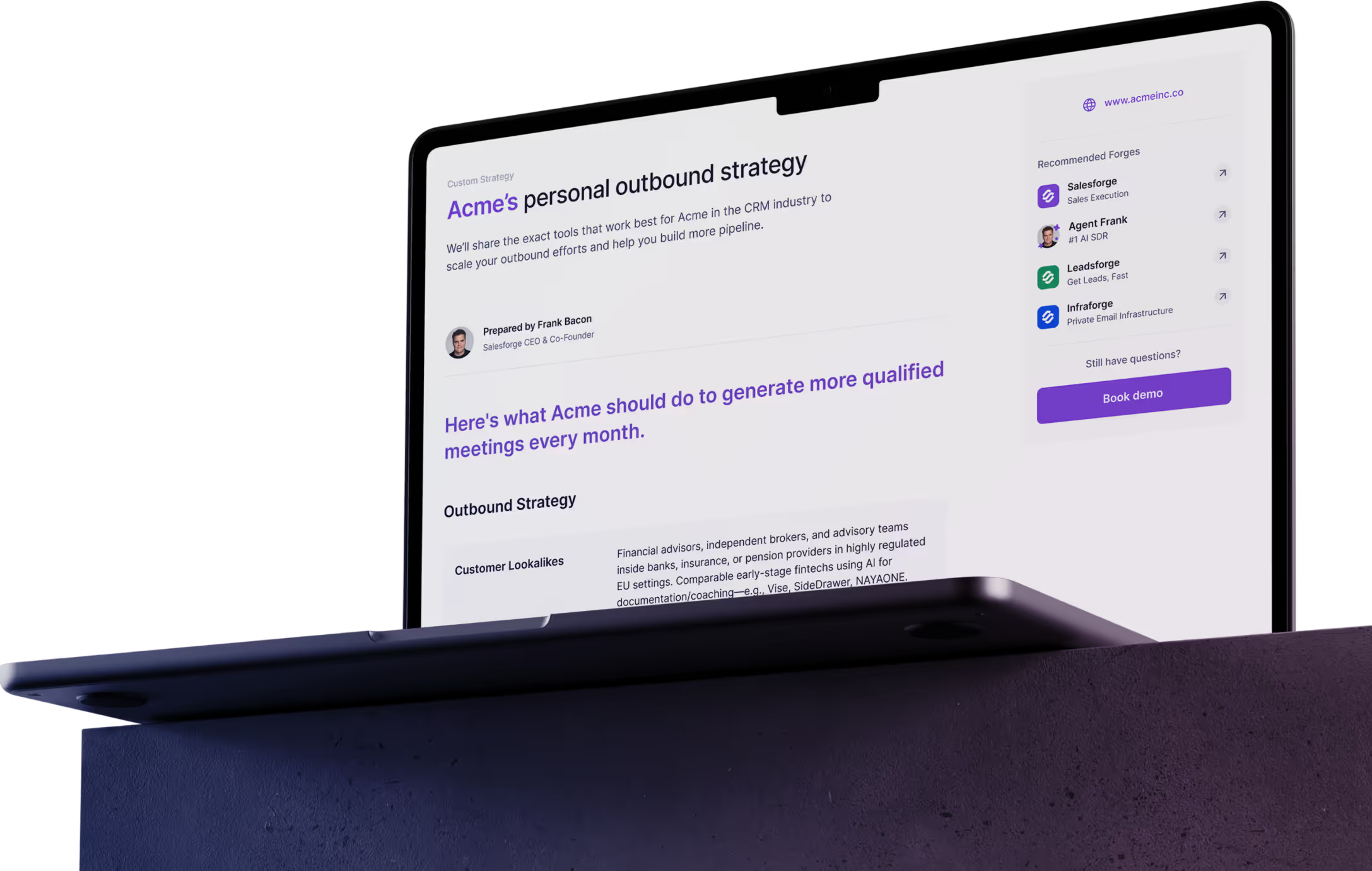
Enter your email to get a custom plan & stack recommendation for your business
It's being carefully crafted by AI
Please check your mailbox in 5 minutes
If you are trying to use Claude to find leads, the first thing to understand is that Claude is not a lead database. It cannot pull verified B2B contacts on its own.
But when connected to outbound tools and lead data sources through MCP workflows, Claude becomes a very powerful prospecting assistant.
Instead of manually switching between LinkedIn searches, enrichment tools, spreadsheets, and outreach platforms, you can use Claude to handle large parts of the lead generation process through simple prompts. That means you can:
In this guide, I’ll show how to automate lead finding with Claude Code, how MCP workflows actually work, and how tools like Leadsforge help Claude access real lead data for outbound campaigns.
No. Claude cannot directly find verified B2B leads on its own because it does not have access to a built-in contact database or live prospect data. It cannot automatically pull verified emails, LinkedIn profiles, phone numbers, or real-time company contact lists by itself.
What Claude can do very well is handle the intelligence side of lead generation. It can help define your ICP, filter companies, analyze prospect data, score leads, generate outreach angles, and organize outbound workflows.
But the actual lead data still needs to come from external tools. Once connected through MCP workflows, Claude can search leads, enrich contacts, qualify prospects, and prepare outreach campaigns.
So, Claude is not the lead database itself. It is the AI layer helping automate the prospecting workflow around connected outbound tools.

Using Claude alone is very different from using Claude Code connected to outbound tools through MCP. Claude alone can help with the strategy and research side of lead generation.
You can use it to define your ICP, analyze customer patterns, write outreach copy, score leads, or research companies based on information you manually provide.
But the workflow still stays manual. For example, if you ask Claude to find SaaS founders in the US, it cannot directly open a live lead database, pull verified emails, enrich LinkedIn profiles, or build a real prospect list on its own.
You still have to switch between lead databases, enrichment tools, spreadsheets, and outreach platforms manually.
Claude Code + MCP changes that workflow. Once connected through MCP, Claude can interact with external tools through natural language prompts. Instead of only helping you think through the workflow, Claude can now help execute parts of it.
For example, you can ask Claude to find ecommerce founders, enrich them with work emails and LinkedIn profiles, filter poor-fit accounts, and prepare the list for outreach. Claude coordinates those actions through connected outbound tools instead of relying only on manual input.
That is the real difference. Claude alone helps with research and planning. Claude Code + MCP helps automate the actual lead generation workflow across connected outbound systems.
To automate lead finding with Claude Code, you need a setup that can handle four things, instructions, tool access, lead data, and outreach execution. Here’s what each part does:
For example, if you ask Claude, “Find SaaS founders in the US with under 50 employees and enrich them with work emails.” Claude Code handles the instruction, MCP gives it access to connected tools, Leadsforge searches and enriches the contacts, and Salesforge can move those leads into outreach campaigns.
Without MCP and connected systems, Claude can only help with research and writing. It cannot search live lead databases or run outbound workflows directly.
Before getting into the workflow, one important thing to understand is that this setup uses Claude Code, not the free Claude chat experience.
The free version of Claude is useful for things like:
But if you want Claude to actually interact with lead databases, enrichment tools, and outbound systems through MCP workflows, you need access to Claude Code, which requires a paid Claude plan. Once Claude Code is connected to an MCP server, the workflow becomes much more practical for outbound automation.
In my case, I use the Forge MCP Server to connect Claude Code with:
This setup allows Claude to search leads, enrich contacts, organize prospect lists, and prepare outbound campaigns through prompts instead of manually switching between multiple tools.
The first thing I do is connect Claude Code to Leadsforge through the Forge MCP Server so Claude can search and enrich leads directly through prompts. Before setup, you need:
Inside Leadsforge, go to: Settings → API → Generate API Key
Copy the API key because Claude Code will use it to access Leadsforge through MCP. Then open Claude Code CLI and run:

claude mcp add leadsforge \
 --transport streamable-http \
 --url https://mcp.salesforge.ai/mcp \
 --header "X-Leadsforge-Key: YOUR_LEADSFORGE_API_KEY"
Replace YOUR_LEADSFORGE_API_KEY with your actual Leadsforge API key.
This setup gives Claude Code access to Leadsforge tools for:
After setup, restart Claude Code and test the connection with prompts like, “What is my Leadsforge credit balance?” or “Find founders at B2B SaaS companies in the US.”
If Claude returns live lead data, the setup is working correctly and Claude can now search and enrich leads directly through Leadsforge.

Once Claude Code is connected to Leadsforge, the next step is defining the ICP clearly before searching for leads. This step matters because the quality of the output depends heavily on how specific the targeting criteria are. If the ICP is too broad, you end up with large prospect lists that are difficult to qualify later. Instead of using vague prompts like, “Find SaaS leads.” I usually give Claude more context around:
For example: “Find B2B SaaS companies in the US with 11–100 employees that likely rely on outbound sales. Focus on founders and heads of sales.” Or, “Find ecommerce brands using Klaviyo with teams under 50 employees and active hiring signals.”
I also try to explain why I am targeting those companies because Claude performs better when it understands the business context behind the search.
For example, “I want companies likely struggling with pipeline generation and actively investing in outbound growth.”
This helps Claude filter leads more intelligently instead of only matching basic company filters.
Once the ICP is defined, I ask Claude Code to search Leadsforge for matching contacts. For example, I might prompt, Find founders and heads of sales at B2B SaaS companies in the US with 11–100 employees.
At this stage, I focus heavily on narrowing the search criteria because broad searches usually create large lists with weak-fit prospects.
The more context I give Claude, the better the lead quality becomes. Adding filters like technologies used, hiring activity, funding stage, or outbound-related signals helps narrow the results to companies that are more likely to convert later during outreach.
This part is important because it reduces the amount of manual filtering needed after enrichment starts.
Once I have a relevant list of companies and contacts, I enrich the leads with verified work emails, LinkedIn profiles, company websites, job titles, and additional company information.
For example, I can ask Claude Code, “Enrich these contacts with verified work emails, LinkedIn URLs, company websites, and job titles.” The initial search is usually not enough for outreach on its own. Enrichment helps turn a raw lead list into something usable while also helping identify weaker prospects early through incomplete or low-quality data.
Once the contacts are enriched, I clean the list before moving anything into outreach.
At this stage, I tell Claude to remove contacts that do not match the ICP. That usually includes irrelevant job titles, agencies, recruiters, students, companies outside the target geography, or businesses that are too small or too large for the campaign.
I also ask Claude to prioritize leads with stronger buying signals, such as recent hiring, sales team growth, funding activity, tool usage, or signs that the company is actively investing in growth.
This step improves the quality of the outreach list significantly because the leads are already pre-qualified before campaigns begin.
Once the lead list is cleaned and organized, I move the qualified contacts into the outbound workflow. At this stage, the leads already have the information needed for outreach, such as company details, work emails, LinkedIn profiles, and ICP fit context.
Depending on the workflow, I may export the list to Salesforge, or move it into a CRM. The main benefit of this process is that the prospect list is already researched, enriched, and pre-qualified before outreach even begins.
That removes a large amount of manual lead preparation work later in the outbound process.
Most issues with Claude-based lead generation usually come from poor targeting or unclear workflows. I noticed that Claude performs much better when the ICP, filters, and lead sources are clearly defined.
Enter your email to get a custom plan & stack recommendation for your business
Please check your mailbox in 5 minutes
Claude can absolutely help automate lead finding, but it works best when connected to the right tools. On its own, Claude is useful for ICP research, prospect qualification, outreach planning, and lead organization.
But if you want to actually search contacts, enrich leads, and build qualified prospect lists, Claude needs access to external lead data through MCP workflows.
Once Claude Code is connected to a lead source through MCP, it becomes much easier to search for ICP-matched companies, enrich contacts, filter weak-fit leads, and organize qualified prospect lists through simple prompts.
The workflow becomes even more practical when paired with Leadsforge and the Forge MCP Server.
Leadsforge handles the actual lead search and enrichment layer, while the Forge MCP Server allows Claude Code to interact with those tools directly instead of manually switching between dashboards and spreadsheets.
The biggest advantage is speed and workflow efficiency. So if your goal is to find leads using Claude, the ideal setup is to connect Claude to a lead source like Leadsforge through the Forge MCP Server.
Try Leadsforge now with 100 free credits!