Automated contact enrichment transforms basic CRM data (like names and emails) into detailed profiles with job titles, company size, industry, and intent signals. This saves time, improves lead targeting, and boosts conversion rates by up to 30%. Without it, sales teams waste hours researching outdated or incomplete records, while enriched data enables real-time updates, better segmentation, and personalized outreach. Tools like Leadsforge and Cognism automate this process, integrating directly with CRMs to ensure accurate, up-to-date information.
Automating contact enrichment is essential for scaling sales and marketing efforts while maintaining data accuracy.
Automated contact enrichment takes basic customer records and transforms them into detailed, actionable profiles, delivering measurable results for your go-to-market strategies. Businesses that focus on enriched contact data see 30% higher sales conversions and a 25% boost in both customer retention and revenue. This shift allows teams to move away from chasing unqualified leads and focus on closing deals with high-value prospects.
Enriched data revolutionizes how you find and connect with potential customers. When your CRM includes firmographics - like company size, industry, and revenue - alongside job titles and seniority levels, your team can prioritize accounts that are the best fit instead of relying on guesswork. For instance, a sales rep targeting healthcare companies with over 500 employees can easily filter their list and tailor outreach based on verified company insights.
Personalized campaigns thrive on enriched details, driving better engagement. In fact, 80% of customers prefer businesses that offer personalized experiences based on comprehensive profiles. Hyper-focused campaigns, built on data like a prospect's industry, job title, or recent activities, resonate in ways that generic mass emails simply can't. Tools like Leadsforge demonstrate how automated enrichment turns these insights into action. Features such as natural language ICP searches, intent signals from company followers, and lookalike modeling help identify accounts similar to your top customers. Waterfall enrichment further ensures high match rates and verified data.
This improved targeting doesn’t just enhance engagement - it also saves time and reduces costs.
Automation eliminates the tedious hours sales reps spend searching for contact details on LinkedIn, company websites, and other platforms. Instead of manually researching one prospect at a time, automation processes hundreds of records simultaneously, appending verified emails, phone numbers, and LinkedIn profiles. This efficiency allows your team to focus on revenue-generating activities like engaging with prospects and closing deals.
The benefits only grow as lead volumes increase. For high-volume teams, manual data entry simply isn’t sustainable. Automated enrichment at the point of data capture - like when a prospect submits a demo request - immediately qualifies leads, adds firmographic details, and assigns them to the appropriate rep based on territory or account fit. Plus, with credit-based pricing models, you only pay for the data you use, making this an affordable solution for teams of all sizes.
Contact data naturally degrades over time - about 30% annually, as job changes, company acquisitions, and outdated emails erode the quality of your database. Real-time enrichment combats this issue by continuously sourcing fresh data and validating it through AI-powered verification. Email addresses are checked for proper formatting, LinkedIn URLs are cross-referenced with live profiles, and phone numbers are confirmed before being added to your sales workflows.
Accurate data minimizes bounce rates and protects your sender reputation. Waterfall enrichment taps into multiple sources until the data is verified, and AI technologies like machine learning and natural language processing further enhance quality. The result is a database of verified contacts, complete with confidence scores to help you identify and exclude low-quality records. This process not only ensures compliance with regulations like GDPR and CAN-SPAM but also boosts customer satisfaction - 60% of businesses using enriched data report notable improvements in customer satisfaction. Clearly, data accuracy is just as critical as having a large volume of data.
To get the most out of automated contact enrichment, it’s important to understand how the process works. Here’s the basic flow: a contact enters your system with minimal details, the platform enriches that record by pulling data from multiple sources, validates the information, and then syncs it back to your CRM. Let’s break down the key steps.
Automated enrichment tools act as dynamic data aggregators, not static databases. When a new contact is added, these tools use identifiers like email addresses, company domains, or LinkedIn URLs to search across various sources - public websites, social platforms, and third-party databases - to collect accurate information.
To ensure a high match rate, many platforms use waterfall enrichment, where multiple data providers are queried in sequence until verified information is found. For instance, Leadsforge taps into a global database of over 500 million contacts using this method, offering higher match rates than tools that rely on a single source. It even allows you to describe your ideal customer in plain terms (e.g., "VP of Sales at healthcare companies with 200–500 employees"), and its AI converts that description into complex queries across its connected sources. This comprehensive approach provides a strong foundation for precise data analysis.
AI takes enrichment to the next level. Instead of merely transferring data from one database to another, machine learning and natural language processing (NLP) analyze both structured and unstructured data - like LinkedIn bios or job descriptions - to extract meaningful insights. For example, NLP can interpret a LinkedIn headline such as "Head of Growth @ Series B SaaS | Ex-Salesforce" and accurately identify "Head of Growth" as the title, determine the seniority level, flag the SaaS industry, and even recognize the company’s funding stage.
Advanced algorithms also group similar contacts and accounts, while anomaly detection flags issues like a "CEO" using a student email domain. Leadsforge uses these AI capabilities for features like lookalike search, where you provide a list of top customer domains, and the platform identifies similar companies. It also offers lead qualification, automatically tagging contacts based on fit and intent signals. The result? Enriched profiles with verified emails, phone numbers, LinkedIn profiles, company details, and even insights like revenue range and tech stack.
Once the data has been refined, seamless integration with your CRM ensures it’s ready for action. Modern tools connect through APIs or native integrations, mapping fields and performing upserts - updating existing records or creating new ones only when necessary. You can set rules to protect data integrity, like only overwriting blank fields or those that don’t meet a confidence threshold. For example, Leadsforge integrates with Salesforge, allowing you to push enriched lead lists into outreach campaigns with a single click, saving time and eliminating manual imports.
Keeping your database current is also critical, especially since up to 30% of B2B contact data becomes outdated each year. Modern enrichment platforms solve this by moving from one-time updates to continuous enrichment. Event-based triggers, like a contact opening an email or visiting your pricing page, prompt updates, while scheduled refreshes - weekly or monthly - ensure high-value segments like open opportunities stay accurate. Webhook listeners detect changes in external systems and trigger re-enrichment, keeping your data aligned across all tools. This real-time approach ensures sales teams always have access to fresh, reliable information, enabling them to act quickly and confidently.

Automated Contact Enrichment Tools Comparison: Features, Pricing, and Best Use Cases
Selecting the right platform for contact enrichment can be a game-changer for your data strategy. With a variety of tools available, each offering distinct approaches to automated enrichment, it’s important to find one that aligns with your needs. Below are some of the top options currently on the market.
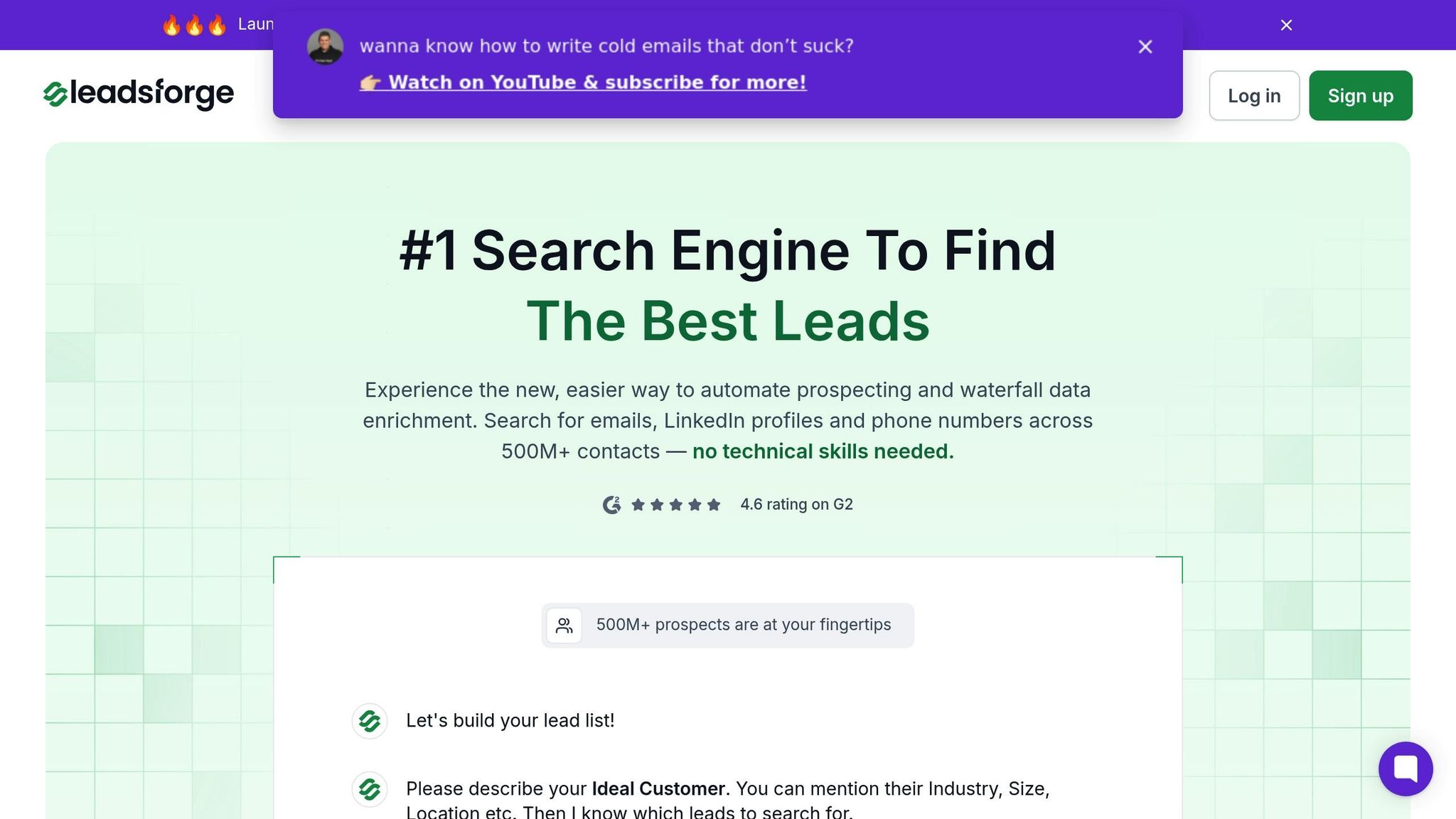
Leadsforge takes a conversational approach to prospecting. Simply describe your ideal customer in plain terms - like "VP of Sales at healthcare companies with 200–500 employees" - and its AI transforms your description into targeted searches across a database of over 500 million contacts. Using waterfall enrichment, the platform queries multiple data sources sequentially, delivering verified emails, LinkedIn profiles, and phone numbers.
Leadsforge goes beyond the basics with features like lookalike search (find similar companies based on your best customers), company followers search (convert competitors’ social media followers into prospect lists), and lead qualification with intent signals. Real-time verification ensures email deliverability and active LinkedIn profiles. It integrates seamlessly with The Forge Stack, especially Salesforge, enabling one-click integration of enriched leads into email or LinkedIn outreach sequences. Pricing starts at $49/month for 2,000 credits, with 100 free credits upon signup. Leadsforge is rated 4.6/5 on G2, making it a solid choice for small to mid-sized teams.
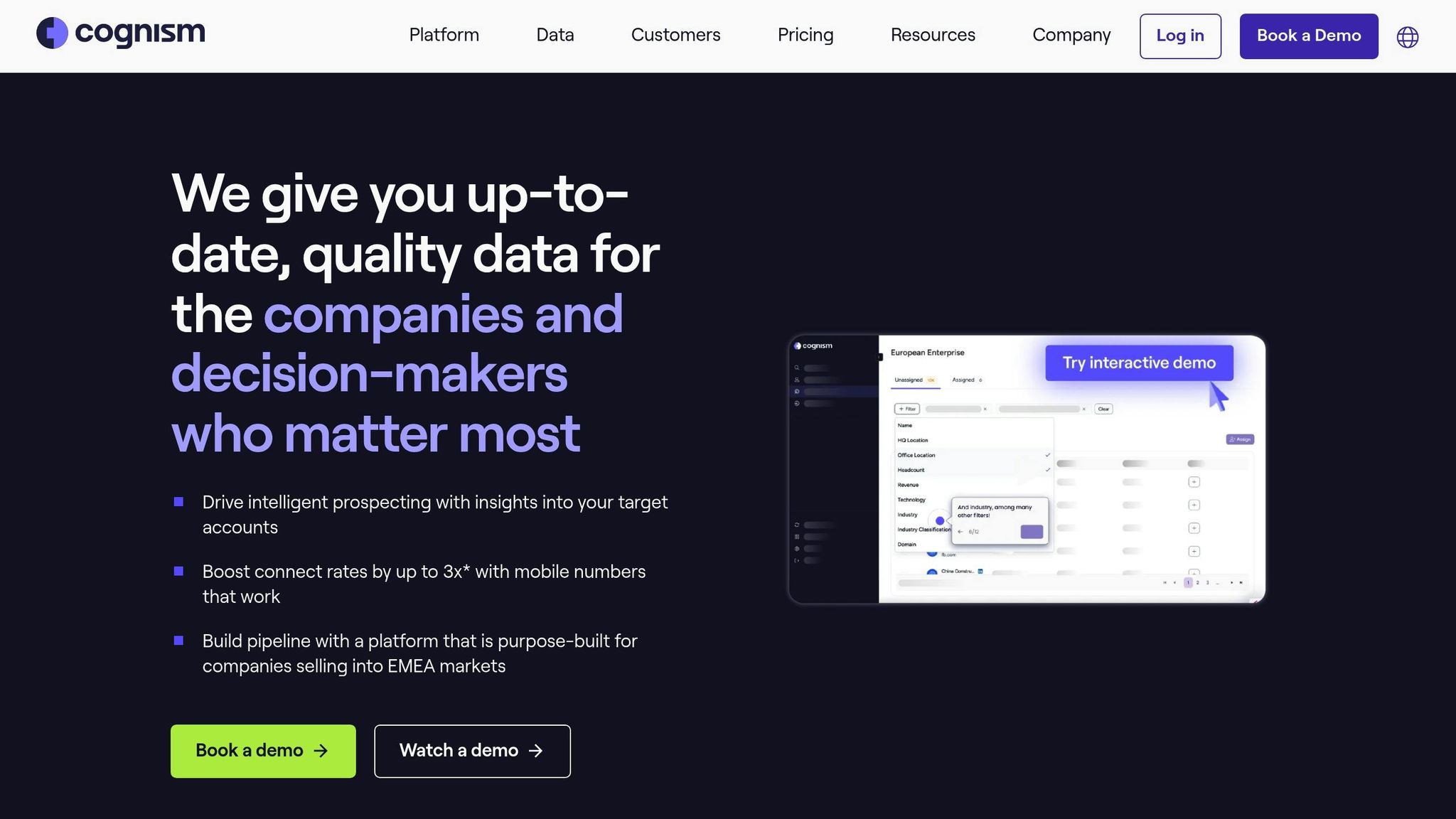
Cognism focuses on keeping B2B contact data fresh and accurate, helping you maintain a clean CRM. The platform provides real-time updates and automatic data validation, pulling information from multiple sources to refresh profiles regularly. With up to 30% of B2B contact data becoming outdated annually, this feature is key to avoiding cluttered databases.
Cognism integrates with major CRMs, giving sales teams enriched decision-maker data without manual work. Many users report success in driving engagement through hyper-personalized email campaigns, leveraging insights like industry, job title, and company size.
For enterprise-level needs, ZoomInfo offers a comprehensive solution with features like confidence scoring to indicate the reliability of each data point. This helps prioritize outreach to the most accurate contacts. The platform processes massive amounts of data in real time, providing detailed contact profiles that include firmographics (company size, revenue, location) and technographics (technology stack details).
ZoomInfo also adheres to strict privacy standards, including GDPR compliance. Pricing follows a tiered enterprise model, with custom quotes starting in the thousands per month. Additional features like real-time intent signals and bulk enrichment cater to high-volume requirements.
Clearbit specializes in data appending, turning basic contact information into detailed profiles enriched with company details, roles, and behavioral data. Its AI-driven system extracts insights like technographics and account activity, enabling precise lead scoring and targeting.
Clearbit integrates directly with tools like Salesforce and HubSpot, ensuring contacts are enriched as soon as they enter your system. Pricing starts around $200/month for basic plans, scaling up for enterprise needs. This makes it a favorite among marketing teams looking to improve lead matching and sales teams aiming for more personalized conversations.
| Tool | Starting Price | Key Strength | Best For |
|---|---|---|---|
| Leadsforge | $49/month | Conversational search, waterfall enrichment | Small to mid-sized teams using AI-powered prospecting |
| Cognism | Custom quote | Real-time CRM updates, data validation | B2B sales teams maintaining a clean database |
| ZoomInfo | Custom quote | Confidence scoring, compliance | Large enterprises needing deep and accurate data |
| Clearbit | ~$200/month | Data appending, AI insights | Marketing and sales teams focused on targeting and scoring |
Ultimately, the best tool depends on your team’s size, budget, and whether you prioritize usability, data accuracy, or CRM integration.
Enriching data as soon as a lead interacts with your brand - whether by submitting a form, joining a webinar, or requesting a demo - can transform your sales process. By adding real-time enrichment, you instantly append key firmographic details, eliminating the need for manual research and enabling immediate lead qualification and routing. This reduces response time and increases conversion rates.
To make this happen, set up form or webhook triggers that pull data from multiple sources in the background. These triggers can standardize details like phone numbers or state abbreviations and ensure clean, complete records are written directly into your CRM. This means sales reps start with enriched profiles instead of blank fields, saving time and improving efficiency. Plus, this approach improves speed-to-lead metrics, ensuring qualified leads reach the right rep within minutes instead of languishing in a queue.
For this strategy to succeed, it’s essential to validate the quality of the enriched data.
Not all enriched data is equally reliable, which is where confidence scores come in. These numerical ratings indicate how trustworthy each piece of appended information is, based on factors like source verification, recency, and cross-checking across multiple databases. By setting thresholds in your CRM workflows (e.g., only allowing data with an 80% or higher confidence score to overwrite existing fields), you can ensure that only reliable data triggers outreach.
To further improve data quality, consider waterfall enrichment. This method layers in additional validation steps, such as SMTP checks for email addresses, format verification for phone numbers, and live LinkedIn profile confirmations. These extra checks help prevent bad data from entering your system, reducing bounce rates and ensuring your reps spend their time on genuine prospects rather than dead ends.
Automated enrichment must align with data privacy laws like GDPR, CAN-SPAM, and CCPA to avoid penalties and maintain customer trust. For example, GDPR requires a lawful basis - such as consent or legitimate interest - to process personal data of EU residents. Additionally, your enrichment vendors should sign Data Processing Agreements (DPAs) to support rights like data access and deletion. Under CAN-SPAM, enriched email addresses can only be used in campaigns that include a physical postal address and a clear unsubscribe option.
Sync enrichment workflows with suppression lists to ensure that opted-out contacts don’t accidentally re-enter outreach campaigns. Limit the data you collect to what’s genuinely necessary, and clearly disclose your enrichment practices in your privacy policy. For California residents, CCPA mandates that they have the right to opt out of data sales, so provide straightforward ways for them to request access or deletion of their profiles. Regularly auditing your vendors’ compliance and security certifications ensures you stay ahead of regulatory changes.
Before implementing enrichment, establish baseline metrics like lead-to-MQL conversion rates, average deal size, sales cycle length, and email reply rates. After rolling out enrichment, track changes in these metrics to assess its impact. Companies using enriched data often report a 25% boost in sales revenue, with 60% noting better customer satisfaction.
A/B testing campaigns on enriched versus non-enriched segments can reveal how enrichment affects open rates, responses, and deal velocity. Analyze which enriched fields your team actually uses in reports and outreach, then refine your rules to prioritize high-value data points. Conduct quarterly reviews of metrics like conversion rates, pipeline generated, and rep productivity (e.g., time saved on research). This not only helps you fine-tune your ideal customer profile (ICP) but also provides concrete evidence of ROI to justify your enrichment investment.
In today’s fast-paced B2B landscape, automated contact enrichment has become a must-have for U.S. teams. By turning incomplete contact records into detailed, actionable profiles, enrichment boosts targeting precision, personalization efforts, and ultimately, conversion rates. With B2B contact data deteriorating at a rate of up to 30% annually, using real-time, AI-driven enrichment tools is critical for keeping CRM data accurate and allowing sales reps to focus on what they do best - selling.
The real magic happens when effective tools meet disciplined execution. Platforms like Leadsforge simplify the process with AI-powered prospecting and validated data enrichment. By following the best practices discussed earlier and staying aligned with U.S. and international privacy standards, your team can achieve measurable improvements in pipeline performance, conversion rates, and productivity. This approach transforms your CRM from a simple database into a strategic powerhouse, reinforcing the importance of accurate data and focused lead targeting.
To get started, evaluate the quality of your current data, pinpoint gaps and inefficiencies, and test one or two enrichment tools in a pilot program. Implement point-of-capture enrichment and set quarterly goals for metrics like conversion rates, pipeline growth, and time saved per rep. Regularly track your progress to measure ROI and fine-tune your strategy for even better results over time.
Automated contact enrichment takes the guesswork out of lead targeting by providing precise, verified contact details - like email addresses, phone numbers, and LinkedIn profiles. By analyzing natural language descriptions of your ideal customer, it gathers data from various sources to create accurate, high-quality lead lists.
This approach helps refine your outreach efforts, making them more focused and effective. The result? Higher engagement and improved conversion rates. Tools like Leadsforge simplify this process, letting you concentrate on reaching the right prospects with ease.
AI-powered contact enrichment brings a host of benefits to the table. One major perk is its ability to deliver quick and precise data collection. By validating information in real-time and sourcing it from multiple trusted databases, it ensures you’re working with high-quality leads - complete with verified emails, phone numbers, and profiles.
On top of that, AI takes the hassle out of prospecting. It automates time-consuming tasks like lead qualification and analyzing intent signals, making the process smoother. Tools such as Leadsforge enhance this experience with user-friendly, chat-based interfaces, allowing you to build highly targeted and verified lead lists efficiently - all while saving you valuable time and effort.
To ensure adherence to data privacy laws during contact enrichment, businesses must focus on securing explicit consent from individuals before collecting or processing personal information like emails, phone numbers, or social media profiles. Leveraging reliable platforms such as Leadsforge, which validates and verifies data in real-time from trustworthy sources, can significantly reduce compliance risks.
Equally important is aligning with privacy regulations like GDPR and CCPA. This involves being transparent about data usage, providing clear opt-out options, and safeguarding information through encryption and restricted access. Conducting regular audits and keeping up-to-date with evolving privacy laws are essential steps for maintaining compliance over time.