

Personalized Outbound Strategy
Get The Right Outbound Strategy In Minutes
Enter your email to get a custom plan & stack recommendation for your business
It's being carefully crafted by AI
Please check your mailbox in 5 minutes
If you are searching for Apollo API, you are likely trying to see if it fits your workflow.
I tested Apollo API for 3 months.
I used it for data enrichment, prospect search, and CRM updates.
Apollo API works for automation-heavy workflows, but not for direct lead generation or outreach.
Apollo API lets you pull data on people and companies.
You can also update records without doing it manually.
For example, instead of updating leads one by one, I used the API to do it in bulk.
It is mainly used when teams want to save time on data work and connect different tools together.
In this review, I’ll explain how Apollo API works, and whether it is worth using.
Apollo API works well for automating data and building integrations.
It is less built for simple lead generation or quick setup.
I compared Apollo API with a simpler setup using Leadsforge API below:
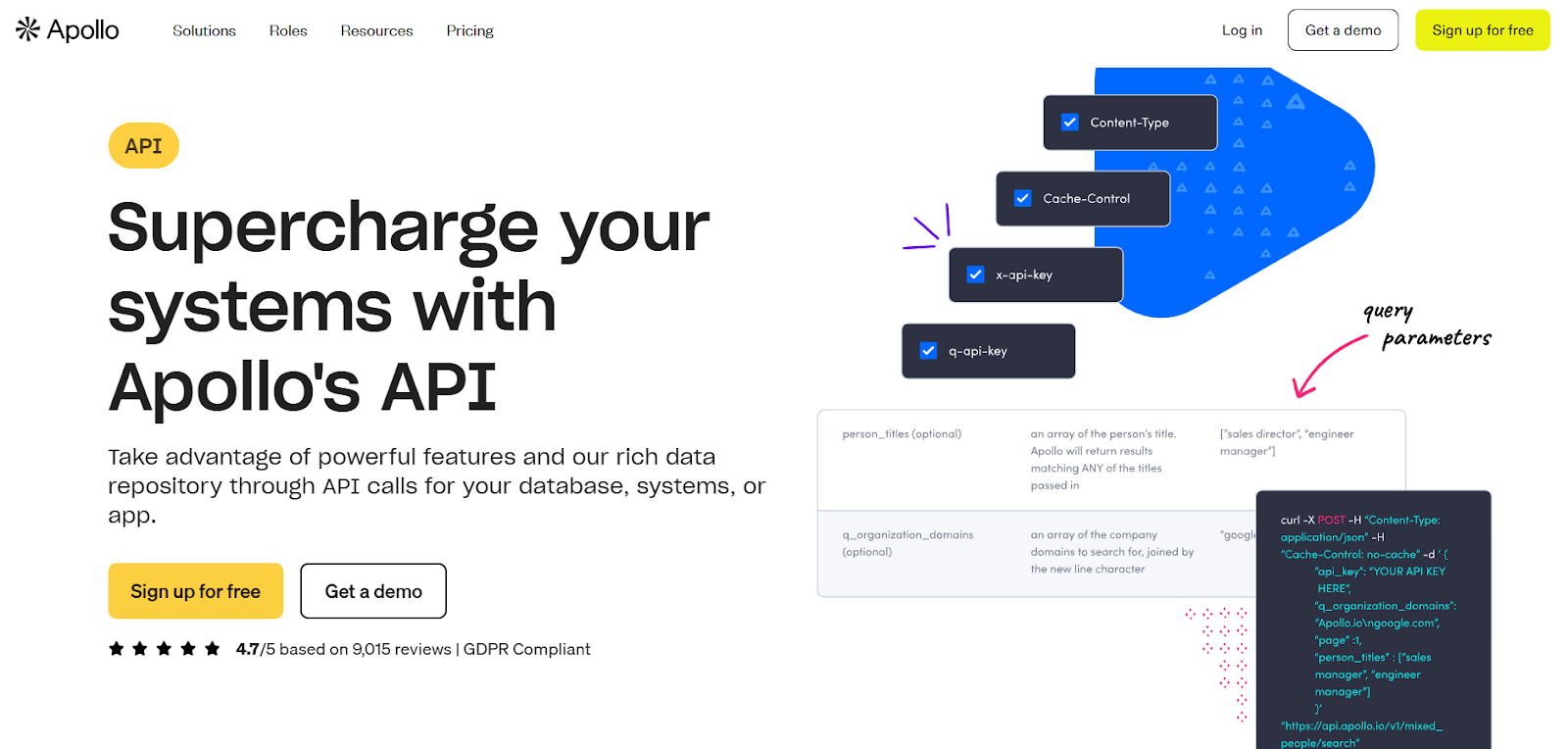
When I used Apollo API, it felt more like a backend data layer than a full tool.
It allows you to pull data on people and companies, and use that data inside your own systems.
Instead of using Apollo’s dashboard, you can use API calls to:
Apollo API can do most of the same actions available in the Apollo platform, but in a programmatic way
To use it, you need an API key and access based on your plan.
It is mainly used by teams that want to automate data processes or connect Apollo with other tools.
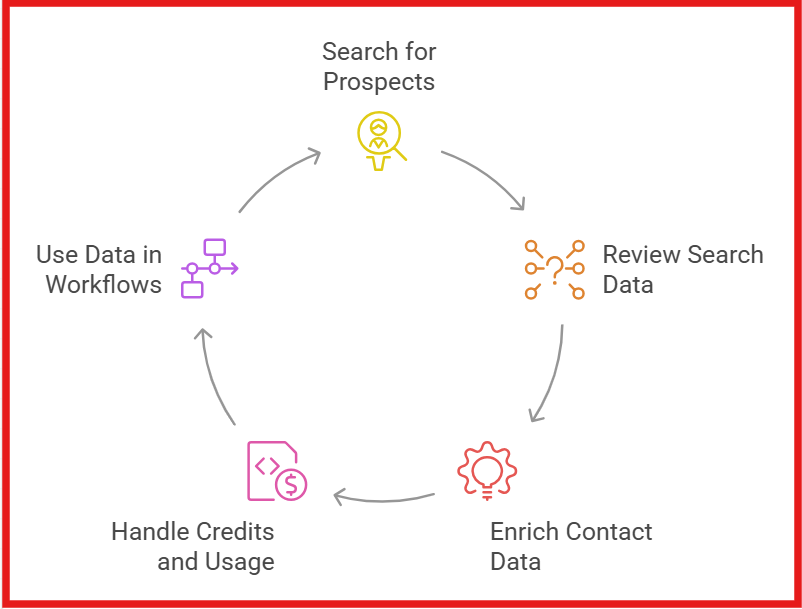
When I tested Apollo API, the workflow felt structured.
It follows a search → enrich → use flow.
Here’s how it works:
I sent a request to the search endpoint using filters like job title, company, or location.
The API returned a list of matching people or companies.
The search response did not include full contact details.
Emails were not always included in search results.
I sent another request to the enrichment endpoint using contact data.
This returned additional details like email, company info, and LinkedIn.
Each request used credits from the account.
Both search and enrichment consumed credits.
In my case, when I enriched a few thousand leads, credits got used faster than expected.
The search step was light on usage.
But enrichment is where most of the cost builds up.
Once I had enriched data, I pushed it into a CRM or internal system.
This helped automate lead management and workflows.
Apollo API focuses on giving access to B2B data and automation through API.
Here are the features that are actually use:
These features make Apollo API useful for data access and automation.
But most value comes when you combine search and enrichment properly.
Apollo API pricing is tied to your Apollo plan.
It is not a separate pricing product.
From what I saw, Apollo API pricing is predictable.
But it depends on how much enrichment you do.
If you only search, the cost stays low.
If you enrich large lists, credits get used quickly.
Apollo API worked best when I needed to automate data and connect tools.
Here are the ideal use cases of Apollo API based on my testing:
When I checked user discussions, the feedback felt mixed.
Some users said Apollo API works fine for basic use.

It is stable enough for production in many cases.
A few teams said they used it for a long time without major issues.
But problems show up when you scale.
Many users mentioned strict rate limits.
They hit limits faster than expected when pulling large data.
Data quality came up often.
Users said emails and job titles are sometimes outdated.

Company data is more reliable for large companies.
Some users said the API can feel inconsistent.
Things can break after changes.
You may need to fix your setup.
Support is another issue.
Users said it can be slow, especially on lower plans.
Apollo API is worth using when the goal is to access B2B data through API.
It lets me search for prospects and enrich them for full details.
This works when I want to build custom workflows or integrations.
I can connect Apollo with my CRM or internal system.
It feels most useful when the setup already uses APIs.
I get more control over how data flows and updates.
Where it feels limited is getting full data in one step.
I have to search first and then enrich contacts.
It also depends on usage and credits.
Some endpoints consume credits as I scale usage.
Apollo API works better for structured workflows and automation.
It is not built for simple lead generation or quick setup.
Use Apollo API if:
Skip Apollo API if:
Apollo API works when I want to access B2B data through API.
But it follows a multi-step flow.
I have to search first, then enrich to get full contact data.
When the goal is to handle sourcing and enrichment in one system, Leadsforge API feels more direct.
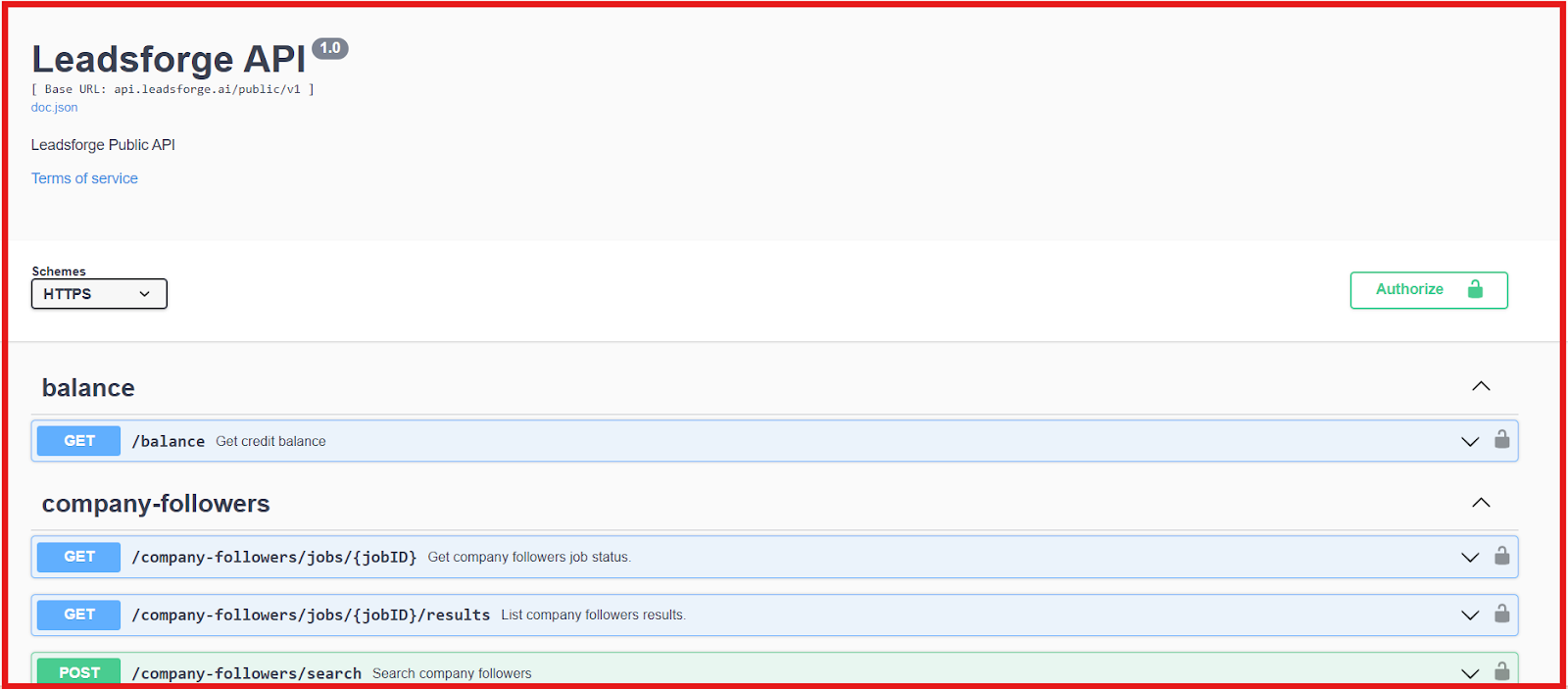
Leadsforge API gives access to lead search using ICP filters.
It also supports enrichment for email, LinkedIn, and phone.
Both single and bulk enrichment are supported.
Each enrichment job accepts up to 500 person IDs.
If I need more, I send multiple requests.
Credits are handled at the account level.
They are reserved upfront and charged only for successful results.
The API uses job-based workflows for enrichment.
I can track job status and fetch results using job IDs
Rate limits are clearly defined.
Search allows 20 requests per minute per account.
Other endpoints allow up to 60 requests per minute per API key.
Enrichment endpoints do not have a fixed rate limit.
But there is a cap on active jobs per account.
If I compare both, Apollo API works for structured API workflows.
Leadsforge API works better when I want sourcing and enrichment together in one flow.
Enter your email to get a custom plan & stack recommendation for your business
Please check your mailbox in 5 minutes
Apollo API works when the goal is to access B2B data through API.
It fits teams that already use structured workflows.
But it follows a multi-step process.
You need to search first and then enrich contacts.
This adds extra steps when working with larger lists.
It also depends on credits and plan limits.
If the goal is custom integrations, Apollo API can work.
But if the goal is faster lead generation, it feels limited.
Leadsforge API combines sourcing and enrichment in one flow.
You can search leads and enrich them in the same system.
If you want fewer steps and faster workflows, try Leadsforge API.