

Personalized Outbound Strategy
Get The Right Outbound Strategy In Minutes
Enter your email to get a custom plan & stack recommendation for your business
It's being carefully crafted by AI
Please check your mailbox in 5 minutes
Most B2B websites get a lot more visitors than demo requests. People visit your pricing page, read your case studies, check integrations, and leave without filling out a form.
I recently saw this happen with a SaaS team running LinkedIn ads and outbound together. Their website was getting good traffic, but the sales team had no idea which companies were visiting the site unless someone booked a demo. They were basically ignoring warm buying signals every day.
That is why more B2B teams are now using website visitor identification software. These tools help you identify anonymous companies visiting your website, track buying intent, and give your sales team accounts they can follow up with faster.
Some tools focus only on visitor tracking, while others also help with lead enrichment, outbound workflows, CRM syncing, and intent-based prospecting.
In this guide, I compared the best website visitor identification tools for B2B teams based on visitor identification accuracy, enrichment capabilities, integrations, ease of use, pricing, and outbound workflow fit.
Website visitor identification software helps B2B companies identify which businesses are visiting their website, even if those visitors never submit a form or book a demo. Most tools work by tracking visitor IP addresses, website activity, cookies, and company-level data.
When someone visits your website, the software tries to match that traffic with a business database to identify the company behind the visit.
For example, if someone from a SaaS company visits your pricing page multiple times, the tool may identify the company name, industry, employee size, pages visited, and how often they returned to your site.
Some platforms also connect this visitor data with CRM systems, intent signals, and outbound tools so sales teams can reach out faster while the interest is still high. The main goal is instead of waiting for website visitors to fill out a form, B2B teams can identify interested companies earlier and start sales conversations much faster.
For this list, I focused on tools that can actually help B2B teams identify anonymous website visitors and turn them into sales opportunities. Some platforms are better for simple company tracking, while others offer deeper intent data, contact enrichment, CRM syncing, and outbound workflows.
I mainly evaluated these tools based on:
I also looked at how useful these tools are for real outbound workflows. Some work better for enterprise sales teams, while others are more suitable for agencies, startups, SaaS companies, and smaller outbound teams trying to identify warm leads faster.

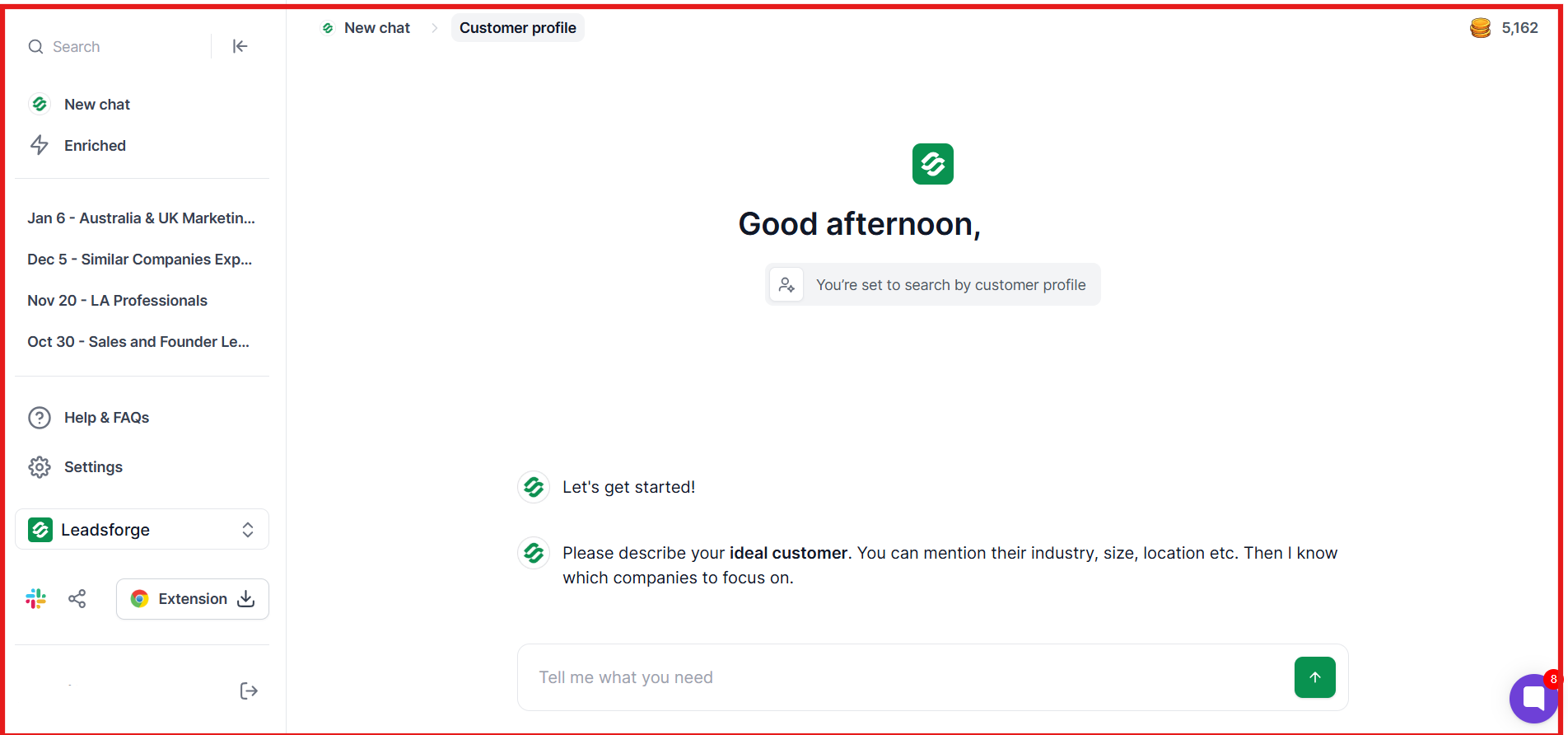
Leadsforge works best when you want to turn high-intent website activity into a real outbound list.
For example, if you have already identified a company visiting your website, you can use Leadsforge to find the right people at that company, enrich them with work emails, LinkedIn profiles, and phone numbers, and then export the list to Salesforge or CSV for outreach.
The biggest advantage is that you do not need to build lists through complex filters. You can describe your ideal customer in simple words, use lookalikes, competitor followers, or built-in intent signals, and Leadsforge helps you build a targeted list from 500M+ contacts.
This makes it useful for B2B teams that want to move from “someone visited our site” to “here are the right people we can contact.”

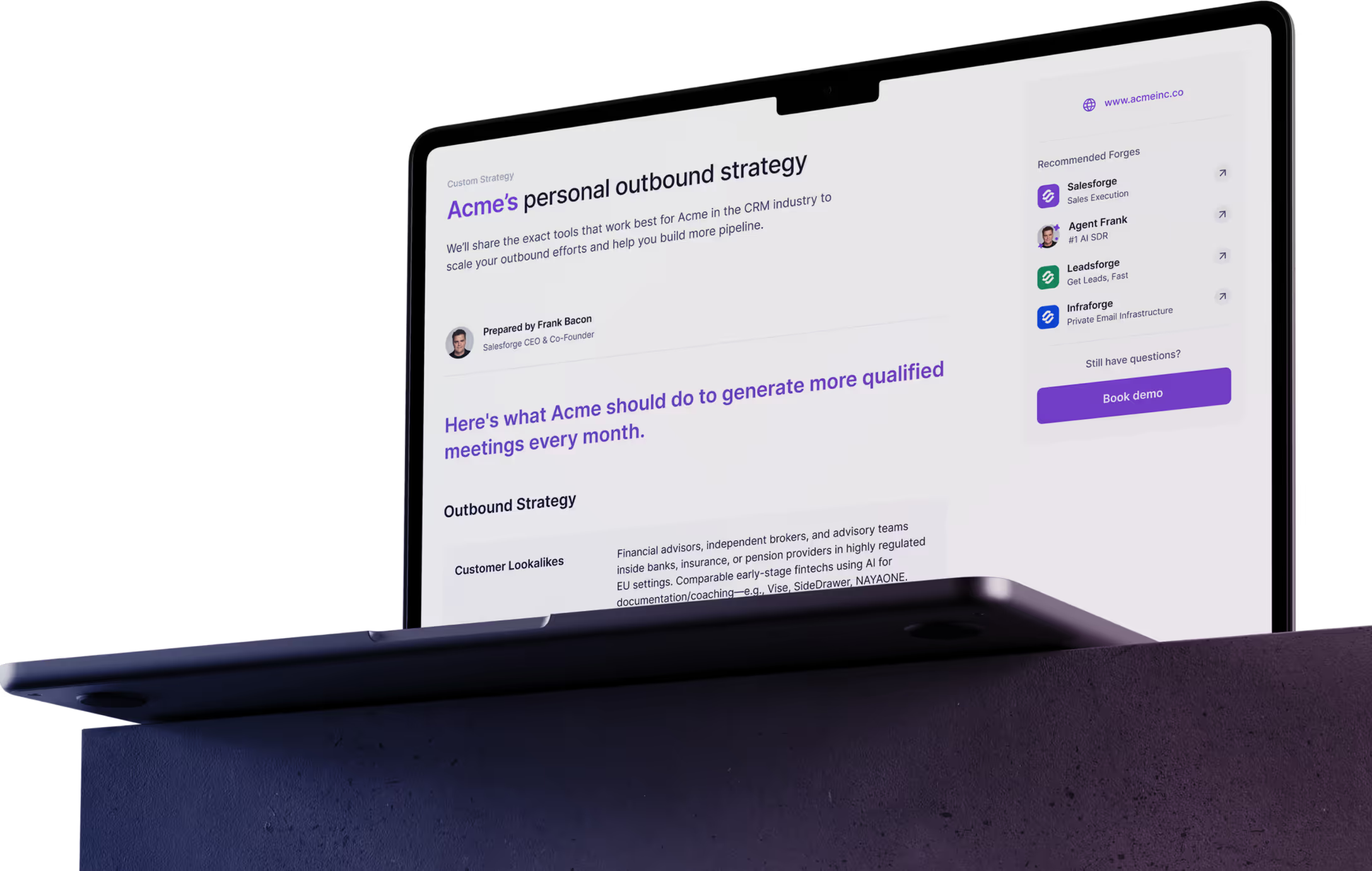
Enter your email to get a custom plan & stack recommendation for your business
Please check your mailbox in 5 minutes
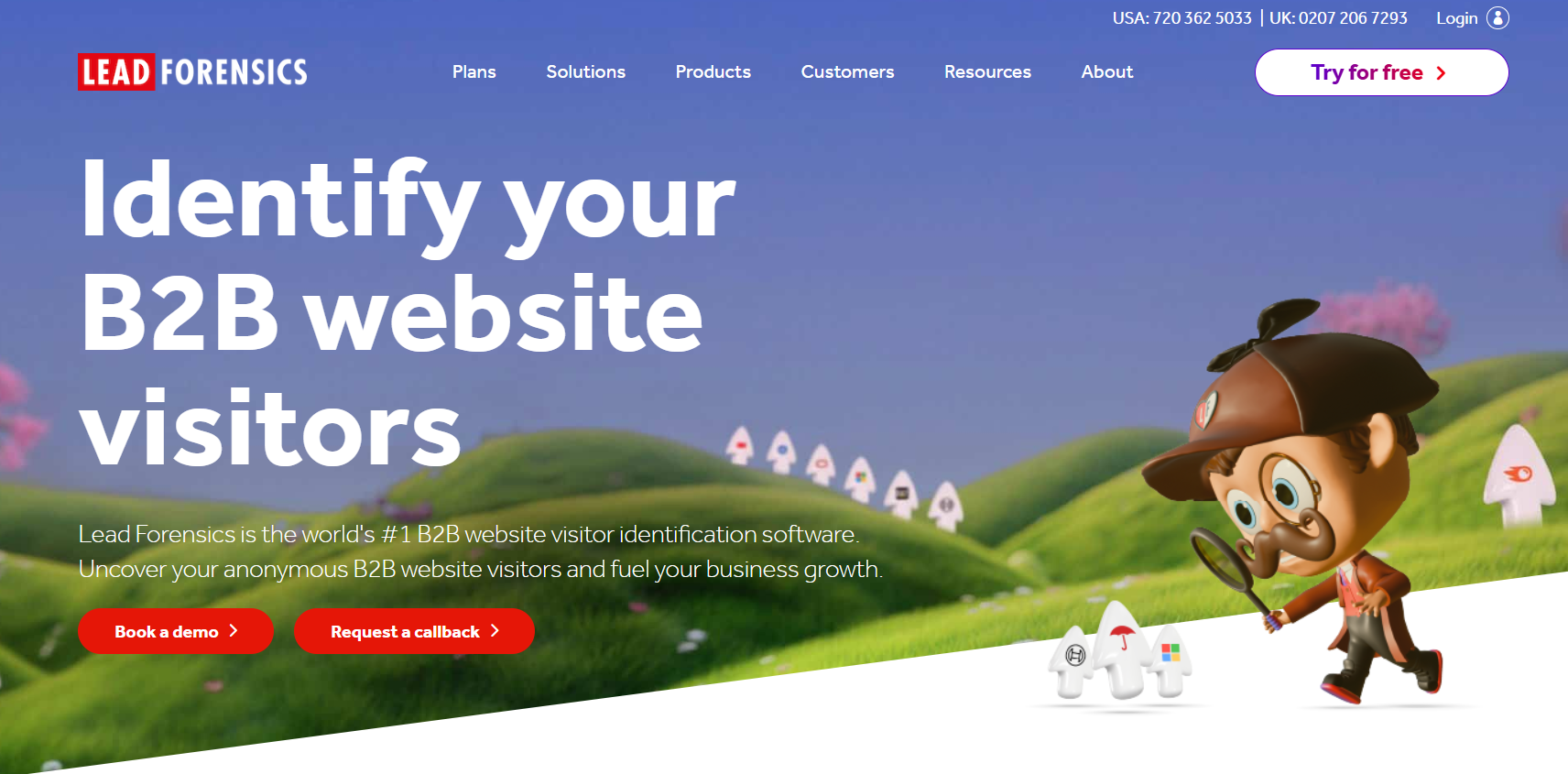
Lead Forensics is one of the oldest and most established website visitor identification platforms in the market. The platform helps B2B companies identify anonymous businesses visiting their website, understand which pages they viewed, and access business contact information for follow-up.
Lead Forensics is built for larger B2B sales and marketing teams that want account-level visitor intelligence, real-time alerts, CRM integrations, and automated lead routing workflows. It is particularly popular among organizations running account-based marketing (ABM), enterprise sales, and high-volume lead generation programs.
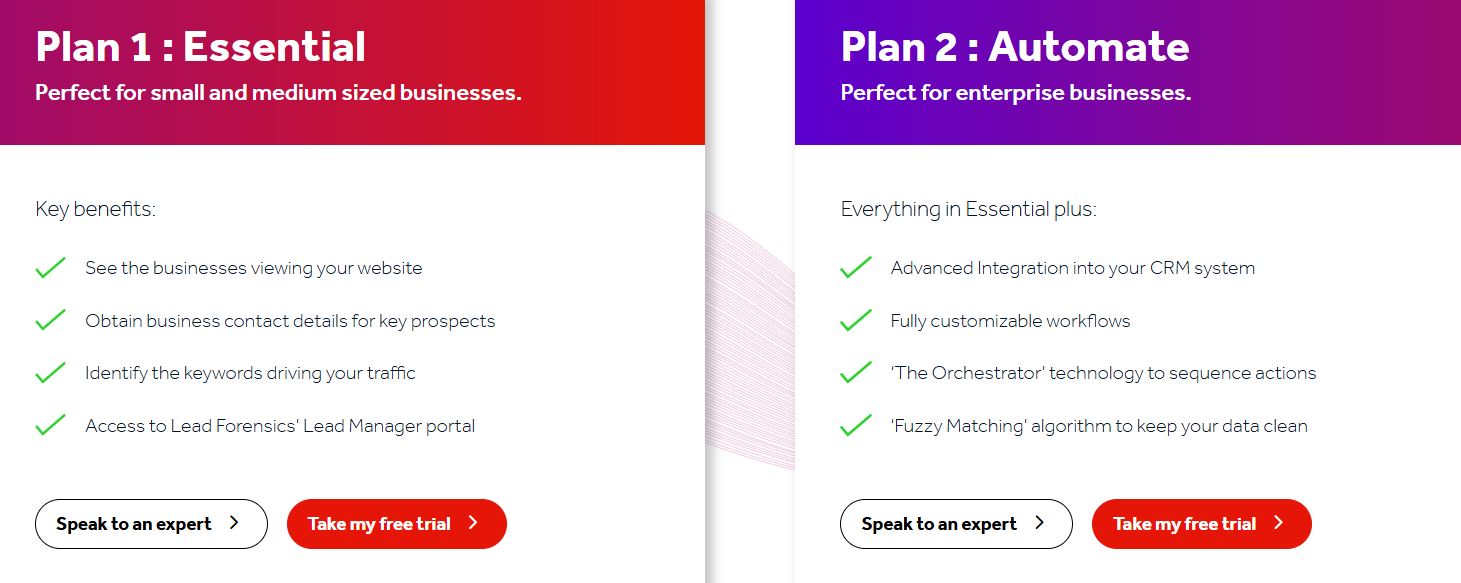
Lead Forensics does not publish exact pricing on its website. Instead, it offers custom pricing based on business size, website traffic, and feature requirements. The platform currently offers two plans:
A free trial is available, but businesses need to contact the sales team for a custom quote.
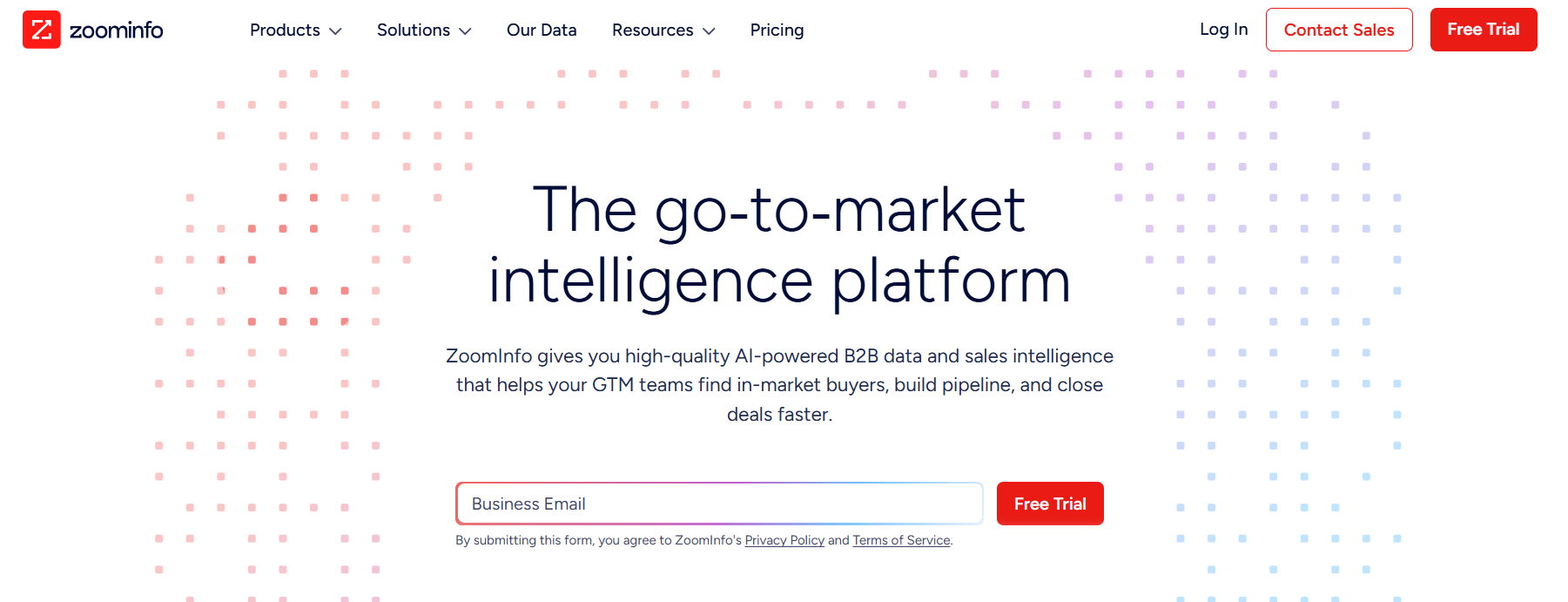
ZoomInfo is one of the largest B2B intelligence platforms on the market. Alongside its contact database and buyer intent data, it offers website visitor identification through its WebSights product, helping businesses identify companies visiting their website, uncover buying intent, and connect with decision-makers faster.
ZoomInfo combines visitor intelligence with contact data, buyer intent signals, workflow automation, CRM integrations, and outbound engagement capabilities. This makes it particularly useful for enterprise sales, ABM, demand generation, and revenue operations teams looking to turn website traffic into pipeline.
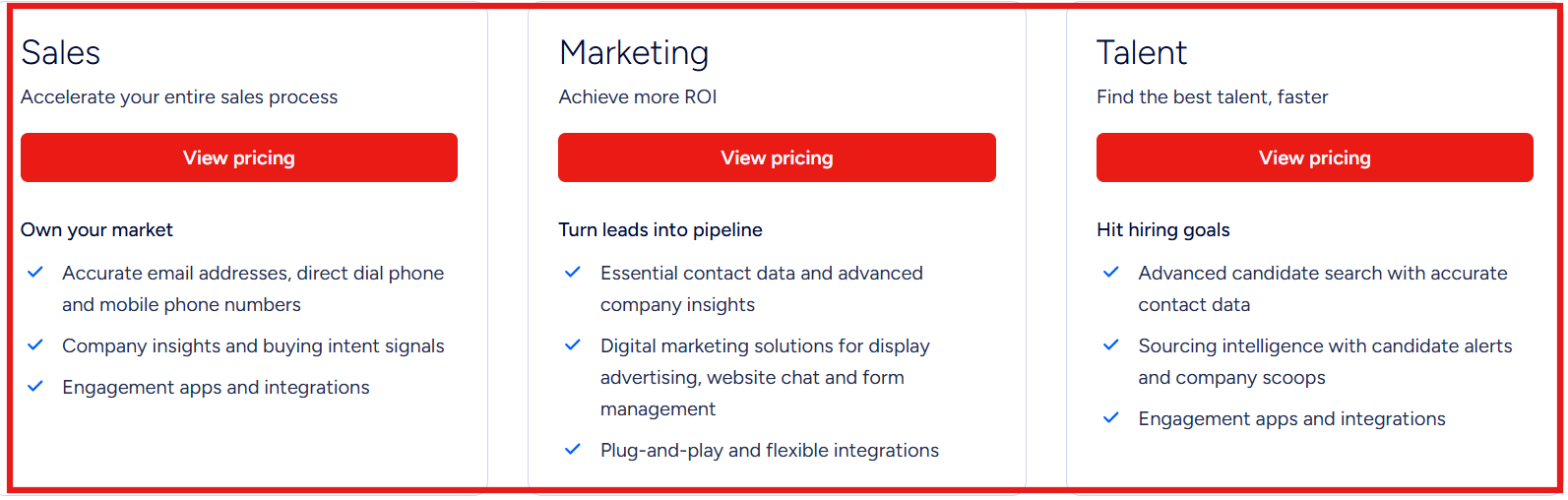
ZoomInfo does not publish fixed pricing on its website. Pricing is customized based on factors such as the number of licenses, feature access, credit usage, and add-on products.
The platform offers separate packages for Sales, Marketing, Talent, and other GTM use cases. Website visitor identification is available through ZoomInfo WebSights and is typically included as part of broader ZoomInfo packages rather than being sold as a standalone tool.
ZoomInfo offers a free trial, but businesses need to contact the sales team for a custom quote and package details.
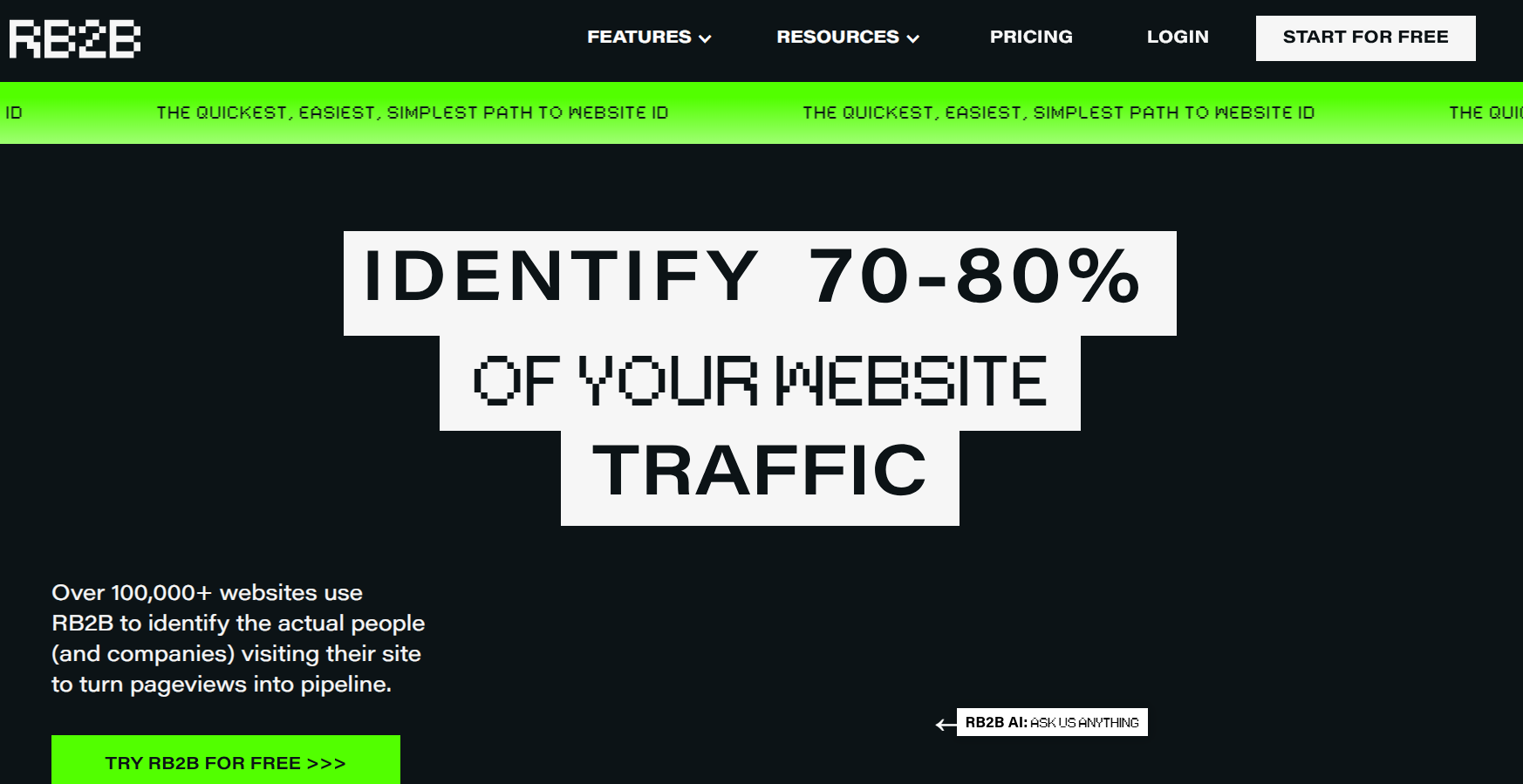
RB2B is a website visitor identification platform designed to help B2B companies identify the actual people and companies visiting their website. It focuses on person-level identification, providing visitor names, LinkedIn profiles, and business email addresses when available.
The platform is built for sales and outbound teams that want to act quickly on website buying signals. With a simple pixel installation, RB2B can send identified visitors directly to Slack, Microsoft Teams, CRMs, Clay, and outbound platforms, allowing teams to start outreach while intent is still high.
RB2B offers transparent pricing with a free plan and several paid options.
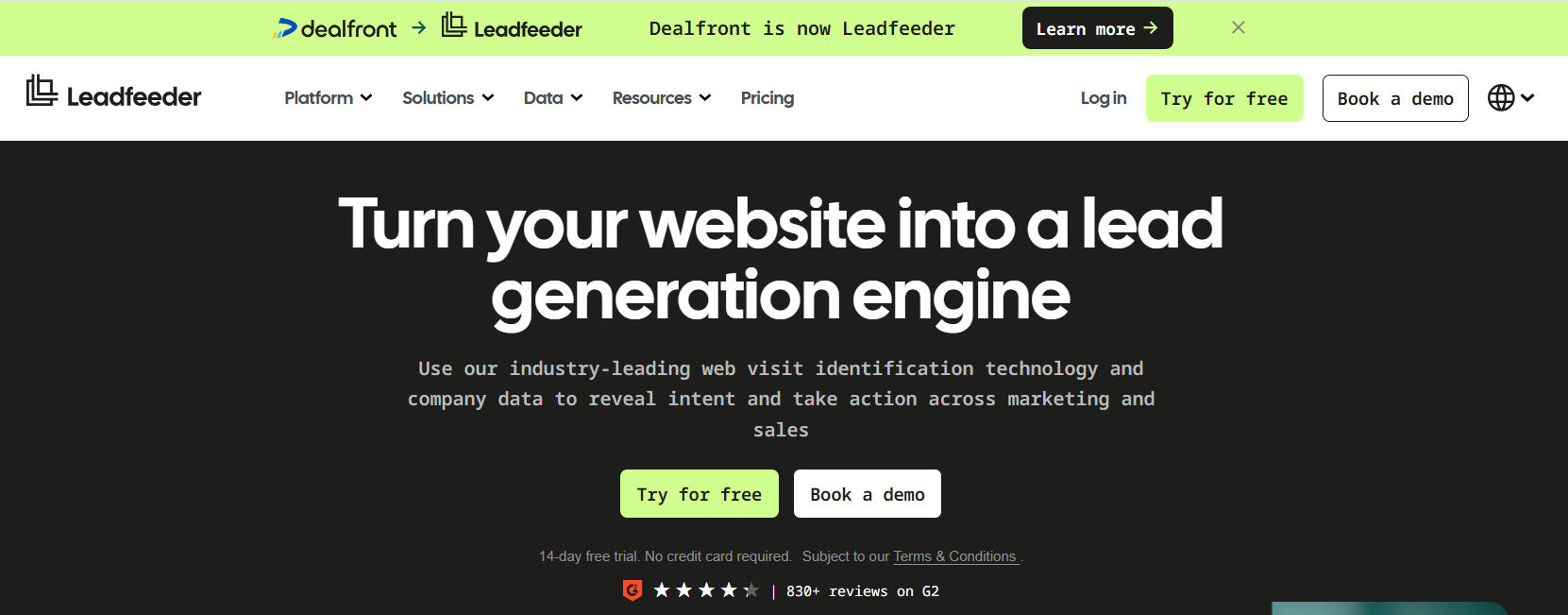
Leadfeeder, now part of Dealfront, helps B2B companies identify which businesses are visiting their website and understand how those companies engage with their content. The platform turns anonymous website traffic into identifiable company profiles, making it easier for sales and marketing teams to discover potential opportunities and prioritize outreach.
It is primarily built around company-level visitor tracking. It combines website activity, company information, contact discovery, buying signals, and CRM integrations to help teams identify and qualify high-intent accounts.
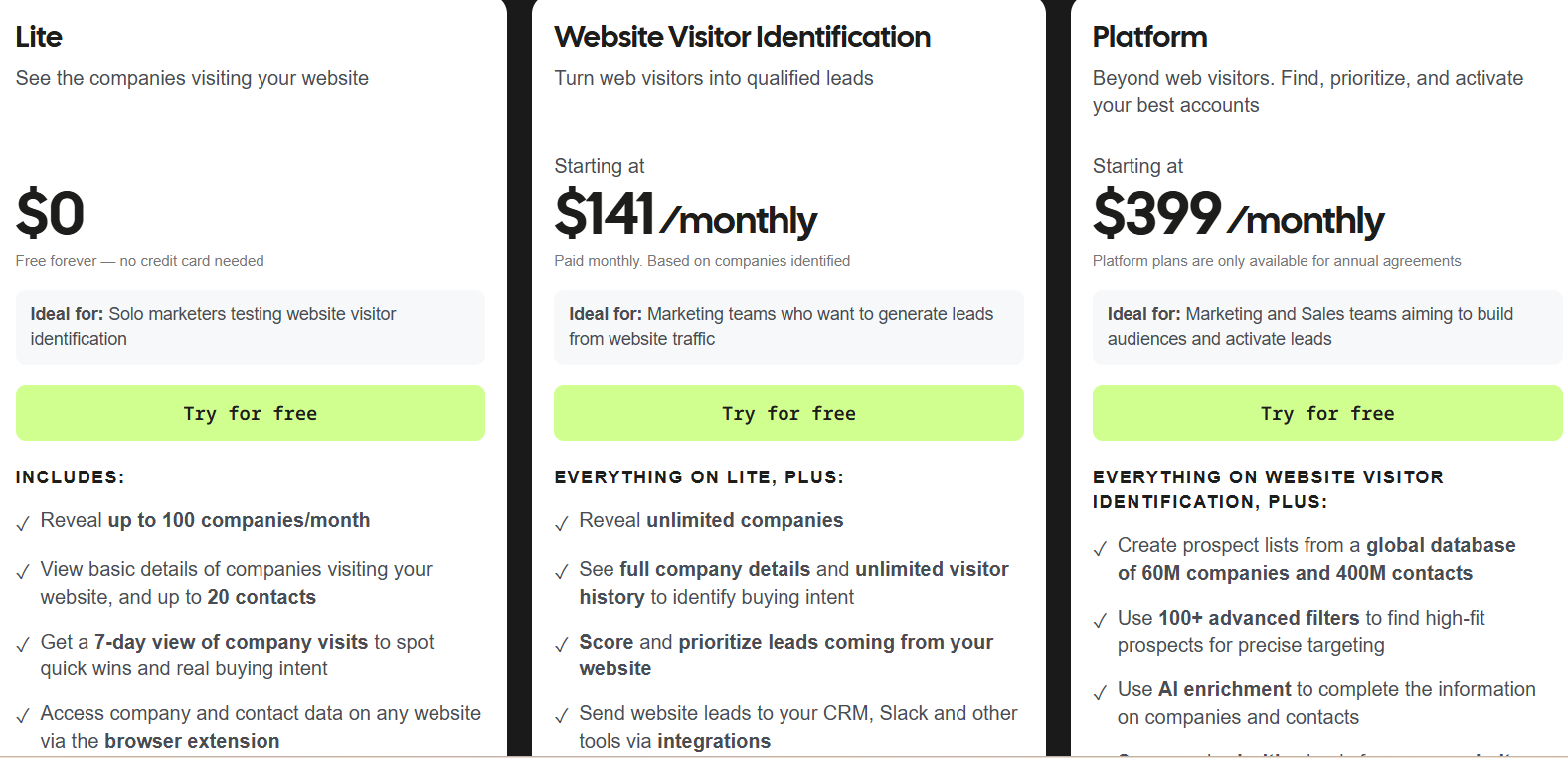
The platform offers a free trial and includes features such as company identification, website visitor tracking, CRM integrations, contact discovery, lead qualification, and workflow automation. Its website visitor identification costs $141/month.
The right website visitor identification tool depends on how your team plans to use visitor data. Some platforms focus on enterprise account intelligence, while others prioritize outbound prospecting, buyer intent signals, or real-time visitor alerts.
If your goal is turning anonymous website traffic into qualified pipeline, choose the platform that best fits your sales and marketing workflow.
Enter your email to get a custom plan & stack recommendation for your business
Please check your mailbox in 5 minutes
Website visitor identification software can help you get more value from the traffic you're already generating. Instead of relying only on demo requests and form submissions, these tools help you see which companies are researching your solution, what they're interested in, and when it might be the right time to reach out.
The best choice depends on your goals. Lead Forensics is a strong option for enterprise visitor tracking, ZoomInfo combines visitor intelligence with buyer intent data, RB2B focuses on real-time person-level identification, and Leadfeeder offers a simple way to identify and qualify website visitors.
If your goal is to turn website visitor signals into actionable outbound opportunities, Leadsforge is worth considering. In addition to helping identify high-intent companies, it helps sales teams build enriched prospect lists and move from website activity to outreach faster, making it easier to turn anonymous traffic into pipeline.
Try Leadsforge today and get 100 free credits!