If you’re comparing Apollo.io vs ZoomInfo, you’re likely choosing a tool to find better B2B leads and close more deals.
Both are popular, but they serve different needs.
Apollo.io is affordable and easy to use. It’s built for fast outbound and works well for startups and small sales teams.
ZoomInfo is more advanced. It offers deeper data and intent signals, but it’s expensive and designed for larger companies.
So which one should you choose?
In this guide, we compare Apollo.io vs ZoomInfo across 5 key differences, so you can pick the right tool before you invest.
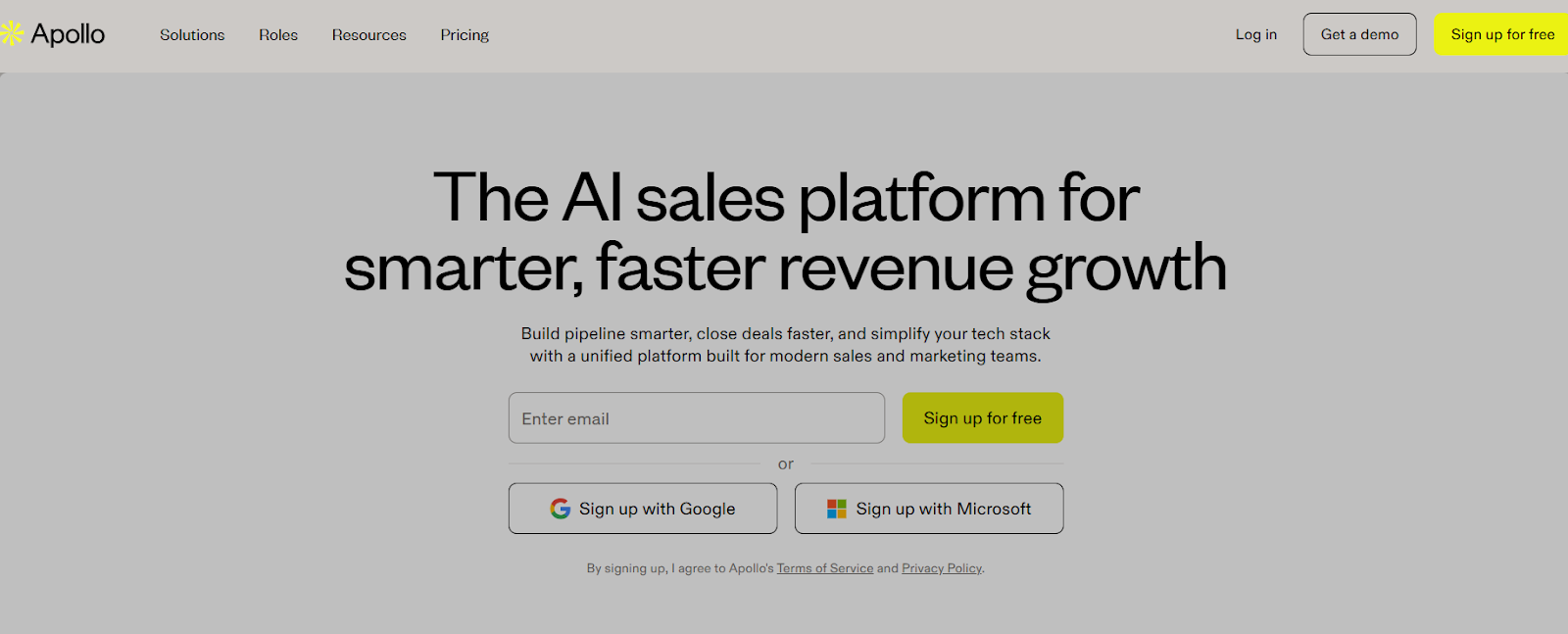
Apollo.io is a B2B sales intelligence and outbound platform built to help teams find leads, reach them faster, and manage outreach in one place.
It combines a large contact database with email, calling, sequences, and CRM syncing, so sales teams don’t need multiple tools to start outbound.
Apollo stands out for its built-in email sending and mailbox integration.
When you connect your mailbox, you can send emails, track opens and replies, run automated sequences, and log activity to your CRM automatically.
This reduces manual work and keeps outreach organized.
The platform also focuses heavily on email deliverability.
Features like email warmup, inbox ramp-up, domain authentication, sending limits, and a deliverability suite help protect sender reputation and keep emails out of spam.
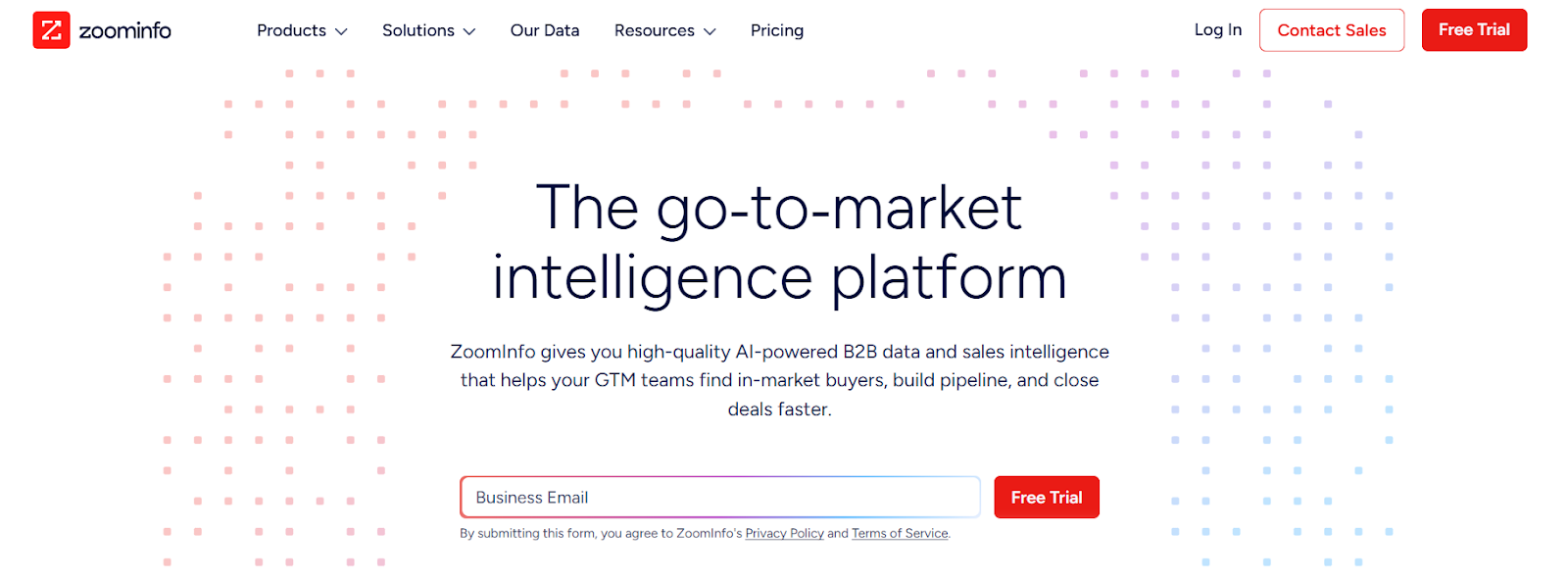
ZoomInfo is a go-to-market intelligence platform built for teams that need deep B2B data and buying signals at scale.
It focuses on data accuracy, buyer intent, and account insights rather than just outbound execution.
The platform offers verified contact data, firmographics, technographics, org charts, and real-time intent signals.
Its AI uses these signals to prioritize accounts, surface decision-makers, and guide sales actions.
Apollo.io and ZoomInfo both help sales teams find and reach buyers, but they are built for different goals.
One focuses on doing outbound fast, while the other focuses on deep data and buying signals.
Let’s start with the first and most important difference.
Apollo.io is an all-in-one outbound tool.
It helps you find leads and contact them directly using built-in email, sequences, and mailbox syncing. Everything needed for outbound lives in one place.
ZoomInfo is a go-to-market intelligence platform.
It helps teams understand who is buying and when, using deep company data, verified contacts, and intent signals. Outreach usually happens through connected tools, not inside ZoomInfo itself.
In short, choose Apollo.io if you want to find leads and start outreach quickly in one tool, or you can choose ZoomInfo if you need deep data, intent signals, and account intelligence to guide a larger GTM strategy.
Apollo and ZoomInfo take very different approaches when it comes to pricing.
Apollo.io offers clear, flat pricing plans.
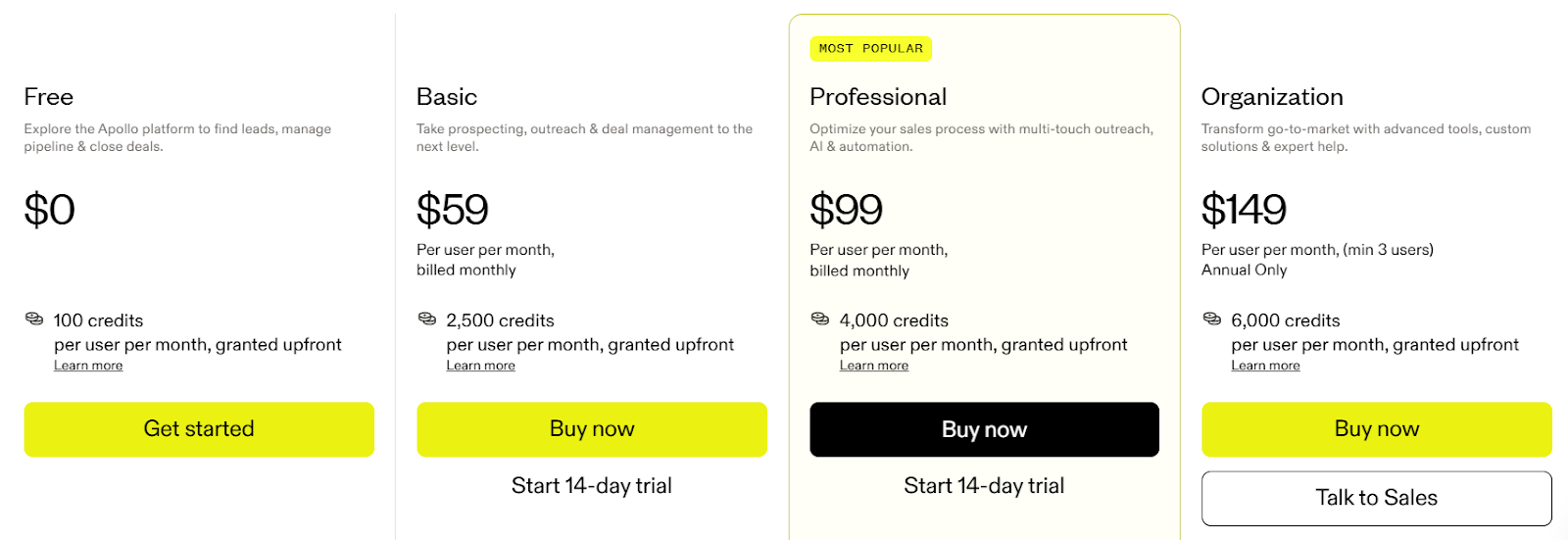
It also has a free plan, so teams can try it before buying.
Paid plans include most core features, lead data, email sending, sequences, mailbox tools, and more, without needing add-ons.
This makes it easy for smaller teams to control cost while scaling.
ZoomInfo follows a credit-based pricing model.
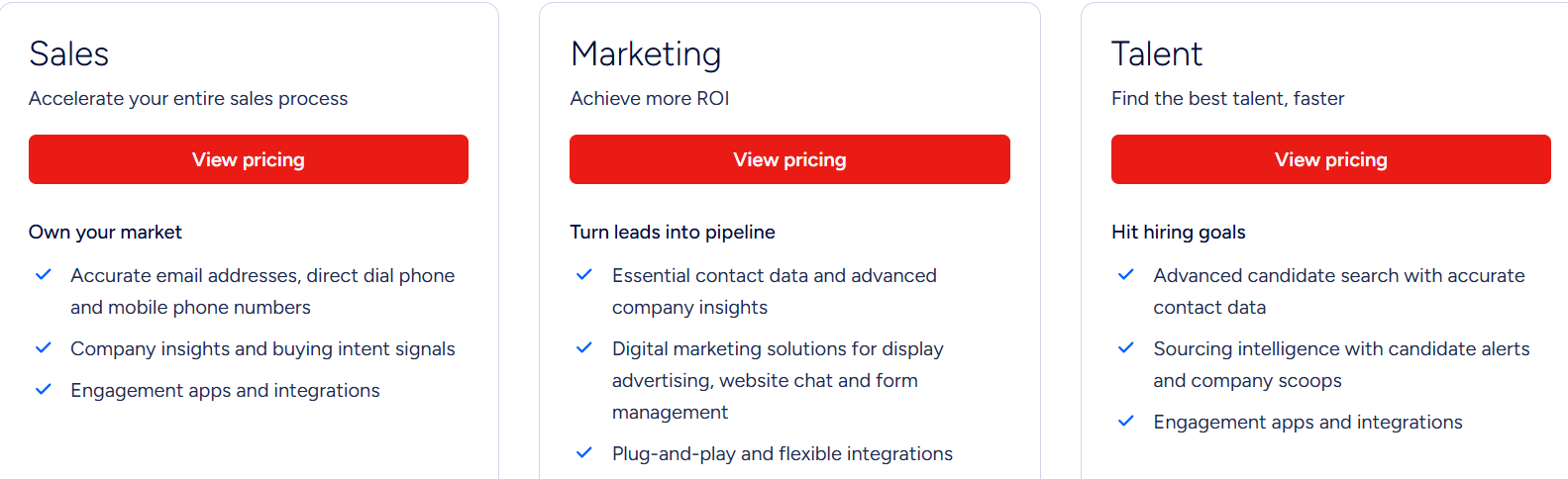
You need to speak with sales to get a quote, and pricing depends on the number of users, features you unlock, and how many data credits you need.
Add-ons like intent data, APIs, enrichment, and integrations come at an extra cost.
This setup is better suited for large teams with higher budgets.
ZoomInfo gives access to deeper data and features, but costs more and requires a long-term commitment.
Apollo is more flexible, especially for teams that want to get started quickly with less upfront cost.
Both Apollo.io and ZoomInfo offer very large B2B databases, but they differ in scale and depth.
Apollo.io provides 210M+ contacts and 30M+ companies.
Its data is built for sales teams that want to find leads fast, personalize outreach, and start emailing right away.
The focus is on usable, verified contact data that fits directly into outbound workflows.
ZoomInfo has a larger overall database, with 260M+ professional profiles and 100M+ company profiles.
It goes deeper with company intelligence, buyer intent signals, org charts, technographics, and advanced account insights.
ZoomInfo is designed more for research-heavy and enterprise GTM teams.
ZoomInfo has the larger and deeper database overall, while Apollo offers a very large database optimized for outbound execution.
Apollo.io and ZoomInfo both help sales teams grow their pipeline, but they are built for different jobs.
Apollo.io is made for daily outbound work. You can find leads, send emails, run sequences, and follow up, all inside one tool.
Sales reps use Apollo to move fast and do outreach without switching tools.
ZoomInfo is made for planning and targeting. It gives deep company data, buyer intent signals, and account insights.
Marketing teams use it to build audiences and run campaigns. Sales teams use it to research accounts and pick the right buyers before outreach.
Apollo.io helps teams send emails and book meetings faster. ZoomInfo helps teams choose the right accounts and buyers using data.
Apollo.io and ZoomInfo feel very different when you start using them. This is mainly because they are built for different types of users.
Apollo.io is easier for most sales reps. You can search leads, add them to lists, start email sequences, and track replies from one dashboard.
Since outreach and data live in the same place, there are fewer steps and less setup.
ZoomInfo takes more time to learn. It offers many products like contact data, intent signals, enrichment, RevOps tools, marketing features, and Copilot.
Teams often connect ZoomInfo with CRMs and other tools, which adds more setup and complexity.
Apollo.io combines lead data with outreach, but it still relies on filters, sequences, and manual list building.
ZoomInfo offers very deep data and intent signals, but it comes with a large platform, multiple modules, and higher setup effort.
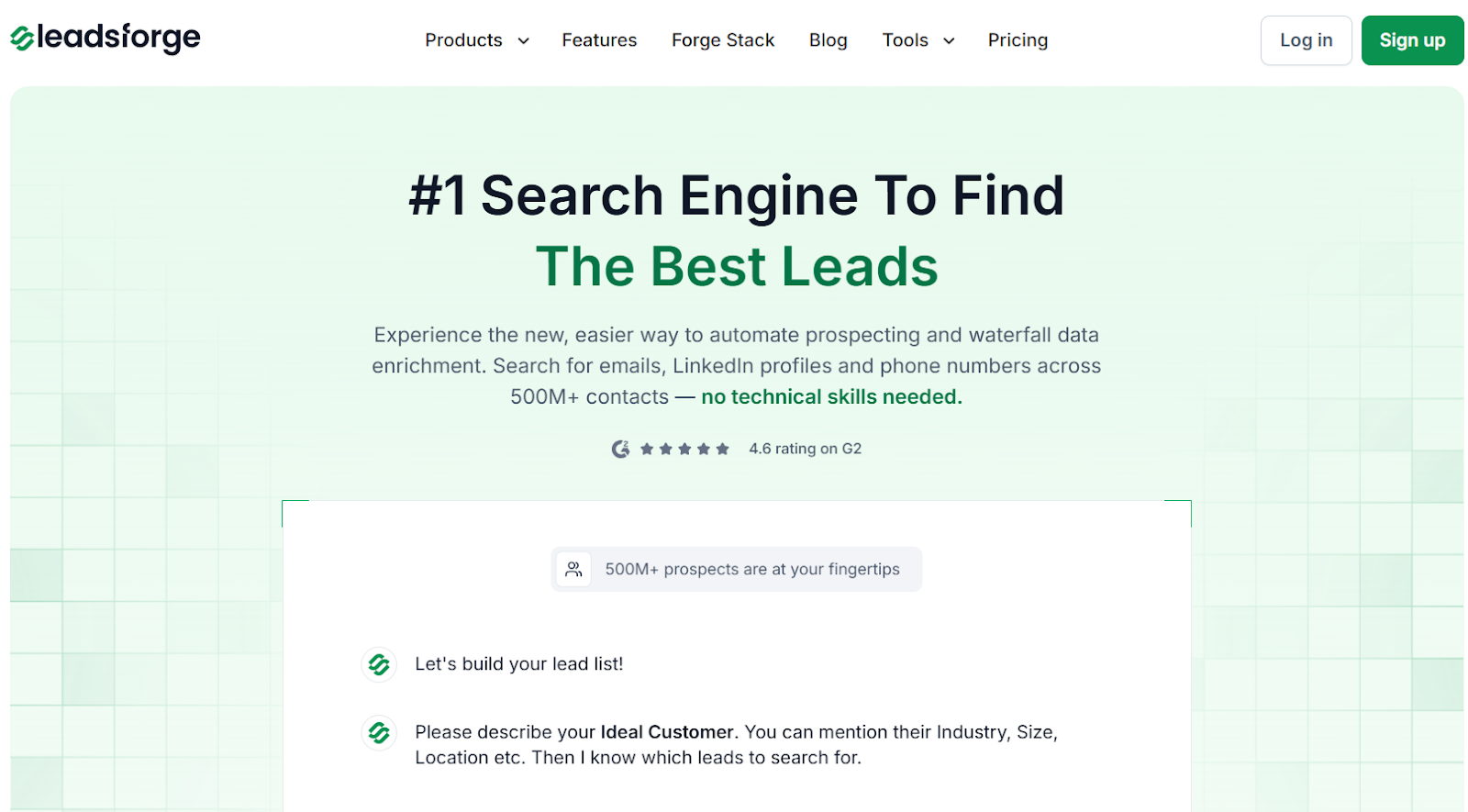
Leadsforge is a lead generation and enrichment platform built for teams that want to find high-quality leads without complex filters or setup.
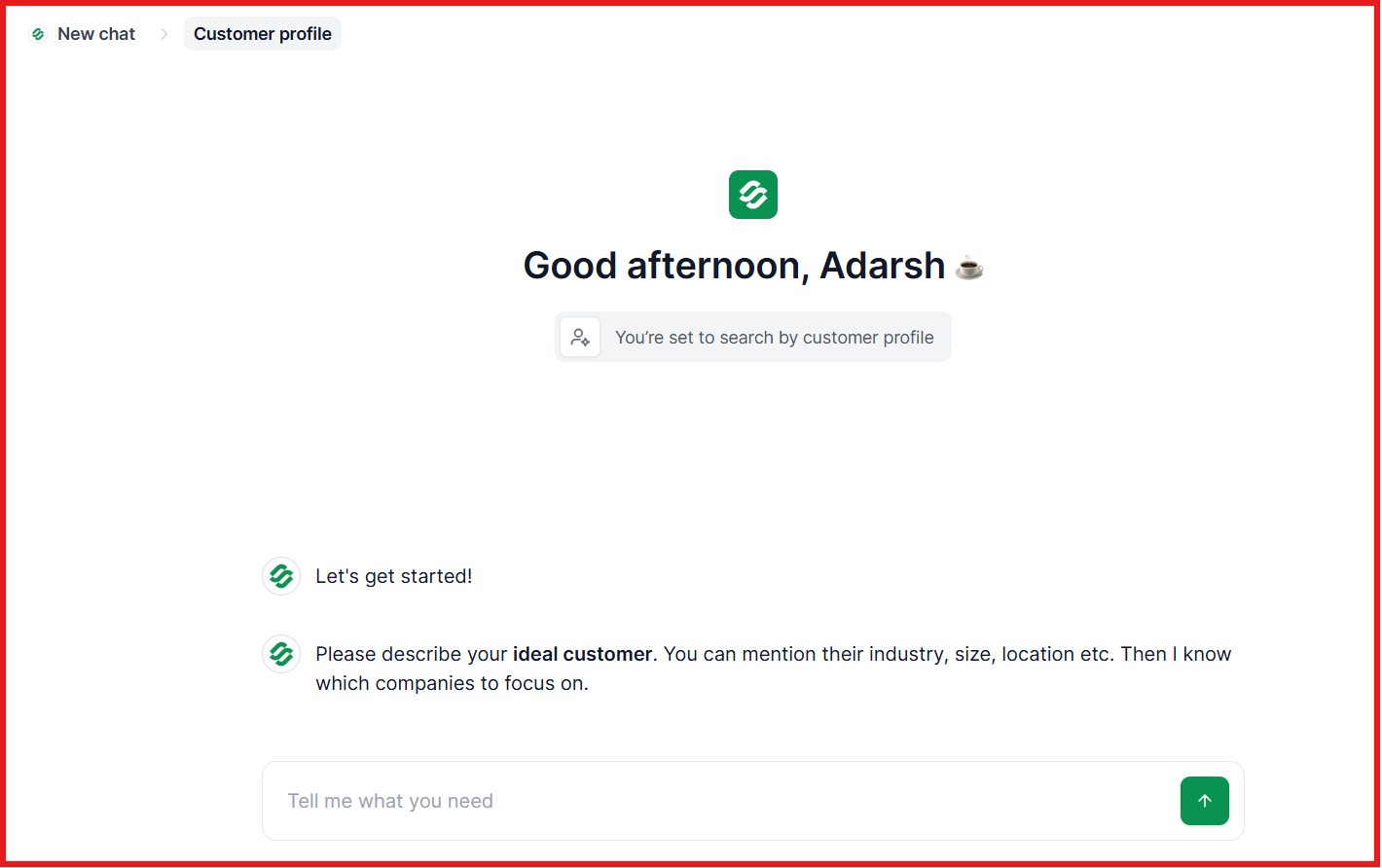
Instead of navigating dashboards, you simply describe your ideal customer in plain words, and Leadsforge finds the right contacts for you.
It also uses waterfall data enrichment, meaning it checks multiple data sources automatically until verified emails, LinkedIn profiles, or phone numbers are found.
Unlike Apollo and ZoomInfo, Leadsforge keeps things focused on just a few jobs:
Pricing starts at $49/month, and you get 100 free credits to test the platform.
Unused credits do not expire, which makes usage flexible.
Leadsforge is a strong option if you want less setup than Apollo and less complexity than ZoomInfo, while still getting large data coverage, verified contacts, and intent signals in one simple workflow.
Apollo.io helps sales teams run outbound from one place. You can find leads, send emails, and follow up without switching tools.
It is built for speed and day-to-day sales work.
ZoomInfo gives deep company and buyer data. It helps teams plan, target accounts, and use intent signals.
But it comes with more tools, more setup, and more complexity.
Both tools work, but each comes with its own effort and setup.
The real choice depends on how much complexity you want to manage.
But if you want a tool that removes heavy setup, avoids complex filters, finds and enriches leads automatically, and lets you build clean lead lists just by describing your ideal customer, Leadsforge is the better alternative.
Try Leadsforge now with 100 free credits!