Generating leads in the tech industry is a complex process. Unlike consumer sales, tech companies target decision-makers like CTOs or IT Directors who require personalized outreach and thorough research. Long B2B sales cycles further complicate things, making manual prospecting inefficient. AI-powered tools solve this by automating lead generation, enriching data, and personalizing outreach, helping teams focus on high-conversion prospects. Here are 10 tools that streamline this process:
These tools vary in price, features, and team suitability. Small teams might prefer affordable options like Saleshandy or Instantly, while larger enterprises may benefit from robust platforms like ZoomInfo or Outreach.
| Tool | Starting Price | Key Feature | Best For |
|---|---|---|---|
| Leadsforge | $49/month | AI-powered lead generation | Small to mid-sized teams |
| Apollo | Free tier available | Verified contact data + CRM sync | All team sizes |
| Clay | Custom pricing | Workflow automation + data enrichment | Mid-sized to enterprise teams |
| Seamless.AI | Custom pricing | Real-time contact discovery | Small to mid-sized teams |
| ZoomInfo | By inquiry | B2B database + intent signals | Enterprise teams |
| Instantly | $25/month | Scaled email automation | Small teams |
| Saleshandy | $25/month | AI reply categorization | Small to mid-sized teams |
| Outreach | By inquiry | Multi-channel orchestration | Enterprise teams |
| Lindy | Custom pricing | Automates sales workflows | Small to mid-sized teams |
| Uplift | By inquiry | Data enrichment | Varies |
Each tool addresses different needs, from email outreach to CRM integration and data enrichment. Choose based on your team's size, budget, and lead generation strategy.
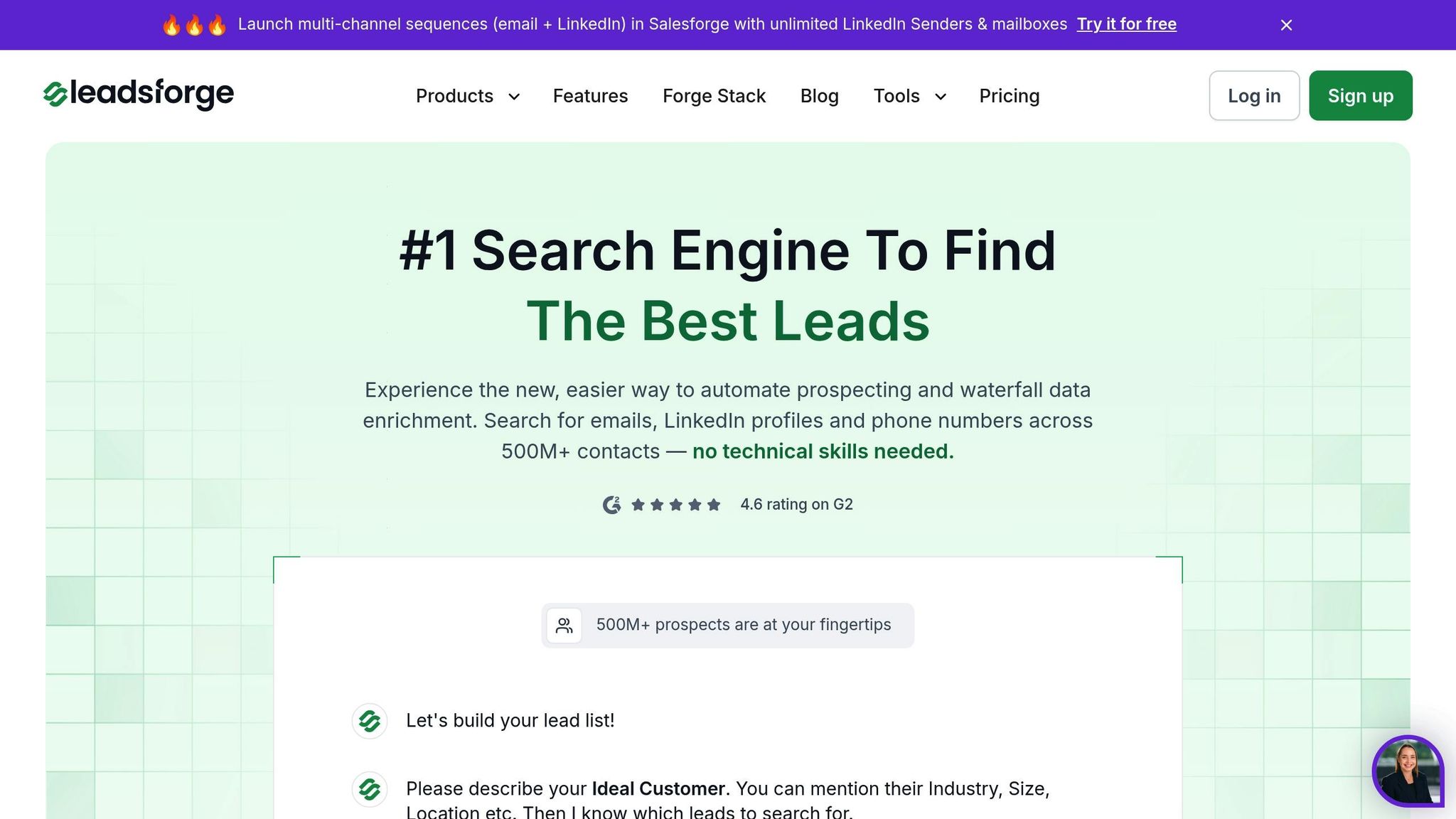
Leadsforge takes a fresh approach to lead generation, moving beyond outdated databases and clunky dashboards. Instead, it works like a smart search engine, connecting multiple B2B data providers and enrichment tools. All you need to do is describe your ideal customer profile in plain language using a chat-like interface, and the platform generates verified lead lists automatically.
With access to over 500 million contacts worldwide and a 4.6 rating on G2, Leadsforge is especially valuable for technology companies aiming to connect with technical decision-makers. Its global coverage and verification process help ensure your outreach targets valid, active contacts.
One of Leadsforge’s standout features is its multi-layer data enrichment process. Instead of relying on a single data source, the platform keeps searching across additional sources until it finds verified information - whether it’s email addresses, LinkedIn profiles, or phone numbers. This process leads to higher match rates and cleaner, more accurate lead lists.
Leadsforge doesn’t stop at basic contact details. It also provides intent signals, helping you identify prospects already researching solutions in your industry. Additional features like company followers search and lookalike search further refine your prospecting. For example:
This enriched data equips you with a solid foundation for scalable and effective prospecting.
Leadsforge’s intuitive interface removes the complexity often associated with lead generation tools. Simply describe your target audience, and the AI does the rest. This simplicity makes it easy to scale your efforts as your team grows.
"Leadsforge and Salesforge are built to work hand-in-hand. Once you generate or enrich a list in Leadsforge, you can push it straight into Salesforge with no copy-paste or import hassle. From there, you can launch email + LinkedIn multi-channel sequences that adapt to prospect behavior, giving you faster time-to-pipeline."
The platform also automates lead qualification, prioritizing prospects based on behavior and firmographic data. This ensures your team can focus on leads with the highest potential to convert.
Leadsforge seamlessly integrates with The Forge Stack ecosystem, which includes tools like Salesforge for multi-channel outreach, Mailforge for shared email infrastructure, and Warmforge for email warm-up. While each tool requires a separate subscription, their native integration eliminates data silos, creating a smooth workflow.
For tech companies, this means leads generated in Leadsforge can flow directly into Salesforge for email and LinkedIn campaigns - no manual exports or imports needed. If you prefer, you can export data as CSV files for use with other CRMs or outreach tools. This flexibility, combined with its seamless integration, makes Leadsforge a great fit for teams of all sizes.
Leadsforge uses a credit-based pricing model, so you only pay for what you use. New users get 100 free credits upon signup, with additional free credits available through referrals. The Essential Plan starts at $49 per month (billed monthly) or $588 per year (billed annually) and includes 2,000 credits per month or 28,000 credits per year (with annual billing). Plus, unused credits never expire.
This pricing structure is perfect for startups and small teams looking for affordable, automated prospecting. Larger organizations can easily scale by purchasing additional credits as their needs grow.
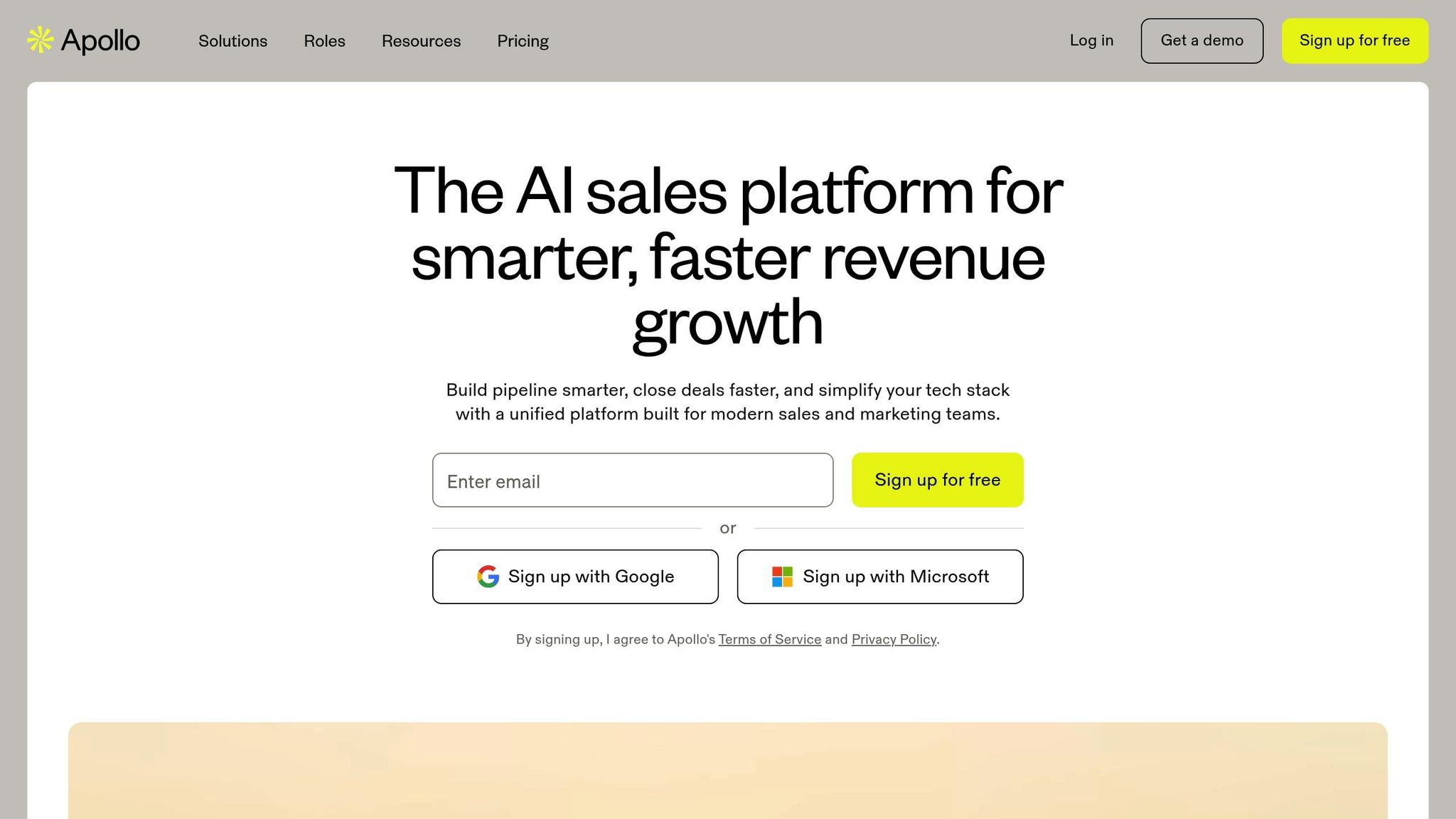
Apollo is a comprehensive sales intelligence and outreach platform tailored for B2B prospecting. It combines a verified contact database, advanced search capabilities, built-in outreach tools, and seamless CRM integrations - all in one place. This unified approach helps tech companies simplify their sales processes, cutting down on the hassle of managing multiple disconnected tools.
With Apollo, sales teams can handle the entire prospecting process, from finding leads to launching outreach campaigns and syncing data with existing systems. For tech-focused sales teams, this means less time spent jumping between tools and more time engaging with potential customers. Apollo’s integration of modern AI technologies enhances its efficiency, making it a standout tool alongside others in this space.
Apollo maintains a constantly updated B2B contact database, ensuring accurate and reliable information. It provides verified emails, phone numbers, and identifies active prospects using intent signals. These intent signals highlight individuals actively searching for solutions, enabling teams to focus their efforts on prospects who are more likely to convert.
The platform also offers advanced search filters, allowing users to refine their lead searches by factors like company size, industry, job title, or even specific technologies used. This level of precision helps sales teams create highly targeted prospect lists that align closely with their ideal customer profiles.
Designed for large-scale prospecting, Apollo automates outreach across email, phone, and LinkedIn, eliminating the need to toggle between different tools. This streamlined automation ensures consistent communication with hundreds - or even thousands - of prospects.
By supporting multiple communication channels, Apollo adapts to the preferences of various decision-makers in the tech sector. Whether a prospect prefers email or LinkedIn, Apollo makes it easy to reach them where they’re most likely to engage.
Apollo integrates effortlessly with popular CRM systems like Salesforce and HubSpot. It automatically syncs lead data into your CRM, removing the need for tedious manual data entry. This ensures that all team members have access to the same up-to-date information, enhancing collaboration and accuracy. Rather than disrupting your existing tech stack, Apollo complements it, fitting seamlessly into your workflows.
Apollo is designed to accommodate sales teams of all sizes. It’s especially valuable for tech companies that have outgrown simpler lead generation tools and need more advanced features to manage complex B2B sales processes. By consolidating various functions into a single platform, Apollo can help reduce costs while boosting team productivity.
For organizations that demand accurate B2B data at scale, Apollo’s mix of verified contact information and actionable intent signals makes it a standout choice for tech sector lead generation. Whether you're a small team or part of a large enterprise, Apollo offers the tools to streamline your prospecting efforts and maximize results.
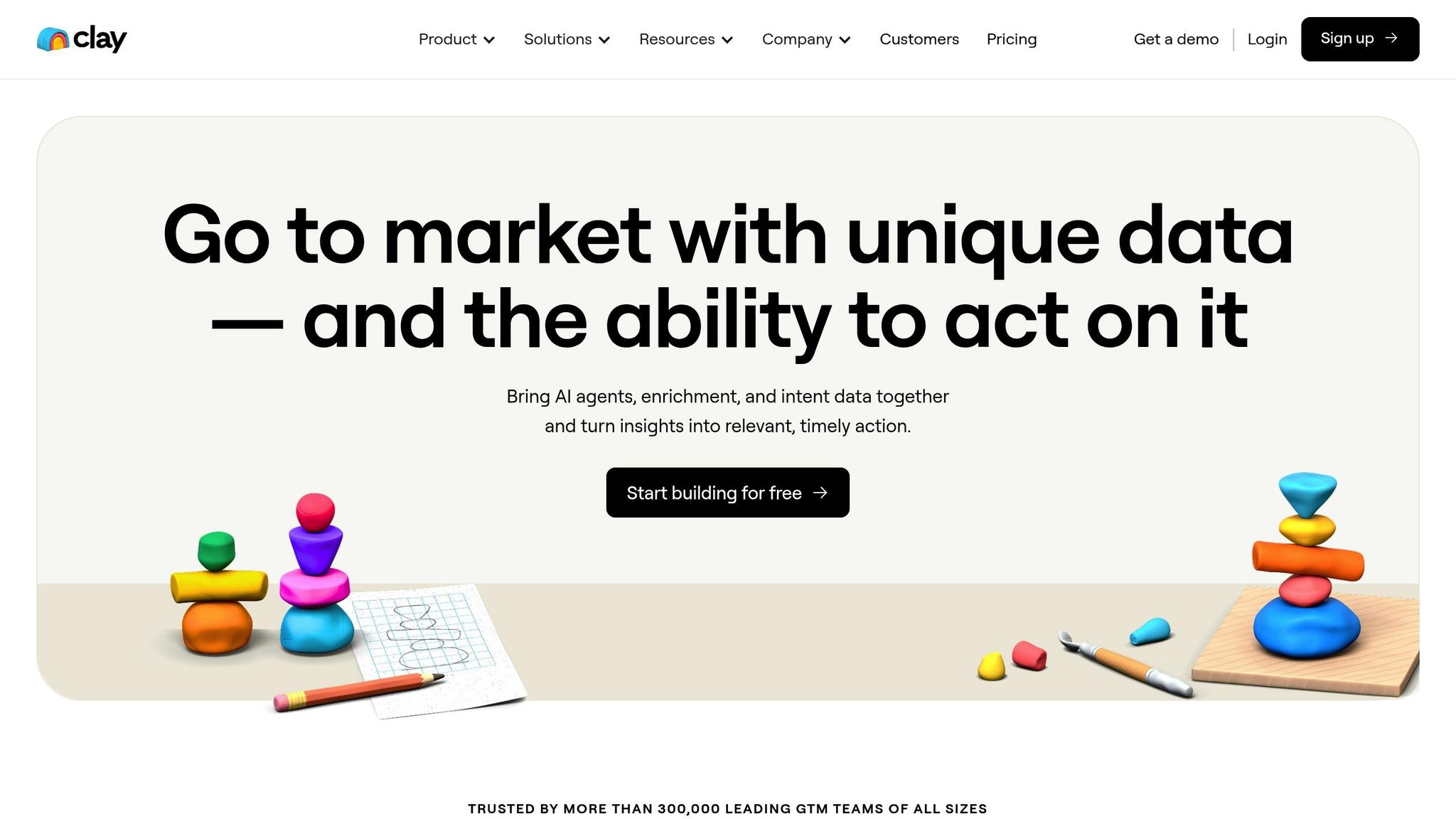
Clay is a powerful platform designed for data enrichment and automation, tailored to help sales and marketing teams build detailed prospect profiles. By pulling information from multiple sources, it provides a more complete picture of potential leads. For technology companies, Clay is particularly valuable because it can identify the tools and technologies a prospect company uses - insights that are crucial for tech-focused sales strategies.
Unlike traditional B2B data providers that rely on a single database, Clay combines data from various sources. This approach ensures more accurate and up-to-date information, which is especially important in the tech sector, where company details and employee roles can change rapidly. This solid data foundation enables advanced enrichment and automation capabilities.
Clay excels at creating comprehensive prospect profiles by merging verified contact details, company information, technographic insights, and behavioral data. For tech companies targeting other tech firms, its ability to uncover technology stacks is a game-changer. You can find out whether a prospect company uses specific cloud platforms, development tools, or enterprise software - details that are often hard to obtain from traditional providers.
If you're working with incomplete lead lists, Clay can fill in the gaps. For example, if you only have company names, Clay can enrich your data by adding email addresses, phone numbers, job titles, company size, and even behavioral indicators that signal buying intent. Thanks to its multi-source approach, Clay reduces the risk of relying on outdated information.
While platforms like ZoomInfo may offer more rigorous data verification processes, Clay strikes a balance between data quality, enrichment features, and automation - all at a price point that's more accessible for growing teams.
Once you've enriched your lead data, Clay simplifies the prospecting process with automation. Its workflow automation tools allow teams to scale their efforts by automatically identifying, enriching, and qualifying leads based on predefined criteria, such as company size or technology stack. From there, leads can be routed to sales reps or added directly to campaigns. These workflows run continuously, ensuring new prospects are processed as they enter the system.
Clay’s visual workflow builder is user-friendly, designed for sales and marketing professionals without technical expertise. You can create workflows through an intuitive interface, and the platform offers templates and pre-built workflows that can be customized to meet specific needs. This makes it easier for teams to get started and manage their own prospecting workflows without relying on technical support.
Clay integrates seamlessly with major CRM platforms and sales engagement tools, including Salesforce, HubSpot, and various email and outreach solutions. These integrations enable Clay to act as a data enrichment and automation layer that feeds directly into your existing workflows.
When connected to your CRM, Clay automatically syncs enriched lead data to prospect records, eliminating the need for manual data entry. Integration with outreach tools means qualified leads can be added directly to email sequences or multi-channel campaigns. For tech companies with complex sales stacks involving multiple tools, Clay’s integration capabilities ensure smooth data flow between systems, creating a cohesive and efficient workflow.
Clay’s pricing model is designed to be accessible for growing technology companies and sales teams of all sizes. It typically offers tiered pricing based on factors like the number of enrichment credits, automation workflows, or active users per month. This makes it a scalable solution as teams expand.
For smaller sales teams or early-stage tech companies with 5-20 members, Clay offers an affordable entry point into advanced data enrichment and automation, without the hefty price tags of enterprise-level solutions. Mid-market companies, on the other hand, can take advantage of Clay’s ability to handle larger teams and higher volumes of prospects.
One of Clay’s standout features is its flexible, usage-based pricing. Instead of requiring expensive annual contracts, teams can pay for what they use, making it an appealing option for companies looking to grow without committing to high upfront costs. Compared to enterprise platforms like ZoomInfo, Clay offers a more adaptable and budget-friendly approach, making it especially attractive for tech companies focused on technographic insights. For teams looking to enrich lead lists, automate prospecting, and seamlessly integrate with existing tools, Clay provides a robust yet flexible solution with minimal implementation hurdles.
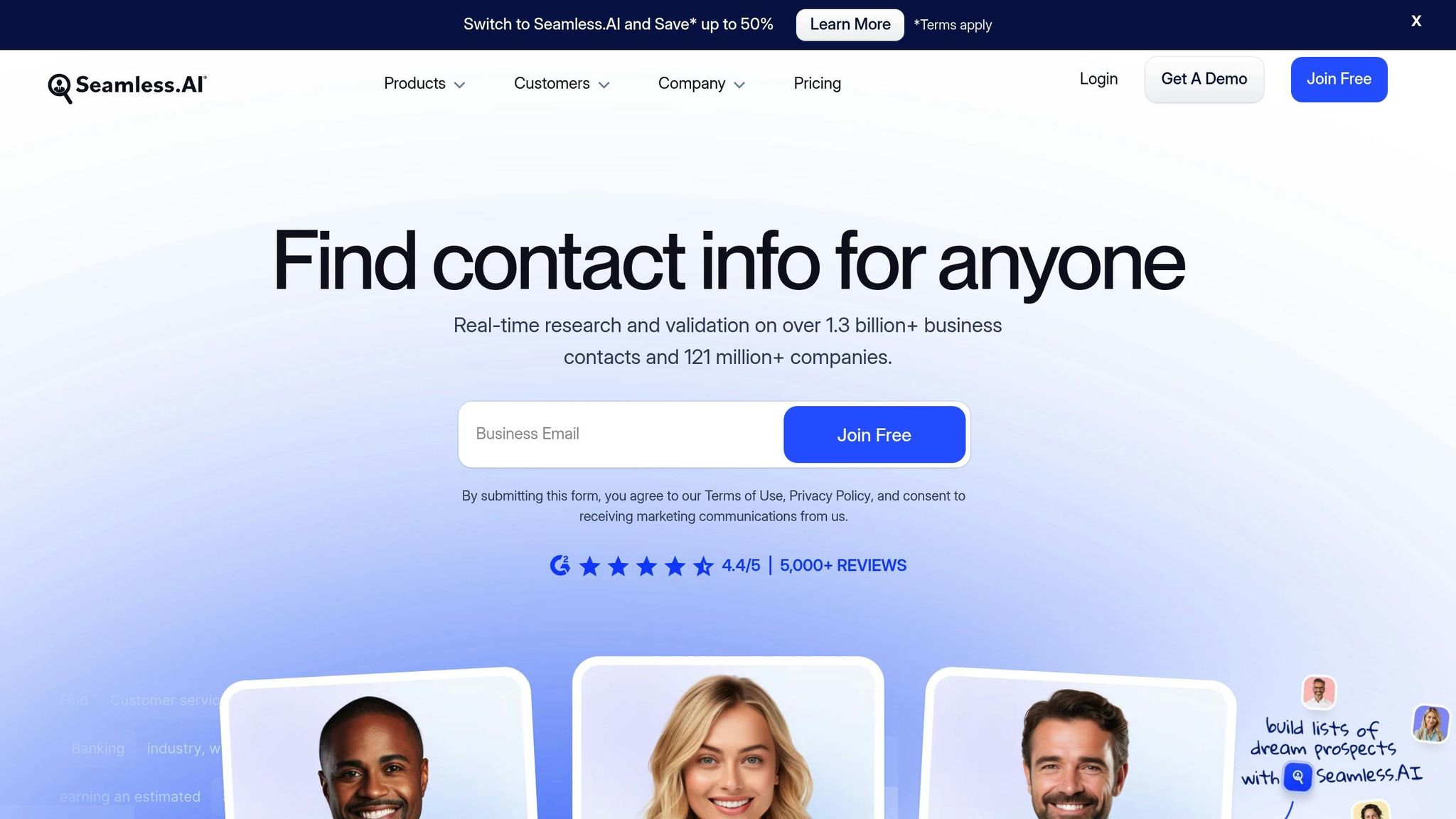
Seamless.AI earns recognition for its ability to seamlessly integrate with various tools, making it easier for sales teams to transfer detailed contact and company profiles into their favorite CRMs and outreach platforms. With just one click, users can connect with popular systems like Salesforce, HubSpot, Salesloft, Outreach, Pipedrive, and Dynamics. Plus, through Zapier, the platform links to over 6,000 additional apps. This level of integration has garnered consistent praise from its users.
An Account Executive highlighted their positive experience with the HubSpot integration:
"The connection with Hubspot is top-notch. Getting it up and running was exceptionally smooth, and the onboarding call I had with the customer support team made my first few weeks go really well." - Devin M., Account Executive
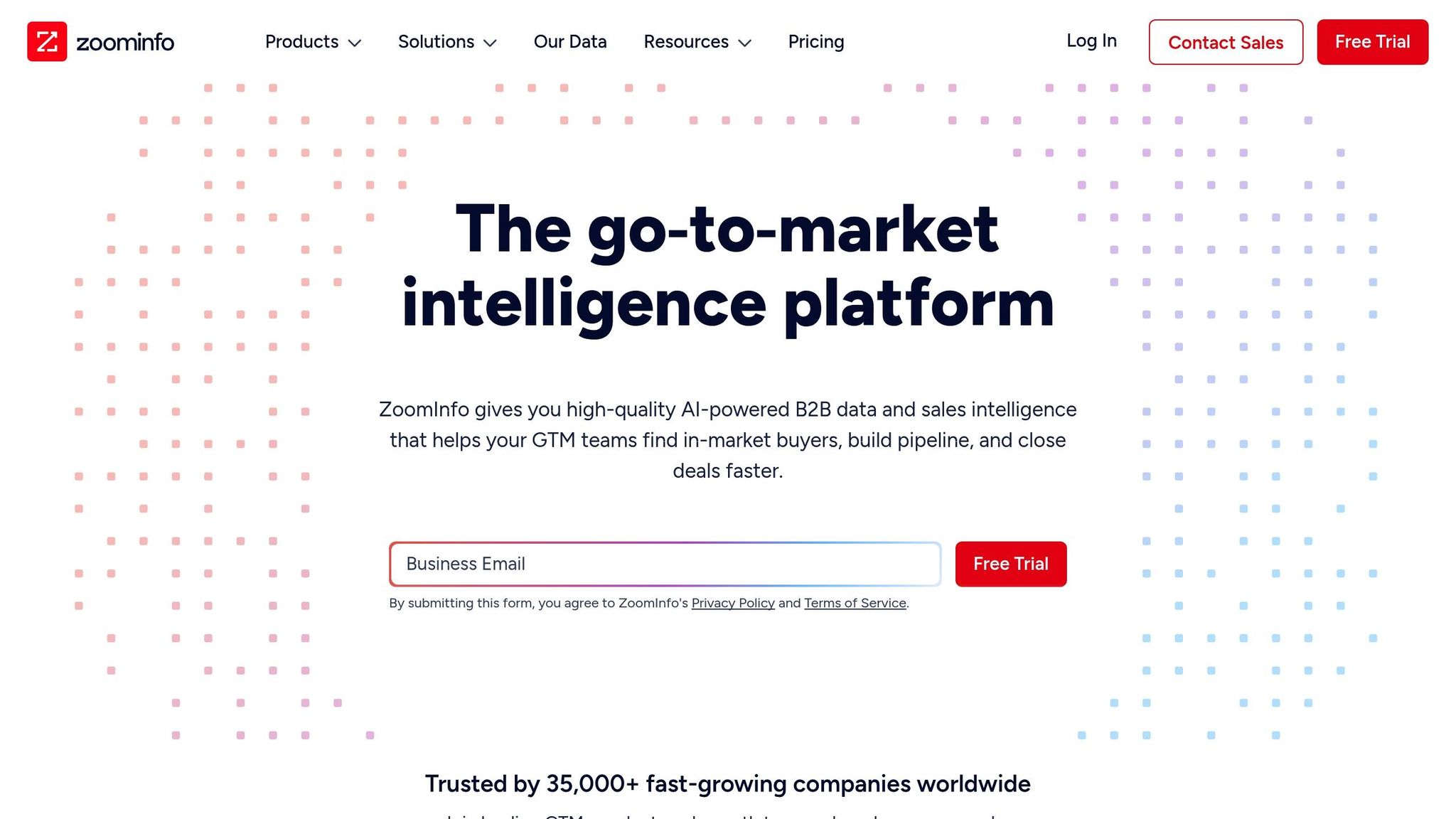
ZoomInfo is a robust B2B database designed to provide detailed data enrichment for technology companies. It offers in-depth company and technographic insights, helping tech sales teams understand not just who their prospects are, but also which technologies they currently use. This level of detail allows for more personalized and targeted outreach, which is especially useful when selling to other tech-focused businesses.
By combining first-party data with AI, ZoomInfo delivers verified contact information, comprehensive company profiles, and intent signals that highlight high-value prospects. Its technographic tracking stands out by allowing vendors to analyze a prospect's technology stack. For instance, it can identify companies still relying on outdated security systems or on-premises solutions, revealing opportunities for tailored pitches. These enriched insights enable sales teams to automate prospecting on a larger scale.
ZoomInfo simplifies lead sourcing and account-based marketing by automating much of the process. It builds prospect lists using criteria like job title, location, industry, and technology usage, enabling sales teams to expand their efforts without a significant increase in workload. The platform also validates contact details like emails and phone numbers, reducing bounce rates and improving outreach efficiency. This ensures smoother multi-channel campaigns with less manual intervention.
ZoomInfo integrates seamlessly with major CRM platforms and sales tools, ensuring a smooth flow of data. For businesses using Salesforce, HubSpot, or similar CRMs, the platform syncs enriched lead data directly into sales pipelines. This integration speeds up lead qualification and routing while supporting multi-channel campaigns through its built-in outreach automation tools.
As an enterprise-level solution, ZoomInfo is best suited for mid-sized to large technology companies. It’s particularly effective for organizations with 50+ sales team members, complex B2B sales cycles, or a focus on account-based marketing. However, businesses should consider factors like the platform's learning curve, training requirements, integration with existing systems, and overall cost before committing. For large tech enterprises, ZoomInfo’s detailed data enrichment and scalable automation make it a strategic investment.
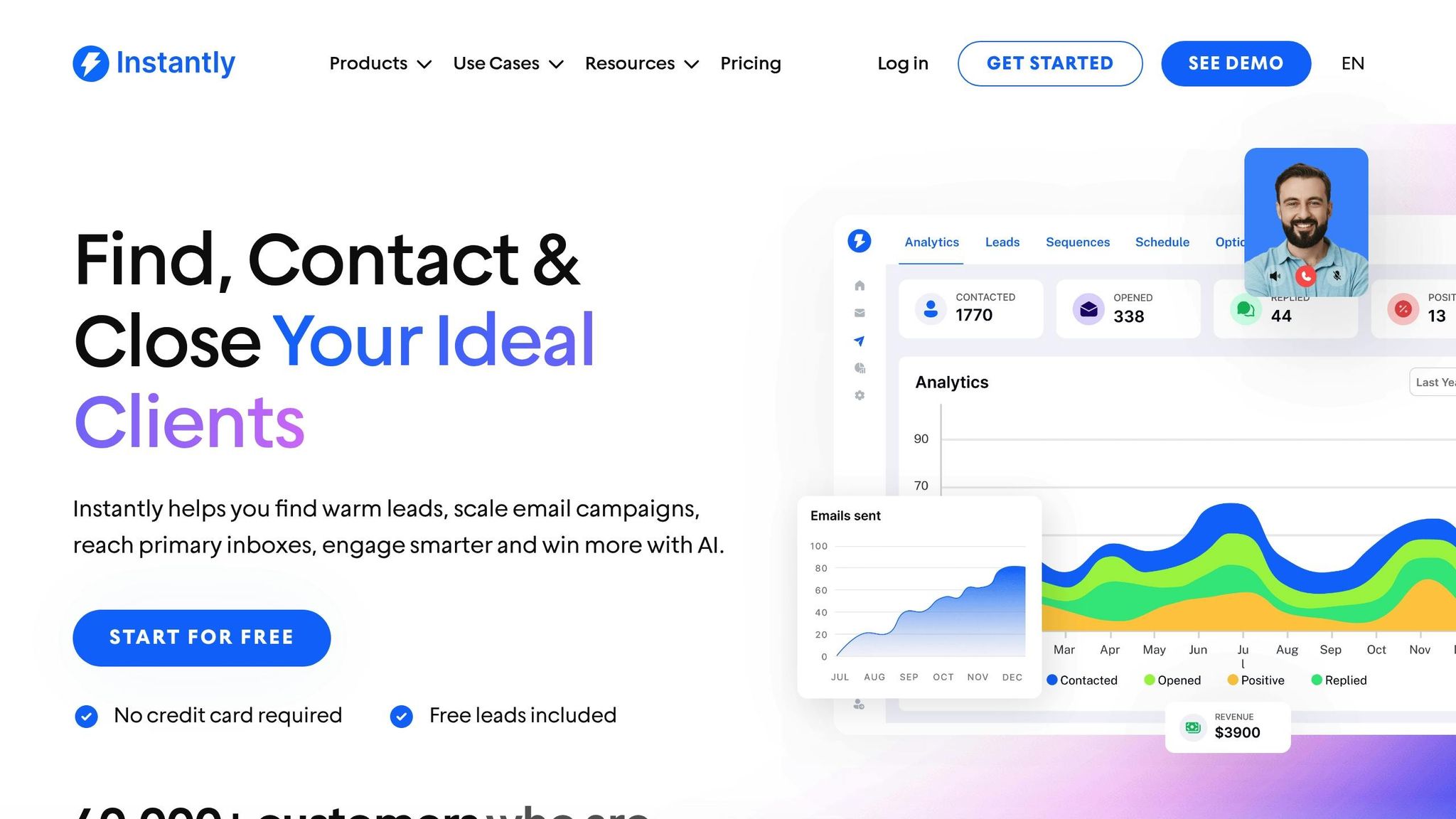
Instantly is designed to automate cold email campaigns at scale, making it easier for tech companies to handle prospecting without breaking the bank. By streamlining the process of high-volume email outreach, it frees up sales teams to focus on what matters most: connecting with qualified leads and closing deals.
One of Instantly's standout features is its ability to manage large-scale email campaigns with minimal manual effort. Once you set up your campaigns, they run automatically in the background, making it a great fit for teams of all sizes. The platform also includes built-in tools like email verification and domain validation, which help reduce bounce rates, protect your sender reputation, and ensure your emails land in the inboxes of busy decision-makers.
This level of automation makes it easy to integrate Instantly into your existing workflow without adding complexity.
Instantly works well with popular CRMs like Salesforce, HubSpot, and Pipedrive, ensuring a smooth flow of data across your tools. While its primary focus is email outreach, Instantly also supports multi-channel strategies, making it possible to combine email campaigns with LinkedIn outreach, phone calls, and social media interactions. This versatility allows tech companies to create more comprehensive prospecting strategies.
When it comes to cost, Instantly is a budget-friendly option compared to many enterprise-level solutions. Pricing typically starts at around $25 per month for smaller teams, with scalable options available for larger organizations. Whether you're a startup or a growing tech company, Instantly’s pricing structure can be tailored to suit your team's size, outreach needs, and budget. It’s particularly appealing for smaller teams looking to maximize their outreach without overspending.
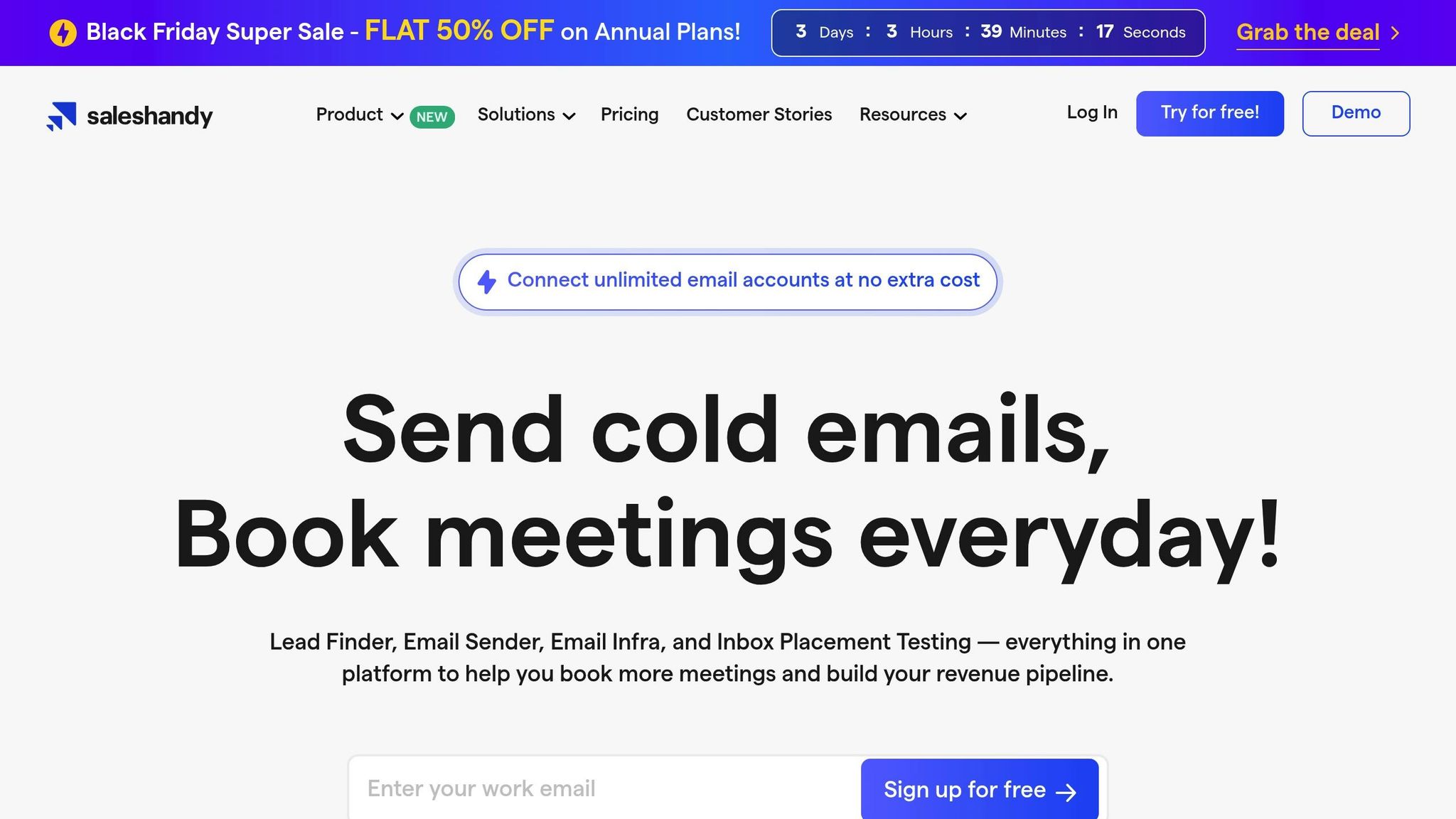
Saleshandy is a cold email outreach platform powered by AI, designed to streamline email sequences and boost engagement without breaking the bank. One of its standout features is its AI-driven reply categorization, which automatically organizes responses into categories like "meeting booked", "interested", "not interested", and "out of office." This ensures your sales team can focus on leads that matter most.
Saleshandy simplifies outreach by automating every step of your email workflow, from the initial message to follow-ups. It’s built to handle large-scale campaigns, enabling businesses to reach hundreds or even thousands of prospects at once - without needing to expand their sales teams. The platform processes incoming responses in real time, helping you quickly identify engaged prospects or those who have already scheduled meetings. This ensures valuable leads don't get lost in the shuffle of a busy sales cycle.
Rather than trying to replace your entire sales stack, Saleshandy works seamlessly with the tools you already use. It integrates with CRM systems, lead databases, and other outreach tools, focusing on email automation and response management. By channeling lead data directly into your CRM, it ensures efficient follow-ups and complements your existing lead discovery and management solutions.
Saleshandy offers professional-grade automation at a price point that’s accessible for businesses of all sizes. Starting at just $25 per month, it’s a great fit for startups, entrepreneurs, and smaller tech companies looking for powerful tools without hefty costs. As your team grows, you can easily upgrade to plans with more features and capacity, all while keeping costs manageable.
Outreach is a powerful platform tailored for tech companies, leveraging AI to identify and prioritize leads with the highest potential for conversion. Instead of treating all prospects equally, it uses data-driven insights to predict which leads are most likely to convert. This approach is especially useful in the tech industry, where long sales cycles and precise targeting can significantly influence success. Alongside this predictive capability, Outreach integrates real-time data and automation to streamline sales processes.
Outreach keeps your sales team ahead of the game with real-time alerts and insights about prospect behavior. If a lead shows buying intent or interacts with your content, the platform immediately notifies your team through email, Slack, or browser notifications. Beyond alerts, its AI-driven sales guidance suggests the next best steps, helping teams manage complex buying processes involving multiple stakeholders. By analyzing behavioral signals, engagement trends, and firmographic data, Outreach creates detailed prospect profiles, reducing wasted effort and improving targeting precision.
Outreach simplifies outbound prospecting with multi-channel, multi-step sequences that integrate email, LinkedIn, and other touchpoints while tracking engagement in real time. This ensures consistent messaging across channels while allowing teams to monitor progress at every stage. With workflow management and personalized engagement sequences, Outreach enables tech companies to scale their outreach efforts without needing to significantly grow their sales teams. This makes it an excellent choice for rapidly expanding organizations, offering a streamlined approach that integrates smoothly with existing tools.
Outreach ensures seamless data flow across platforms, integrating natively with tools like Salesforce Sales Cloud, Marketing Cloud, Data 360, and Agentforce. This eliminates the need for manual data entry and keeps prospect information synchronized across systems. For companies using specialized tools like LinkedIn Sales Navigator, email platforms, or analytics software, Outreach creates a unified workflow by syncing lead data, engagement history, and sales activities. This is particularly helpful for teams using account-based marketing strategies, as it supports coordinated campaigns targeting multiple decision-makers while maintaining consistent messaging.
Outreach is designed for mid-sized to large tech companies with established sales operations. It’s particularly beneficial for organizations with dedicated sales development teams, account executives, and SDRs, offering advanced automation that improves conversion rates and shortens sales cycles. While its pricing may be a challenge for smaller startups, larger companies will find the investment worthwhile, thanks to its ability to streamline operations and drive results. Combined with its robust integration capabilities, Outreach stands out as a key tool for scaling sales efforts efficiently.
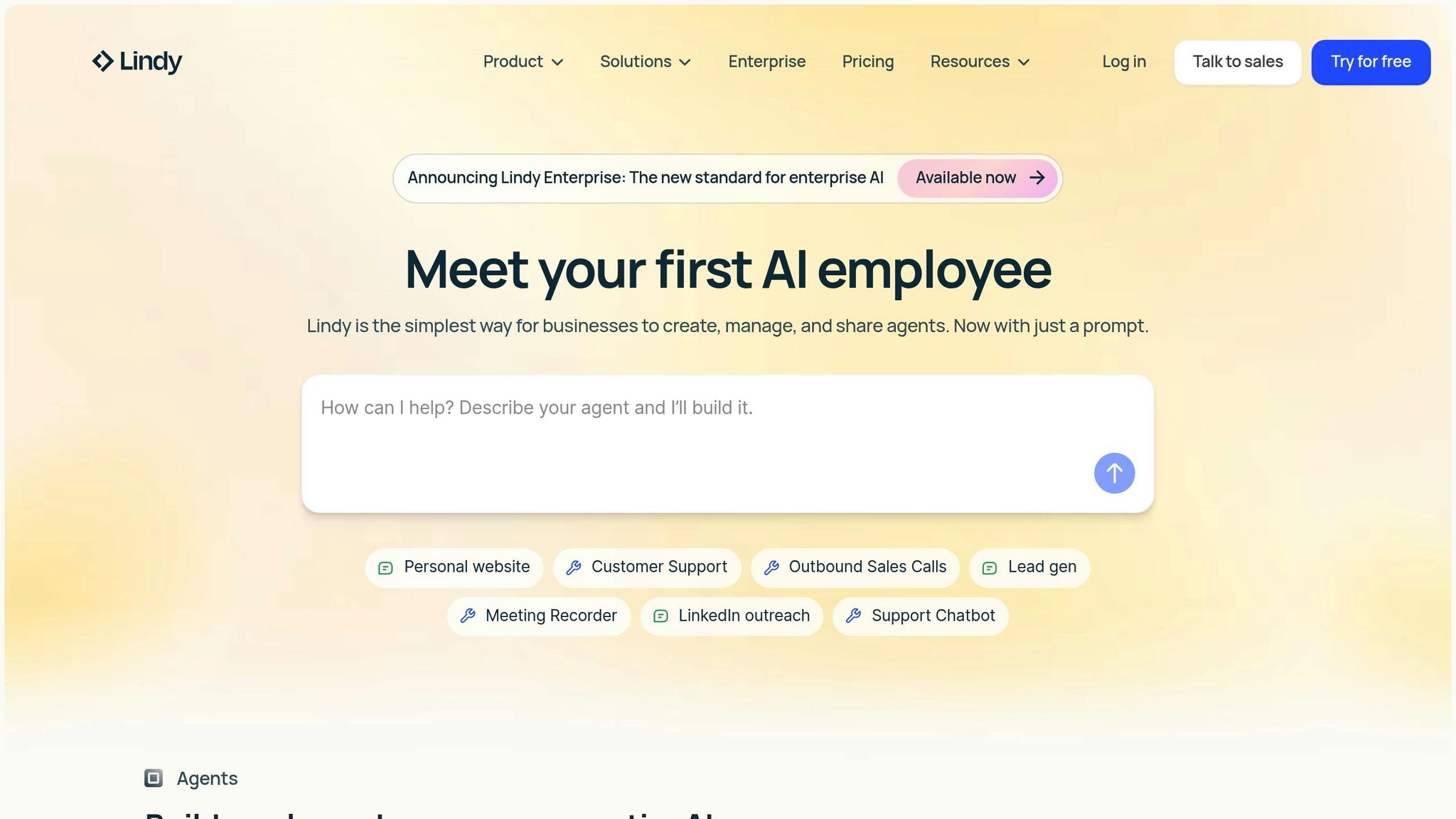
Lindy is an AI-powered automation platform designed to take the hassle out of routine tasks in prospecting. Instead of focusing on just one aspect, like data enrichment or outreach, Lindy tackles multiple processes at once. This makes it a great option for tech companies aiming to simplify and improve their sales workflows. Its ability to handle complex tasks sets the stage for more advanced automation.
Lindy shines when it comes to automating multi-step workflows that would otherwise demand significant manual effort. For instance, tech companies can set up triggers to route leads or send follow-ups based on how prospects interact. This means teams can handle a much larger number of prospects without needing to hire more staff - a big win for fast-growing startups and mid-sized businesses.
By taking over these repetitive tasks, Lindy frees up sales reps to focus on what really matters: closing deals and building relationships with qualified leads. This efficiency not only makes processes smoother but also demonstrates its usefulness for teams of all sizes.
Although detailed pricing information isn’t readily available, Lindy is designed to be accessible for tech companies at different stages of growth. Its focus on automating workflows makes it particularly appealing to smaller and mid-sized teams looking to scale their prospecting efforts without relying heavily on manual work.
Uplift rounds out the list of tech lead generation tools, but detailed information about its features is sparse. If you're evaluating Uplift, you'll need to reach out to the vendor for specifics on its data enrichment capabilities, automation features, integration options, and pricing.
While Uplift claims to offer data enrichment, the exact details of what it enhances - such as contact information, firmographics, or intent signals - are not publicly available. For a clearer understanding of its enrichment processes, it's best to contact the vendor directly.
Information about Uplift's automation features and its ability to scale prospecting efforts is also limited. Requesting a demo is likely the best way to explore how it handles these aspects.
Uplift is anticipated to work with widely used CRMs and outreach tools, but the specifics of its integrations remain unclear. Similarly, the platform's pricing structure isn't publicly documented. To get a better sense of its compatibility with your existing tools and its cost, you'll need to consult with the vendor.
If you're a tech company considering Uplift, a direct conversation with the vendor is essential to fully understand what the platform can offer.
Picking the right lead generation tool comes down to understanding how each option measures up in pricing, strengths, and suitability for your team’s needs. Below is a breakdown of 10 tools, making it easier to identify the right fit based on your team size, budget, and prospecting approach.
| Tool | Starting Price | Primary Strength | Best For | Recommended Team Size |
|---|---|---|---|---|
| Leadsforge | $49/month (2,000 credits) | AI-powered prospecting with chat interface & waterfall data enrichment | Tech companies needing verified leads with natural language search | Small to mid-sized teams (1–20 people) |
| Apollo | Free tier available; paid plans vary | Verified contact data & intent signals | Sales teams prioritizing data accuracy and CRM integration | Small to enterprise teams (5–100+ people) |
| Clay | Custom pricing | Multi-step workflow automation & AI enrichment | Teams needing complex automation workflows | Mid-sized to enterprise teams (10–100+ people) |
| Seamless.AI | Custom pricing | Real-time contact discovery | Sales teams needing immediate contact information | Small to mid-sized teams (5–50 people) |
| ZoomInfo | Enterprise pricing (by inquiry) | Comprehensive B2B database & intent signals | Enterprise sales organizations with large budgets | Enterprise teams (50+ people) |
| Instantly | Varies by plan | AI reply sorting & cold email automation | Teams with limited resources needing email outreach | Small teams (1–10 people) |
| Saleshandy | Starting at $25/month | Cold email outreach with AI reply categorization | B2B outbound prospecting on a budget | Small to mid-sized teams (1–20 people) |
| Outreach | Enterprise pricing (by inquiry) | Sales engagement platform with multi-channel orchestration | Enterprise sales teams managing complex pipelines | Enterprise teams (50+ people) |
| Lindy | Custom pricing | AI-powered sales assistant automation | Teams looking to automate SDR tasks | Small to mid-sized teams (5–30 people) |
| Uplift | By inquiry | Data enrichment (details limited) | Companies needing vendor consultation | Varies (contact vendor) |
Prices range from Saleshandy’s $25/month for small teams to enterprise solutions like ZoomInfo, which can start at $1,000+ monthly. The right tool for your team depends on your budget, team size, and prospecting style.
Team size matters when choosing a tool:
Each tool’s core strength aligns with specific needs:
Use cases vary depending on your prospecting strategy:
Data enrichment capabilities differ across platforms:
Finally, integration options can streamline workflows. Most tools connect with popular CRMs like Salesforce, HubSpot, and Pipedrive, but the depth of integration varies. For example:
Scalability is another key factor. Tools like Leadsforge use a credit-based model, allowing you to start small and scale up as needed. Subscription-based tools, on the other hand, require upgrading to higher tiers as your team grows, potentially increasing costs. Enterprise solutions like ZoomInfo typically offer custom contracts that adapt to your organization’s growth but often involve long-term commitments.
Ultimately, the best tool for your team depends on what you need most. A small startup might thrive with Saleshandy’s cold email automation, while a mid-market SaaS company could leverage Leadsforge’s AI-driven prospecting. Larger enterprises with complex sales cycles and bigger budgets often find ZoomInfo worth the investment for its comprehensive data and intent signals.
AI-powered tools have completely transformed how tech companies handle lead generation. Tasks like manual research and data verification, which used to consume significant time, are now automated by platforms that connect various data sources and handle repetitive processes. These tools not only provide verified contact information but also deliver actionable intent signals, helping businesses identify prospects actively searching for solutions. This shift allows teams - whether part of a startup or a large enterprise - to dedicate more time to building relationships rather than sifting through data.
Static databases are being replaced by dynamic, multi-source data enrichment, offering higher-quality results with real-time validation. This means cleaner prospect lists, better match rates, and fewer errors. Integrated tools also eliminate the need for manual data entry, streamlining workflows and reducing inefficiencies.
When it comes to selecting the right tool, your prospecting strategy and budget should guide your decision. Small teams with tight budgets can start with affordable solutions like Saleshandy, priced at $25 per month, or even free tools like HubSpot's CRM to establish their groundwork. Mid-sized tech companies seeking more advanced AI-driven automation might find platforms like Leadsforge appealing, thanks to its chat-based interface and flexible, credit-based pricing. For enterprise-level organizations managing complex sales cycles, investing in comprehensive platforms like ZoomInfo can be worthwhile. These tools offer extensive B2B databases and advanced intent signals, despite their higher costs.
Your specific goals also play a key role in choosing the right tools. If you're running high-volume email campaigns, prioritize platforms with features like AI-powered reply categorization and deliverability optimization. For LinkedIn-focused outreach, tools that offer profile enrichment and company follower searches are essential. Teams working on account-based marketing campaigns should focus on tools that provide intent data and firmographic insights to pinpoint in-market buyers effectively.
The most successful tech companies don’t rely on just one tool - they combine multiple platforms that complement each other. For example, pairing a lead finder with an email verification tool ensures data quality, while integrating everything into a CRM creates a seamless workflow. Native integrations between these tools keep pipelines running smoothly and efficiently.
To get started, identify your bottlenecks, test a small-scale implementation, and expand once you find the solution that improves lead quality and reduces manual effort. By incorporating the right AI-powered tools into their workflows, tech companies can streamline their processes and focus on what truly matters: building better connections and driving growth.
AI-driven platforms, such as Leadsforge, are transforming the way businesses handle lead generation by automating tasks that traditionally consumed significant time, like prospecting and enriching data. Rather than sifting through endless resources manually, users can simply define their ideal customer profile, and the platform quickly produces precise, verified lead lists.
Key features like lookalike searches, company follower searches, and intent signals make these tools even more powerful. They not only cut down on time but also ensure leads are more refined and relevant. This efficient process enables tech companies to concentrate on building meaningful connections with the right prospects, all while minimizing effort and maximizing productivity.
When choosing lead generation tools, tech companies should prioritize options that can grow with their needs, offer flexible pricing, and include features tailored to their goals. For smaller teams, selecting a tool with pricing models that adjust as your business expands - like credit-based systems - can be a smart move.
One example is Leadsforge, which offers a flexible approach through plans like the Essential Plan. This plan is perfect for smaller teams, allowing them to purchase extra credits as needed. With this pay-as-you-go system, businesses can control costs while accommodating fluctuating lead generation demands, making it an excellent option for those working within tight budgets.
Integrating lead generation tools with CRMs and outreach platforms can significantly boost sales efficiency by automating tedious tasks and simplifying workflows. Take Leadsforge, for example - it enables users to directly transfer verified leads into platforms like Salesforge. This means sales teams can jump straight into outreach efforts without wasting time on manual data entry.
By cutting down on administrative work, this kind of integration not only accelerates the sales process but also ensures teams spend more time connecting with high-quality prospects. The result? Faster pipeline growth and stronger overall performance.