

Personalized Outbound Strategy
Get The Right Outbound Strategy In Minutes
Enter your email to get a custom plan & stack recommendation for your business
It's being carefully crafted by AI
Please check your mailbox in 5 minutes
Origami says it can find leads that tools like Apollo, ZoomInfo, and other databases simply don't have. That's a bold promise. Most prospecting platforms rely on databases that are updated periodically. Origami takes a different approach.
Instead of searching its own database, it searches live sources like LinkedIn, Google Maps, job boards, company websites, funding databases, and other public sources every time you run a search.
In theory, that should help you find more accurate data, fresher buying signals, and prospects that traditional databases miss. But does it actually work? I spent four weeks evaluating Origami AI across different prospecting use cases to see how good its lead discovery, contact data, buying signals, enrichment, and sequencing features really are.
If you're considering Origami AI and want to know whether it's worth your money, this review will help you decide.
Origami AI is worth a look if your biggest problem is finding prospects that tools like Apollo and ZoomInfo don't have. What makes Origami different is that it searches live sources like LinkedIn, Google Maps, job boards, company websites, and other public sources instead of relying only on a database.
That makes it especially useful for finding local businesses, niche companies, and fresh buying signals.
What I liked most is how easy it is to use. You simply describe who you want to target, and Origami does the heavy lifting. Most users seem to like Origami because it's easy to use, flexible, and helps simplify complex workflows. The user interface gets positive feedback, and several reviewers mention that customization and automation are strong points.
The biggest complaints are around the learning curve for new users, limited documentation, and wanting more advanced features like finding LinkedIn Page followers, high-intent leads, which tools like Leadsforge offers. A few its users also mentioned occasional usability and performance issues.
My Take: I think Origami's biggest strength is lead discovery. If you're tired of working with the same database-driven prospecting tools and need a way to uncover fresh opportunities, Origami is worth exploring and If you need to do enrichments like scraping LinkedIn followers, finding phone numbers, finding company lookalikes, you can try Leadsforge.
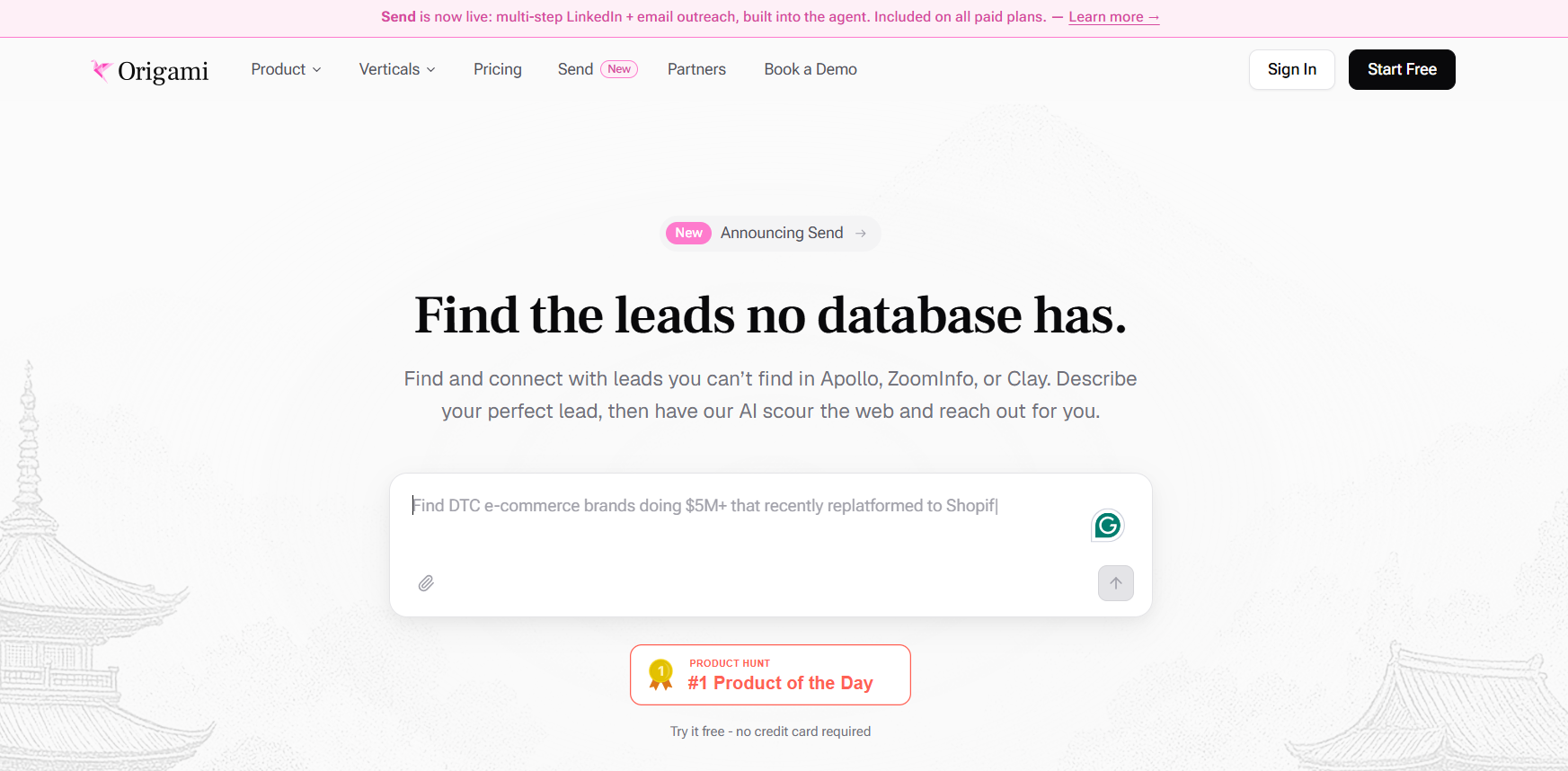
Origami AI is an AI-assisted prospecting platform that helps you find companies, decision-makers, buying signals, and contact information using simple natural language prompts. Instead of building complex filters, you describe your ideal customer, and Origami searches multiple live data sources to find matching prospects.
What makes Origami different is that it doesn't rely on a traditional lead database. The platform searches live sources such as LinkedIn, Google Maps, job boards, company websites, funding databases, and other public data sources whenever you run a search. For example, you can search for something like:
Origami will then build a list of matching prospects and let you enrich them with emails, phone numbers, tech stack data, funding information, and buying signals. It also includes built-in email and LinkedIn sequencing for outreach.
Origami AI is built for people who spend a lot of time finding prospects and researching accounts. The platform is especially useful when traditional databases are not giving you enough opportunities or when you need prospects from niche industries, local businesses, or companies showing active buying signals.
Origami is probably most valuable for teams that need fresh opportunities and hard-to-find prospects rather than simply accessing another contact database.
Origami has a lot of features, but honestly, not all of them matter equally. After looking through the platform, I think most of the value comes from a handful of features that directly help you find better prospects and build pipeline faster.
These are the features that stood out the most to me.
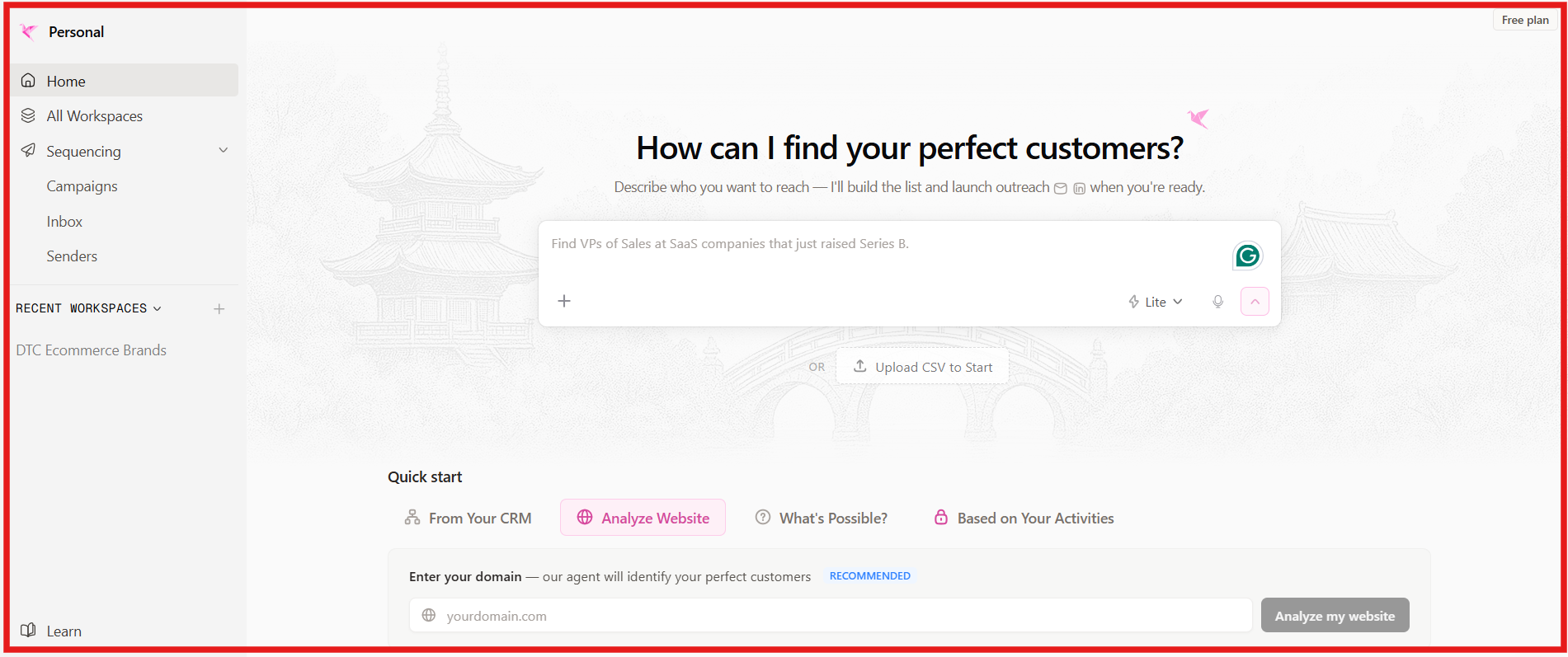
This is the main reason most people will use Origami. Instead of building filters and searching databases, you simply describe your ideal customer in plain English. Origami then searches multiple live data sources and returns matching prospects.
What I like is that it feels more like talking to a researcher than using a traditional prospecting tool. Origami makes prospect discovery much easier, especially when you're targeting niche markets or hard-to-find buyers. The natural language search experience is one of the platform's strongest features.
Most prospecting platforms rely on a database. Origami takes a different approach. It searches live sources like LinkedIn, Google Maps, job boards, company websites, and other public sources whenever you run a search. This is probably Origami's biggest differentiator.
If fresh data and recent buying signals matter to your outreach, this feature is genuinely useful.
Origami can find companies based on signals such as:
Instead of targeting random companies, you can focus on companies that are actively showing signs they may need your product. I like this feature because it focuses on timing. Reaching out when a company is hiring, growing, or raising money usually makes more sense than reaching out completely cold.
This is where Origami feels very different from most B2B prospecting tools. The platform uses Google Maps, local directories, licensing databases, and web data to find businesses that often don't exist in traditional databases. If you're selling to contractors, dentists, HVAC companies, roofers, agencies, or other local businesses, this may be one of Origami's most valuable features.
After finding prospects, Origami can enrich them with:
The platform verifies contact data before returning it. The enrichment experience is simple and saves you from constantly switching between multiple tools.
Origami includes email and LinkedIn sequencing inside the platform. You can move leads directly into outreach campaigns without exporting lists into another tool. The sequencer isn't the main reason most people will buy Origami, but it's a useful addition because you can move directly from prospect discovery to outreach inside the same platform.
Origami can analyze existing customers and find similar companies based on industry, size, growth, funding, tech stack, and other attributes. If you already know what your best customers look like, this feature can help you discover more companies that match the same profile.
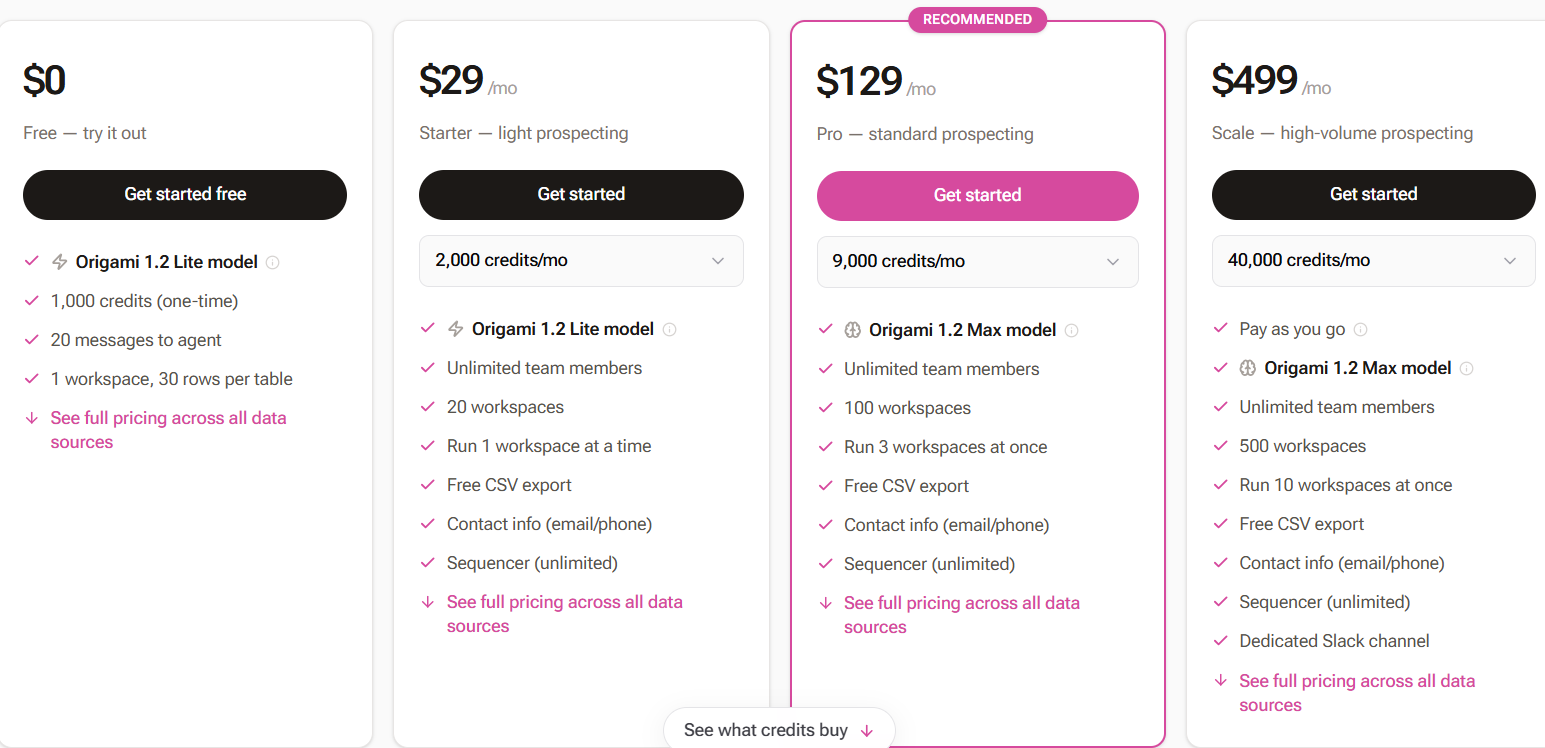
Origami uses a credit-based pricing model instead of charging per seat. Every plan comes with a monthly credit allowance. Credits are consumed when Origami finds new leads, enriches contacts, verifies emails and phone numbers, or performs AI research.
Simply chatting with the agent, exporting data, and transforming your own data does not consume credits.
Origami offers:
All paid plans include unlimited team members, contact enrichment, CSV exports, and the built-in email and LinkedIn sequencer.
Origami has a few limitations worth knowing before you sign up.
Unlike traditional prospecting tools that charge per user, Origami uses credits. Credits are consumed for lead generation, enrichment, contact data, and AI research. While the system is flexible, it can take some time to understand how quickly credits are used across different workflows.
One tradeoff of using live data is speed. Origami says most searches take around 45 to 90 seconds because the platform is searching live sources rather than pulling records from a database. That's not a huge issue, but it is slower than tools that return results almost instantly.
The free plan includes 1,000 one-time credits, 20 agent messages, one workspace, and a limit of 30 rows per table. Teams doing regular prospecting will likely need a paid plan.
Origami currently supports HubSpot, Salesforce, and Attio integrations, but the integrations are primarily designed for reading CRM data and deduplicating records. Direct write-back functionality is not currently available.
Because Origami is built around natural language searches rather than traditional filters, there may be an adjustment period for users who are used to database-style prospecting workflows.
After spending time looking at Origami's features, pricing, and positioning, I don't think this is a tool for everyone. Origami is at its best when your biggest challenge is finding prospects. The platform is built around lead discovery, buying signals, enrichment, and finding companies that traditional databases may not cover.
If that's the problem you're trying to solve, Origami can be a strong option.
My take is simple. If you're looking for fresh opportunities, niche prospects, and live buying signals, Origami is worth considering. But if your current prospecting process already works well and you mainly want a large contact database, you may not see a huge difference.
Origami AI is a good choice if you want to actively research prospects, explore buying signals, and search across live data sources yourself. But not every team wants to spend time researching leads.
Sometimes, you just want to describe your ideal customer and get a verified lead list with emails, LinkedIn profiles, phone numbers, lookalikes, and intent signals in one place.
That's where Leadsforge takes a different approach. Like Origami, Leadsforge uses a chat-based experience.
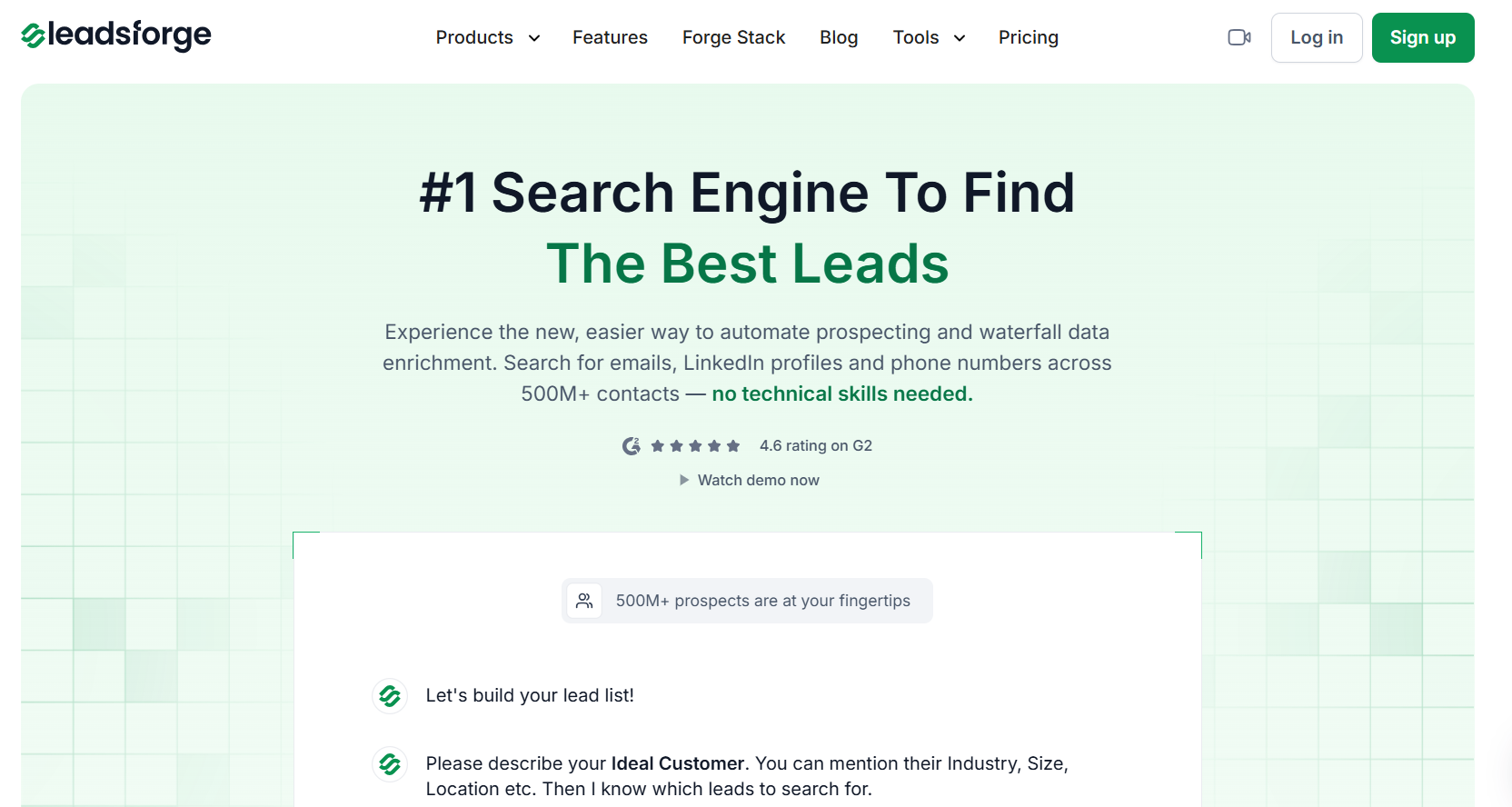
You describe your ideal customer in plain English, and the platform searches across multiple data sources to find matching prospects. It also includes waterfall data enrichment, lookalike search, competitor follower search, and built-in intent signals.
One thing I particularly like is that Leadsforge focuses heavily on enrichment and verification. Instead of relying on a single source, it searches multiple providers until it finds the best available email, LinkedIn profile, or phone number.
My take: If you want a platform focused on live web research, local business discovery, and buying signals, Origami AI is a strong choice.
If your goal is finding verified prospects, enriching them quickly, building lookalike lists, and moving them into outreach campaigns with as little work as possible, Leadsforge is the option I would choose.
Enter your email to get a custom plan & stack recommendation for your business
Please check your mailbox in 5 minutes
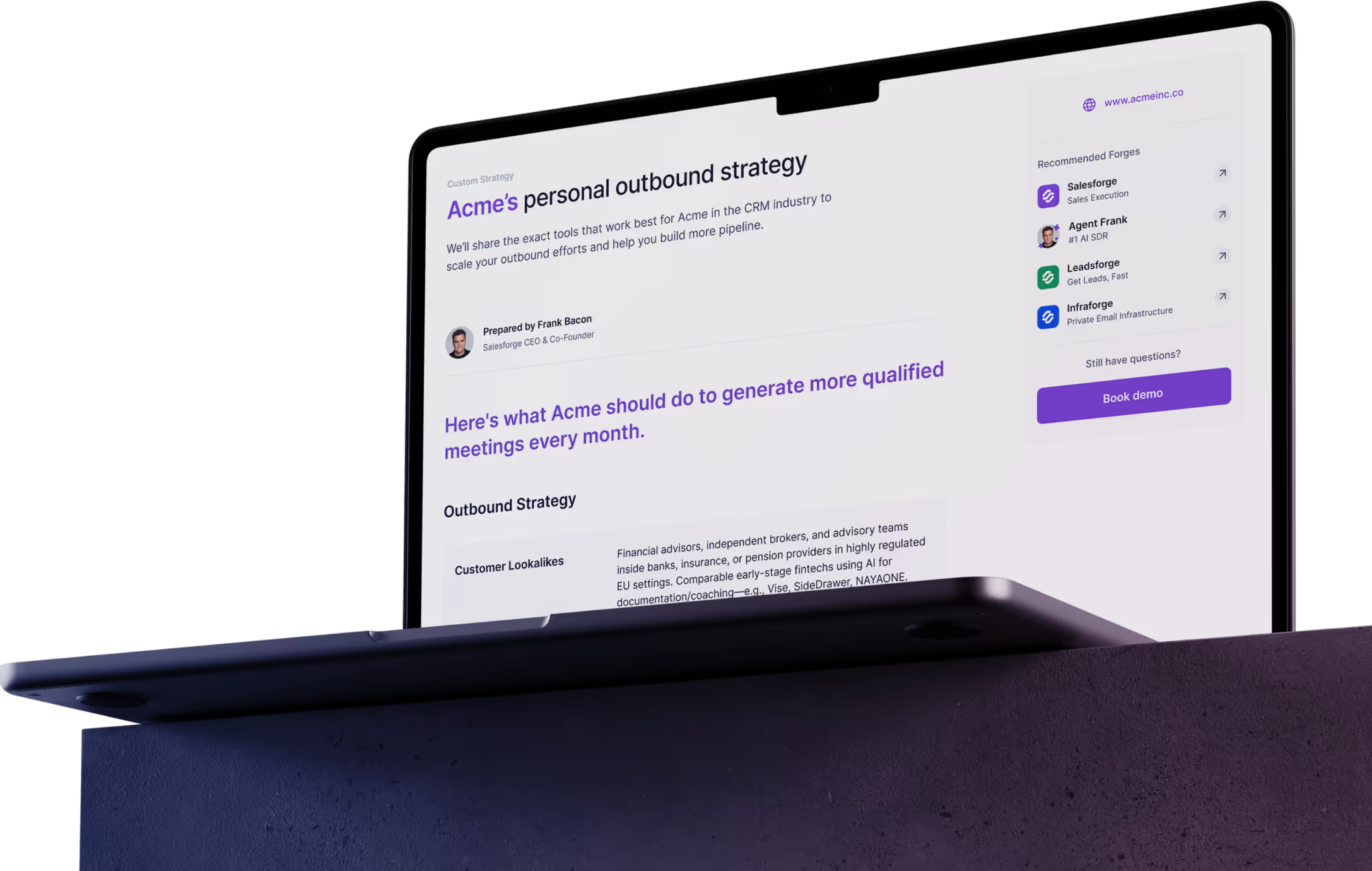
Origami AI is a solid prospecting tool for teams that want to find opportunities beyond traditional databases. Its biggest strength is helping you discover companies, contacts, and buying signals from live data sources.
If you're targeting niche markets, local businesses, or accounts showing signs of growth, Origami can be a useful addition to your outbound process.
At the same time, it's not the only option available. If your main goal is getting verified prospects as quickly as possible, Leadsforge is worth considering. Instead of spending time researching and enriching prospects yourself, you can simply describe your ideal customer and generate lead lists with verified emails, LinkedIn profiles, phone numbers, lookalike companies, and intent signals in one place.
Try Leadsforge and see how quickly you can build your next prospect list.