Leadfeeder is useful for identifying website visitors, but many teams look for alternatives when they need more complete lead data or better flexibility for lead generation.
Users look for Leadfeeder alternatives when website visitor tracking alone is not enough for their lead generation needs.
Leadfeeder mainly shows company-level visits, not individual decision-makers, which makes follow-up harder.
Visitor identification depends on IP tracking, which can reduce accuracy for remote or VPN-based users.
Some users report data mismatches with CRM tools like HubSpot or Dealfront.
Not every visit turns into a sales-ready lead, which can lower ROI.
Pricing can feel high for small teams compared to the number of usable leads.
Teams still need separate tools for enrichment and outbound outreach.
Because of this, many teams look for Leadfeeder alternatives that offer full contact data, better accuracy, and clearer paths to outreach.
Personalized Outbound Strategy
Get The Right Outbound Strategy In Minutes
Enter your email to get a custom plan & stack recommendation for your
business
It's being carefully crafted by AI
Please check your mailbox in 5 minutes
How We Evaluated These Leadfeeder Alternatives
To find the most useful Leadfeeder alternatives, we focused on what actually matters when your goal is lead generation, not just website visitor tracking.
Here’s how we evaluated the 5 best Leadfeeder alternatives:
Lead data depth and accuracy, to see whether the tool provides real contact details like emails, phone numbers, or decision-makers, not just company names.
Ability to generate new leads, including whether the tool works without relying only on website traffic.
Ease of lead discovery, such as how easily users can find, filter, or identify relevant leads without complex setup.
Enrichment and intent signals, to check if the tool adds useful context like company size, roles, activity, or buying signals.
Each tool was reviewed based on how well it helps teams move from interest to usable leads, without the limits that come with Leadfeeder.
1. Leadsforge - Best Leadfeeder Alternative for Lead Generation
This image shows the Leadsforge homepage
Leadsforge is a lead generation tool that helps you find new B2B leads, not just track visitors.
You type your ideal customer in simple words, and it shows matching contacts. It gives you emails, LinkedIn profiles, and phone numbers in one place.
Key Features of Leadsforge
Chat-based ICP search that lets you describe your ideal customer in plain English and get results instantly.
This image shows the Leadsforge ICP based lead generation
Waterfall data enrichment that pulls emails, LinkedIn profiles, and phone numbers from multiple sources.
Lookalike search to find companies and contacts similar to your best customers.
This image shows the Find lookalike audience with Leadsforge
Competitor follower targeting to turn competitor audiences into lead lists.
This image shows the Leadsforge competitor follower feature
Built-in intent signals based on hiring, launches, and activity cues.
Leadsforge vs Leadfeeder: Quick Comparison
Feature
Leadsforge
Leadfeeder
Core approach
Proactive lead search
Website visitor tracking
Lead discovery
ICP chat, lookalikes, followers
Only companies visiting your site
Contact data
Emails, LinkedIn, phone numbers
Limited, credit-based contact reveals
Intent data
Signals + enrichment context
Page visits and web behavior
Best for
Filling pipeline from scratch
Converting existing traffic
Pros & Cons of Leadsforge
Pros
Cons
Finds leads even without website traffic
Credit-based pricing
Simple, chat-style workflow
Not a web analytics tool
Strong enrichment across multiple sources
Requires ICP clarity for best results
Leadsforge Pricing
This image shows the Leadsforge pricing
Starts at $49/month for 2,000 export credits.
Credits do not expire, and unused credits roll over.
100 free credits are included to try the platform.
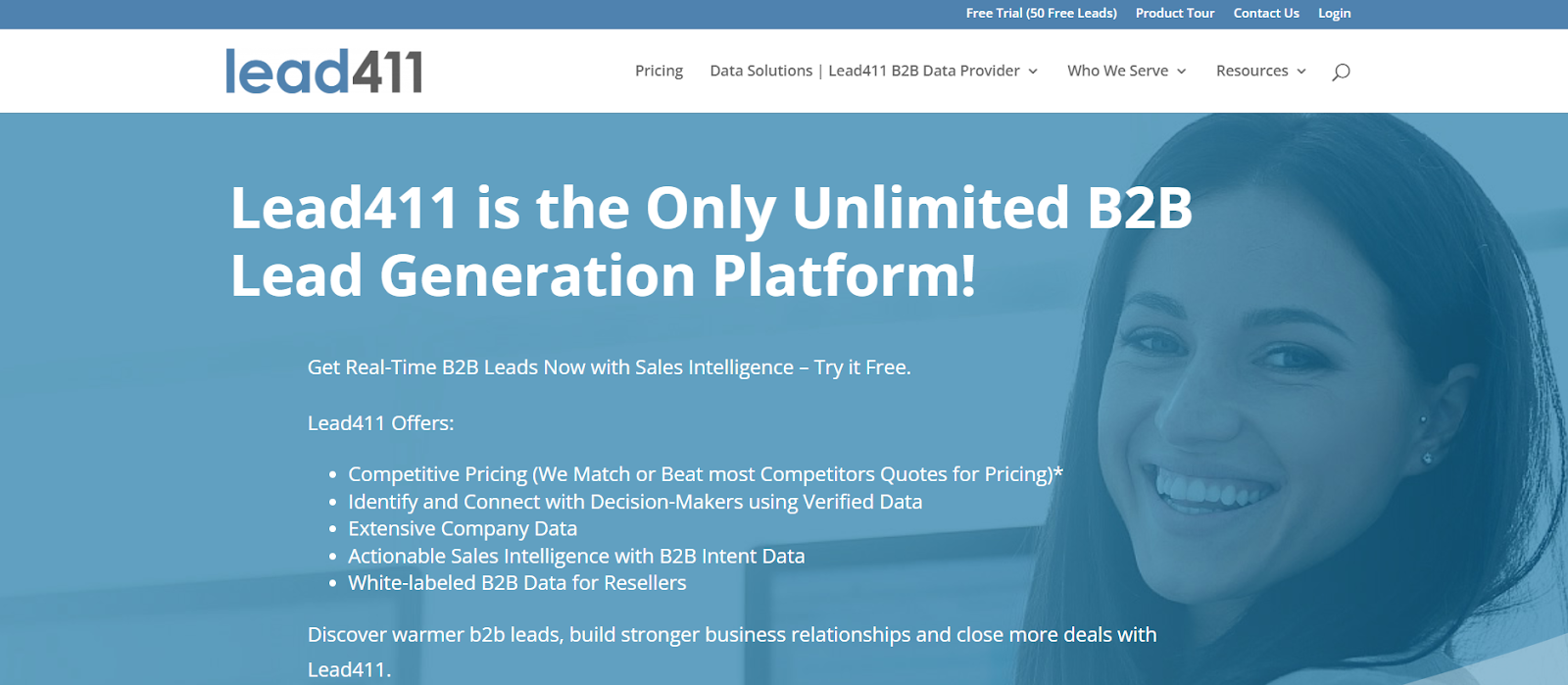
Lead411 is a B2B lead generation and sales intelligence tool that helps you find verified emails, direct phone numbers, and company data.
While Leadfeeder focuses on showing which companies visit your site, Lead411 focuses on finding decision-makers upfront using verified data and intent signals.
This makes Lead411 better suited for outbound teams that need emails, phone numbers, and buying signals, even without website traffic.
Key Features of Lead411
Lead411 provides verified work emails and direct-dial phone numbers for B2B decision-makers.
The platform includes growth intent signals such as hiring activity, funding events, and company changes.
Users can search leads using advanced filters like job title, industry, company size, location, and technologies used.
Lead411 offers unlimited search and export on select plans without daily caps.
CRM integrations with Salesforce and HubSpot allow easy data syncing.
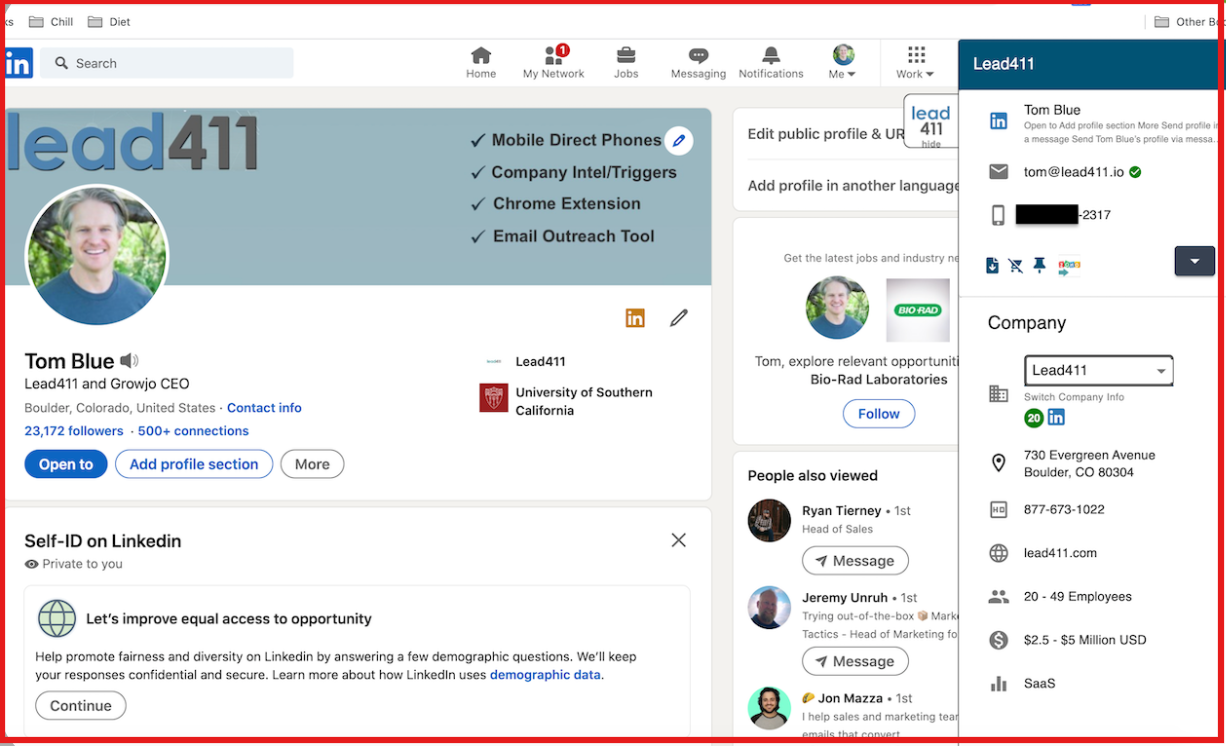
A Chrome extension helps users find contact data while browsing LinkedIn.
This image shows the Example of Lead411 chrome extension finding details
Lead411 vs Leadfeeder: Quick Comparison
Feature
Lead411
Leadfeeder
Primary focus
Lead data & sales intelligence
Website visitor tracking
Lead source
B2B database
Website traffic
Emails
Yes (verified)
Limited
Phone numbers
Yes (direct dials)
Limited
Decision-makers
Yes
Limited
Intent signals
Yes (growth intent)
Yes (page activity)
Works without website traffic
Yes
No
Pros & Cons of Lead411
Pros
Cons
Provides verified emails and direct-dial phone numbers
Does not focus on website visitor tracking
Includes growth intent signals to prioritize leads
Advanced intent data may be unnecessary for small teams
Unlimited usage on higher plans
Pricing increases with higher tiers
Lead411 Pricing
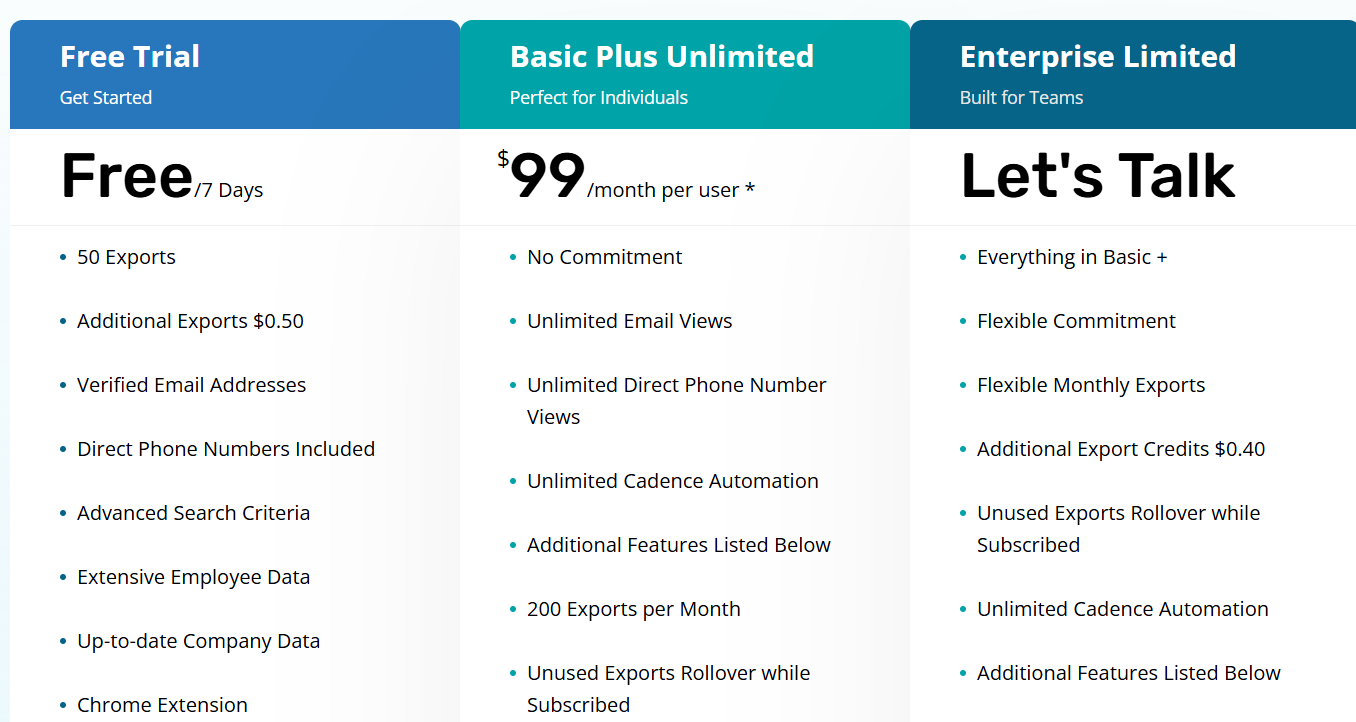
This image shows the Lead411 pricing
Free trial: 7-day trial with up to 50 free leads.
Paid plans: Start at $99/month.
Unlimited plans: Available on higher tiers.
Custom plans: Offered for teams and resellers.
3. Lead Forensics – Website Visitor Identification for B2B Teams
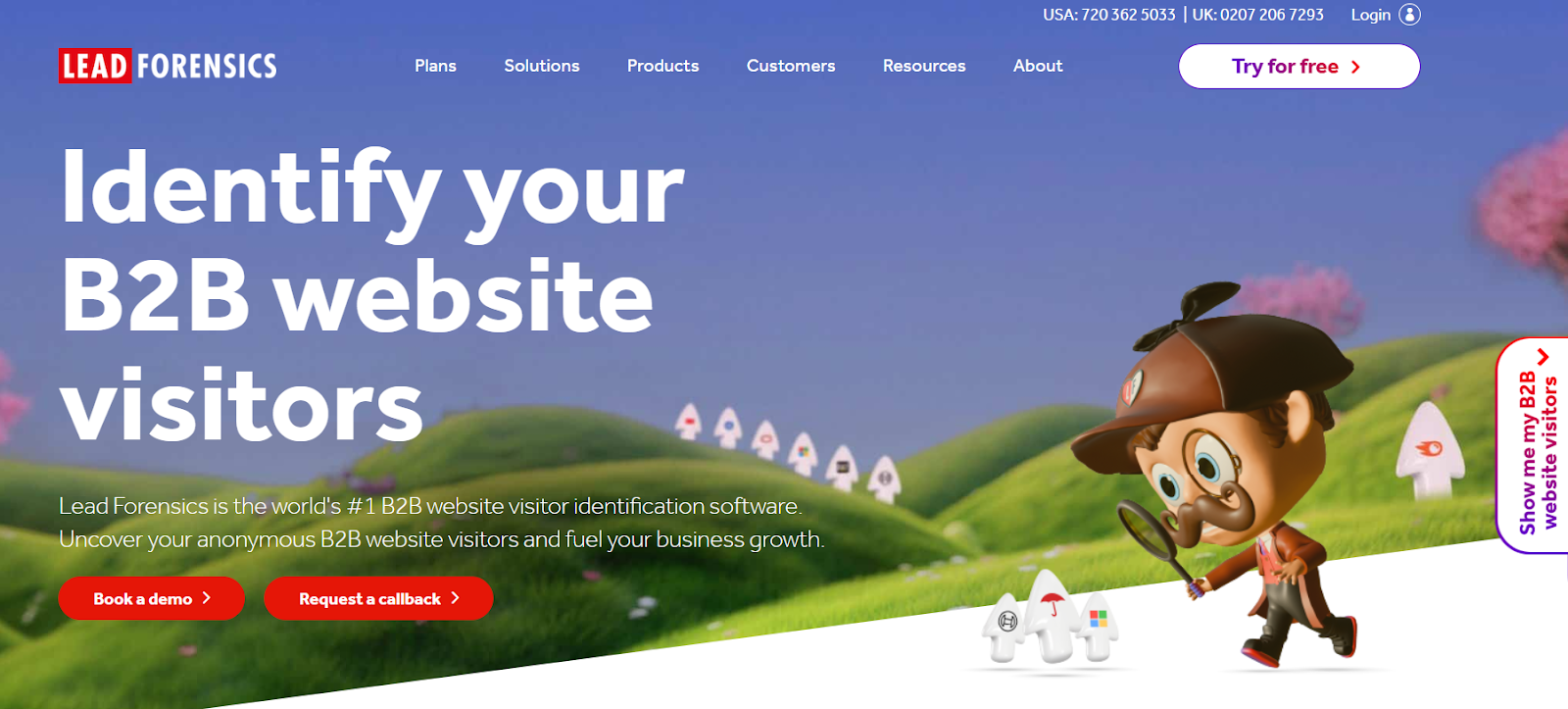
This image shows the Lead Forensics homepage
Lead Forensics is a well-known Leadfeeder alternative for companies that want to see which businesses visit their website.
Like Leadfeeder, it focuses on anonymous website visitor identification, not outbound prospecting or list building.
It works best for B2B companies with steady website traffic that want to turn visits into sales or marketing opportunities.
Key Features of Lead Forensics
Lead Forensics identifies anonymous B2B website visitors by matching IP addresses to a large proprietary database.
The platform shows company names, firmographic data, and engagement activity for visiting businesses.
Real-time alerts notify teams when target or existing accounts visit key pages on the website.
Website behavior tracking shows which pages were viewed, how often, and for how long.
Unlimited user access allows sales, marketing, and account teams to use the platform together.
Lead Forensics vs Leadfeeder: Quick Comparison
Feature
Lead Forensics
Leadfeeder
Primary focus
Website visitor identification
Website visitor identification
Lead source
Website traffic
Website traffic
Identifies companies
Yes
Yes
Individual contact data
Limited
Limited
Intent signals
Page & visit behavior
Page & visit behavior
Works without website traffic
No
No
Best for
High-traffic B2B sites
Small to mid-size B2B sites
Pros & Cons of Lead Forensics
Pros
Cons
Strong website visitor identification
Requires consistent website traffic
Real-time alerts for high-intent visits
Limited individual contact data
Large proprietary B2B IP database
Not suitable for outbound lead sourcing
Unlimited user access
Pricing is higher for small teams
Lead Forensics Pricing
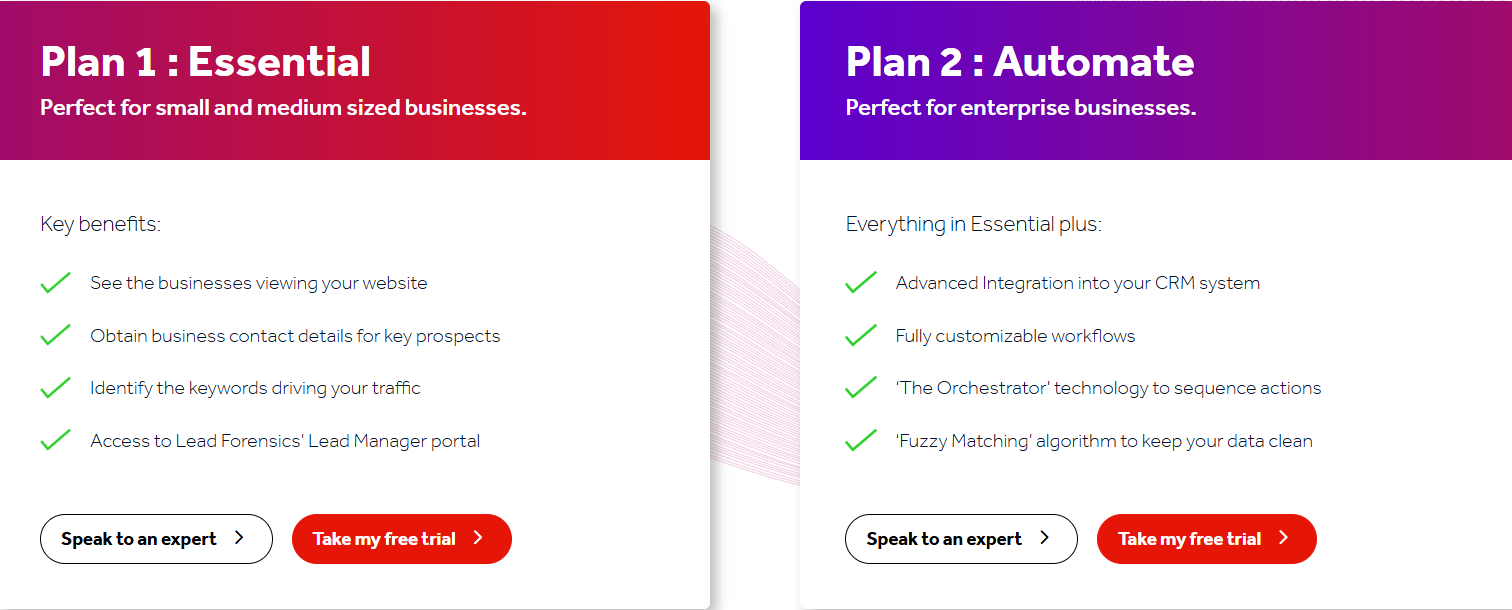
This image shows the Lead Forensics pricing details
Free trial: Available with demo request.
Essential plan: Designed for small to mid-size businesses.
Automate plan: Built for enterprises with high website traffic and CRM automation.
Pricing model: Custom pricing based on traffic volume and requirements.
4. ZoomInfo – B2B Data & GTM Intelligence Platform
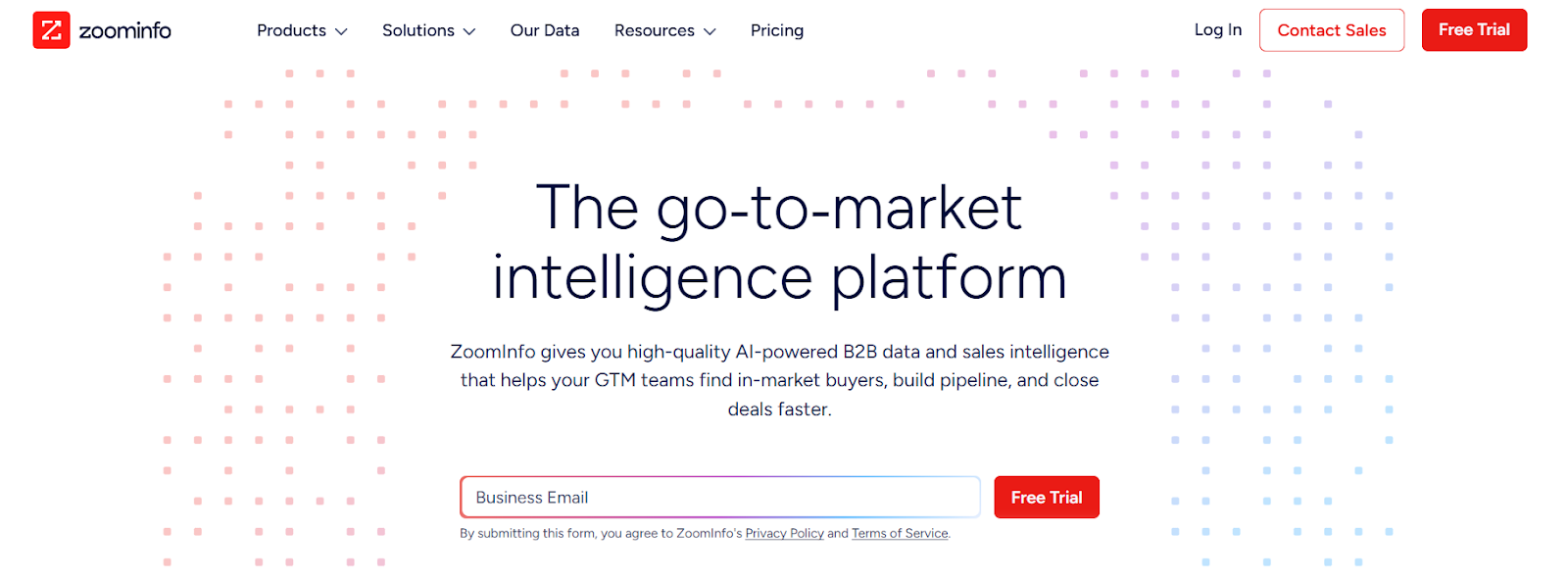
This image shows the ZoomInfo homepage
ZoomInfo is a B2B go-to-market intelligence platform that helps sales and marketing teams find verified company and contact data, buyer intent signals, and account insights for outbound and revenue growth.
Unlike Leadfeeder, ZoomInfo does not depend only on website traffic. It works best for sales, marketing, and RevOps teams that need emails, phone numbers, intent data, and account insights at scale.
Key Features of ZoomInfo
ZoomInfo provides verified business emails, direct dials, and mobile numbers for B2B decision-makers across companies of all sizes.
The platform offers buyer intent data that shows which companies are actively researching products or topics related to your solution.
ZoomInfo includes company and contact intelligence, such as firmographics, technographics, org charts, and job changes.
Built-in AI tools and automation help teams prioritize accounts, enrich CRM data, and speed up outreach.
ZoomInfo vs Leadfeeder: Quick Comparison
Feature
ZoomInfo
Leadfeeder
Primary focus
B2B data & GTM intelligence
Website visitor identification
Lead source
Global B2B database + intent data
Website traffic
Identifies companies
Yes
Yes
Identifies individual contacts
Yes (emails & phones)
Limited
Buyer intent data
Yes (topic & activity based)
Page visit behavior
Works without website traffic
Yes
No
Best for
Sales & GTM teams at scale
Website-driven inbound teams
Pros & Cons of ZoomInfo
Pros
Cons
Large global B2B contact and company database
Pricing can be high for small teams
Verified emails and direct phone numbers
Credit-based usage model
Strong buyer intent and account insights
More complex than simple visitor tools
Deep CRM and sales tool integrations
Requires onboarding for full value
Works even without website traffic
Not designed only for inbound tracking
ZoomInfo Pricing
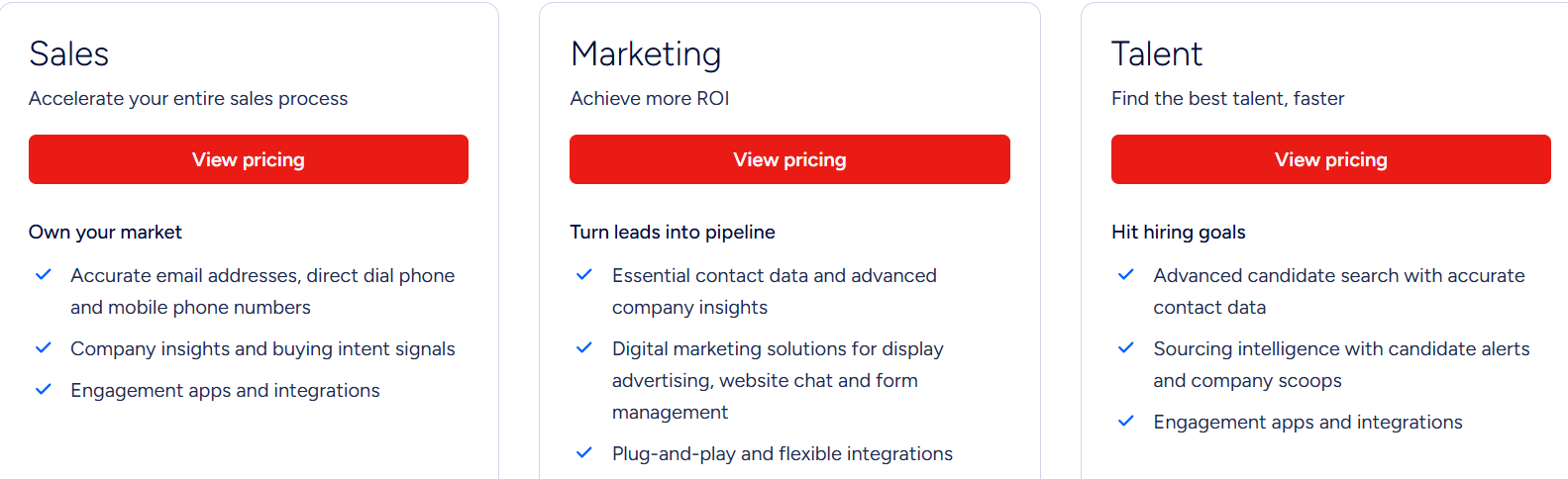
This image shows the ZoomInfo pricing
Free trial: Available with limited access
Pricing model: Custom pricing based on licenses, features, and credit usage
Plans include: Sales, Marketing, RevOps, and Data solutions
Credits: Used when exporting contact or company data
Best suited for: Mid-market and enterprise GTM teams
5. Lemlist – Multichannel Outreach for Booking Meetings
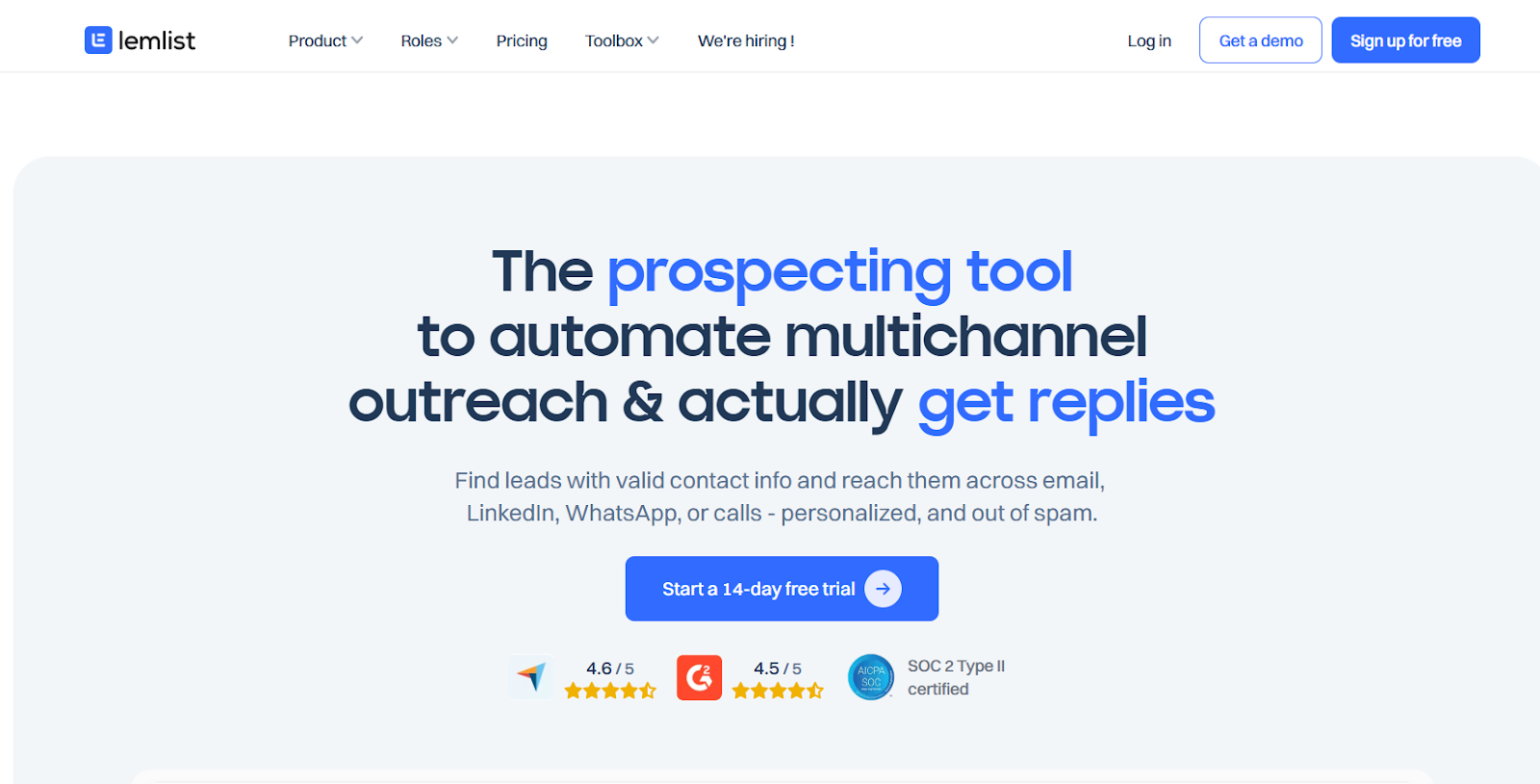
This image shows the Lemlist homepage
Lemlist is a sales engagement platform that helps teams find leads and run multichannel outreach using email, LinkedIn, calls, and WhatsApp.
Unlike Leadfeeder, which focuses on identifying companies visiting your website, Lemlist focuses on actively reaching out to prospects with personalized messages at scale.
Lemlist works best for sales teams that already know who they want to contact and need a tool to send outreach, get replies, and book meetings.
Key Features of Lemlist
Lemlist lets teams run multichannel sequences using email, LinkedIn actions, calls, and WhatsApp from one workflow.
The platform includes a built-in B2B database with over 600M contacts and waterfall enrichment for emails and phone numbers.
AI-powered personalization pulls data from LinkedIn, websites, and profiles to customize messages at scale.
Lemlist includes lemwarm, a built-in email warm-up and deliverability tool to help emails land in inboxes.
A unified inbox allows teams to manage replies from all channels in one place.
Pros & Cons of Lemlist
Pros
Cons
Strong multichannel outreach from one platform
Does not focus on website visitor identification
Built-in email warm-up with lemwarm
Requires outbound strategy and lead targeting
High level of personalization with AI and dynamic variables
Pricing increases as teams and usage scale
Lemlist vs Leadfeeder: Quick Comparison
Feature
Lemlist
Leadfeeder
Primary focus
Outbound sales outreach
Website visitor identification
Lead source
Lead database + enrichment
Website traffic
Multichannel outreach
Yes (Email, LinkedIn, Calls, WhatsApp)
No
Best for
Booking meetings with outbound
Turning website visits into leads
Lemlist Pricing
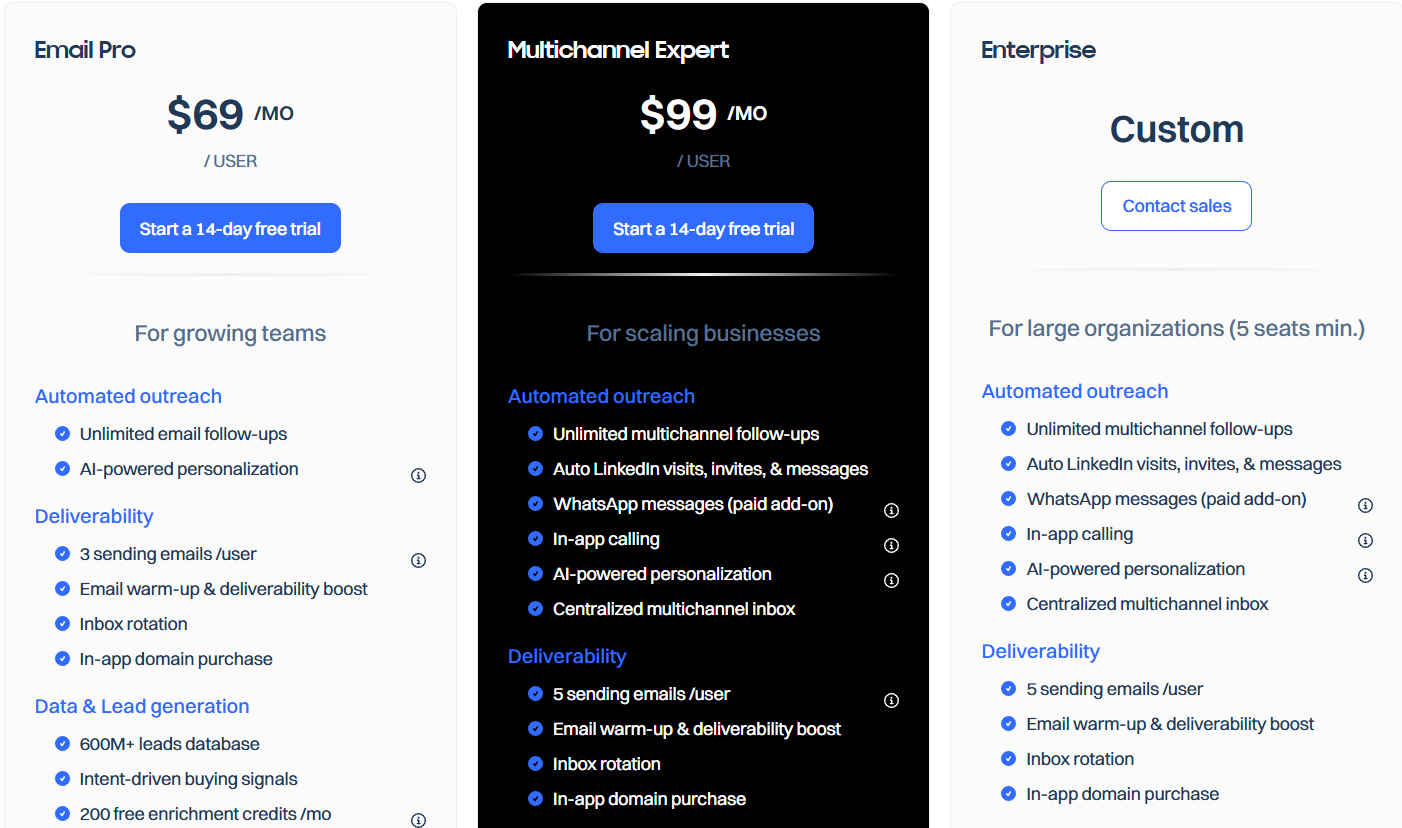
This image shows the Lemlist pricing
Lemlist uses per-user pricing with a free trial available.
Email Pro: Starts at $69/user/month, includes email outreach, personalization, and lemwarm.
Multichannel Expert: Starts at $99/user/month, adds LinkedIn, calls, WhatsApp, and advanced workflows.
Enterprise: Custom pricing for large teams with advanced security and API access.
Enter your email to get a custom plan & stack recommendation for your
business
It's being carefully crafted by AI
Please check your mailbox in 5 minutes
Which LeadFeeder Alternatives Should You Choose for Lead Generation?
Choosing the right LeadFeeder alternative depends on how you want to find leads. Some tools focus on website visitors. Others help you find and contact new prospects directly.
Here’s a quick guide to help you choose the best LeadFeeder alternative:
If you want to identify companies visiting your website and already have good traffic → Use tools like Lead Forensics or LeadFeeder.
If you want verified emails, phone numbers, and LinkedIn profiles for outbound sales → Choose ZoomInfo or Lead411.
If you want multichannel outreach with email, LinkedIn, and follow-ups → Use Lemlist.
If you want the fastest and simplest way to find verified B2B leads without website traffic or complex setup → Go with Leadsforge.
If your goal is to generate fresh leads quickly instead of waiting for website visitors, Leadsforge is the best option.
You can find verified emails, phone numbers, LinkedIn data, and intent signals in seconds.