Data integration platforms are essential for businesses to unify disconnected systems like CRM, ERP, and databases. These tools enable seamless data flow, reduce manual work, and improve decision-making by creating a single source of truth. For B2B companies, this means faster sales cycles, better customer insights, and efficient workflows.
Here’s a quick overview of the top platforms:
Each platform suits different needs, from enterprise-level data governance to quick lead generation for sales teams. Below, you'll find detailed comparisons to help identify the right fit for your business.
Fivetran is a fully managed data integration platform designed to simplify the process of connecting various data sources. It automatically detects and adjusts to API and schema changes, minimizing the need for constant IT involvement and oversight.
With a library of over 700 pre-built connectors, Fivetran covers a wide range of essential systems like Salesforce, Stripe, and BigCommerce. It also supports direct connections to popular databases such as MySQL, PostgreSQL, SQL Server, and MongoDB. Additionally, it integrates with cloud storage solutions like Amazon S3 and Google Cloud Storage, making it a versatile choice for diverse data environments.
Fivetran relies on API-based connectors and Change Data Capture (CDC) pipelines to extract only incremental data updates. This approach reduces latency and system strain while maintaining up-to-date information. The platform also includes AI tools that enable users to transform data using plain-language queries, making it more accessible for those without technical expertise. Since Fivetran operates entirely in the cloud, there's no need to manage servers or worry about scaling, as it seamlessly integrates with major cloud data warehouses.
Built with a cloud-native architecture, Fivetran can handle growth effortlessly. Whether it’s adding new data sources, managing larger data volumes, or expanding across regions, the platform is designed to scale without disruption. This flexibility ensures that businesses can adapt as their integration needs evolve.
Fivetran uses a usage-based pricing model, where costs are determined by the volume of data transferred and the number of connectors utilized. This pay-as-you-go structure is particularly appealing for growing B2B companies, as it aligns expenses with actual integration requirements. Additionally, its automated maintenance and reduced IT demands help lower the total cost of ownership. Fivetran is an ideal solution for application integration, cloud migration, modernization projects, and automating business workflows.

Talend Cloud Data Integration is designed to connect, transform, and manage data across both cloud and on-premise applications. It's particularly useful for B2B companies that deal with complex, high-quality data within systems like ERP, CRM, and eCommerce platforms. While it offers strong connectivity like other top platforms, Talend stands out with its ELT (Extract, Load, Transform) approach.
Talend provides a wide range of prebuilt connectors that simplify integration with databases, SaaS applications, and APIs - eliminating the need for heavy custom development. It also offers native integration with major cloud data warehouses such as Amazon Redshift, Google BigQuery, and Snowflake. This makes it easier to connect and unify data from diverse enterprise systems.
Using an ELT architecture, Talend first loads data into the target system and then performs transformations there. This approach can boost performance, especially with cloud-based data warehouses. The platform also features no-code and low-code tools, along with AI-driven queries, making it easier for non-technical users to create data pipelines. Additionally, Talend supports change data capture (CDC) pipelines, enabling real-time data synchronization and moving beyond traditional batch processing methods.
With its cloud-native design, Talend easily scales to meet growing enterprise data demands. It maintains reliable performance even as data volumes and integration complexities grow. This scalability is particularly advantageous for B2B companies handling multiple integrations across systems, business units, or regions. Whether it's batch processing or real-time synchronization, Talend adapts to evolving needs.
Talend operates on a subscription-based pricing model, with costs depending on factors like the number of connectors, data volume, and support level. Positioned as a mid-to-premium solution, it combines ETL, ELT, data quality, and governance into one platform. This consolidation can reduce the need for multiple specialized tools, making it a smart choice for mid-to-large B2B enterprises. It's especially appealing for industries with strict data governance requirements and businesses managing hybrid IT environments that blend cloud and on-premise systems.

MuleSoft, acquired by Salesforce in 2018, stands out as a top-tier integration platform, particularly for enterprise B2B environments. Known for its API-led connectivity approach, MuleSoft enables businesses to create modular, reusable integrations. With over 1,200 enterprises worldwide - many of them Fortune 500 companies - relying on its platform, MuleSoft excels at bridging legacy systems with modern cloud applications. Below, we’ll explore its connectors, integration methods, scalability, and pricing.
MuleSoft's Anypoint Platform provides access to over 200 pre-built connectors, covering a wide range of systems like CRM, ERP, HRIS, and e-commerce platforms. It integrates seamlessly with major names such as Salesforce, HubSpot, SAP, Oracle, Workday, and NetSuite. Additionally, it supports connections to tools like Microsoft Dynamics, various accounting software, and marketing automation platforms. Regular updates ensure API compatibility, enabling integration with more than 150 data sources.
MuleSoft’s API-led connectivity approach organizes integrations into three distinct layers: system, process, and experience.
This structure promotes API reuse across projects, reducing development time and increasing flexibility. The Anypoint Platform provides a unified environment for designing, building, and managing APIs, whether deployed in the cloud or on-premise. For data transformations, MuleSoft uses its proprietary DataWeave language to handle formats like JSON, XML, and CSV, while performing tasks such as filtering, aggregation, and enrichment.
In 2023, a financial services company leveraged MuleSoft to integrate over 50 legacy systems with a new cloud-based CRM. This reduced integration time by 60% and improved data accuracy by 45%.
MuleSoft is built for enterprise-level scalability. Its cloud-native architecture supports both horizontal and vertical scaling. For example, a global retail chain improved operational efficiency by 30% and reduced IT costs by 20% using MuleSoft. The Mule runtime engine can operate in clustered environments, ensuring high availability and load balancing. Additionally, the platform supports microservices and containerization, allowing individual components to scale independently. With its ability to handle hybrid and multi-cloud setups, MuleSoft delivers consistent performance even as infrastructure grows more complex.
MuleSoft uses a subscription-based pricing model, with costs determined by factors like the number of connectors, API calls, and deployment options (cloud, on-premise, or hybrid). Basic cloud deployments typically start at several thousand dollars annually, with additional fees for premium connectors and advanced support. While its pricing might be steep for smaller businesses with simpler needs, it’s a strong fit for large enterprises handling intricate integrations. According to Gartner, MuleSoft is a leader in the Magic Quadrant for Full Life Cycle API Management, and users on Gartner Peer Insights give it an average rating of 4.5 out of 5 stars. For larger organizations, the investment often pays off in reduced integration timelines and improved data accuracy.

Informatica PowerCenter is a well-regarded data integration platform trusted by organizations worldwide. Recognized as a leader by Gartner in the data integration space, it offers powerful ETL (Extract, Transform, Load) capabilities along with data quality and governance tools. While it’s often associated with large enterprises, its broad functionality also makes it a viable option for small and mid-sized B2B companies. Businesses operating in SAP-heavy environments find PowerCenter especially valuable for its ability to integrate SAP and non-SAP systems effortlessly.
PowerCenter supports an impressive range of data sources, making it a versatile choice for B2B integrations. It connects seamlessly to databases, SaaS applications, on-premises software, and APIs - without requiring extensive customization.
This connectivity is particularly useful in complex IT environments with multiple systems. Whether you're working with Oracle, SAP, or third-party applications, PowerCenter’s native integration capabilities simplify the process of moving data between systems. For B2B companies managing diverse technology stacks, this flexibility reduces the need for multiple tools, streamlining operations.
PowerCenter employs a traditional ETL architecture to handle data transformation. It extracts, transforms, and loads data according to business rules, ensuring smooth and efficient workflows. This approach is ideal for managing complex transformations, cleansing data, and standardizing it as it moves between systems.
One standout feature is its ability to handle schema changes automatically. When source systems update their data structures, PowerCenter adapts without requiring manual intervention. This is a game-changer for B2B environments where frequent system upgrades or process changes can alter data structures.
Additionally, PowerCenter includes data quality and profiling tools to ensure data is clean and consistent across systems. IT teams can define rules to filter, aggregate, and enrich data during integration. Its quick setup and configuration tools allow teams to deploy integrations faster compared to platforms that require heavy customization, helping businesses see results sooner.
PowerCenter is built to handle enterprise-scale data integration, supporting both high-volume processing and complex workflows. It accommodates big data and real-time processing, offering B2B organizations the flexibility to process large batch jobs or stream data for real-time analytics.
For growing companies, PowerCenter’s scalability is a major advantage. It can expand to handle increasing data volumes and system connections without requiring a complete redesign. While it excels in large enterprise environments, its robust functionality also supports smaller B2B companies preparing for future growth. This flexibility ensures that businesses of all sizes can rely on PowerCenter as their integration needs evolve.
PowerCenter’s licensing fees reflect its enterprise-grade capabilities, with costs scaling based on factors like integration complexity, the number of connectors, and data volume.
When considering PowerCenter, it’s important to account for the total cost of ownership, which includes not just licensing but also implementation, training, and ongoing support. For enterprises that require consistent, high-quality data across systems - especially those with SAP-heavy operations - the platform’s extensive features often justify the investment. However, smaller B2B companies should carefully weigh whether its advanced capabilities align with their current needs and budget.

SnapLogic takes a modern, visual approach to data integration, setting it apart from older, code-heavy platforms. As a cloud-based iPaaS, it simplifies the integration process with a low-code, drag-and-drop interface. This makes it a great choice for B2B companies juggling data from multiple sources, especially those without large development teams or the time for lengthy implementations.
The platform’s visual pipeline development allows business analysts and even non-technical users to build integrations alongside IT teams. This accessibility encourages collaboration across departments, making integration a shared effort. SnapLogic’s growing reputation in the integration world is underscored by its recognition as one of the standout companies in the 2025 Big Data 100.
SnapLogic offers a vast library of connectors, known as Snap Packs, which link to popular cloud services, SaaS tools, and on-premises software. These include systems like Salesforce, SAP, Oracle, and NetSuite, among others. By using these pre-built connectors, businesses can skip the hassle of custom coding when connecting their applications.
For companies managing a mix of tools and platforms, SnapLogic ensures seamless data exchange across systems. Its bi-directional data flow capabilities keep customer and operational data in sync, whether you're integrating accounting tools, marketing platforms, or ERP systems. This versatility is particularly useful for hybrid setups, where both cloud-based and legacy systems need to work together. With SnapLogic, you can efficiently create data pipelines without the usual complexity.
SnapLogic’s integration philosophy is all about speed and simplicity. Its visual interface, paired with AI-assisted data mapping and transformation suggestions, makes building data pipelines faster and less labor-intensive. Users can connect Snap Packs and quickly set up integrations, even for complex workflows.
This low-code approach lowers the technical barriers, enabling organizations with limited development resources to implement sophisticated integrations. SnapLogic supports everything from straightforward point-to-point connections to advanced, multi-step data transformations.
The platform also includes tools for data cleansing, validation, and structuring. These features are crucial for maintaining high data quality, especially for critical processes like financial reporting, CRM, and supply chain management. Additionally, SnapLogic supports real-time data synchronization and event-driven automation, allowing businesses to react instantly to changes or events, rather than relying solely on scheduled updates.
SnapLogic’s cloud-native design makes it highly scalable, allowing businesses to handle larger data volumes as they grow. Whether starting with basic integrations or moving to complex pipelines, the platform evolves alongside your needs.
It’s equipped to manage multiple integrations and large-scale data transfers, making it ideal for businesses experiencing rapid growth or undergoing major transitions like mergers and acquisitions. Plus, SnapLogic operates as a managed service, taking care of tasks like connector updates and API changes automatically. This reduces the maintenance burden on IT teams, freeing them to focus on strategic projects instead of routine upkeep.
SnapLogic uses a tiered pricing structure, offering a core package with unlimited Snap Packs and premium options for more advanced needs. Pricing details aren’t publicly available, as costs are tailored to each organization’s specific requirements and usage.
This flexible pricing approach works well for mid-sized and enterprise businesses, letting them start with a smaller investment and scale up as their integration needs grow. For B2B companies, it’s important to evaluate both current and future integration demands to estimate the overall investment needed as the business evolves.
Dell Boomi is a cloud-based integration platform designed to simplify how businesses connect their systems. As part of the Dell Technologies family, it helps B2B companies streamline operations by integrating tools like ERP, CRM, accounting, and e-commerce platforms. Its focus? Eliminating the usual headaches of system integration while providing real-time, unified data synchronization - key for B2B success. It's no surprise that Dell Boomi has earned recognition as one of the standout data management and integration tools in the 2025 Big Data 100.
Dell Boomi comes with a robust library of pre-built connectors, making it easy to link to hundreds of apps and data sources. Whether you're using Salesforce, SAP, Oracle, or NetSuite, Boomi has you covered. It also connects to widely-used databases like SQL Server, Oracle, and PostgreSQL, as well as cloud storage solutions and custom APIs. This extensive network of connectors minimizes the need for custom development. Plus, for businesses juggling both legacy systems and modern applications, Boomi's on-premise connectivity helps bridge the gap.
Dell Boomi uses an iPaaS (Integration Platform as a Service) model, which simplifies integration with a user-friendly drag-and-drop interface. This approach allows both business users and developers to collaborate on creating integrations, cutting down on wait times for IT resources. The platform supports real-time synchronization for critical tasks and batch processing for handling large data sets. Its visual mapping tool lets users define complex workflows, apply conditional rules, and execute multi-step transformations - all without needing to write code. Boomi also supports both ETL and ELT processes and includes built-in tools to ensure data quality and governance, keeping your data accurate and reliable.
Dell Boomi’s cloud-native design makes it highly adaptable to the needs of growing businesses. It automatically handles increased data loads and transaction volumes, ensuring smooth performance even during busy periods or rapid expansions. Its distributed architecture allows for parallel processing and multiple integrations running simultaneously, making it a strong choice for businesses managing complex systems - especially those navigating mergers or acquisitions.
Dell Boomi uses a subscription-based pricing structure tailored to your organization's usage, the number of integrations, and data volume. This flexible model works for businesses of all sizes, from mid-market companies starting their integration journey to large enterprises with critical needs. Unlike some competitors that charge per connector or integration, Dell Boomi offers predictable costs, with subscriptions covering support, updates, and full access to connectors. While pricing is customized to fit your specific requirements, the platform’s ability to scale as your business grows makes it an attractive choice for a wide range of organizations. This pricing approach sets the stage for evaluating the overall strengths and weaknesses of integration platforms.

Jitterbit is a low-code integration platform designed for enterprise B2B settings, making it possible to connect older on-premise systems with today’s cloud-based applications. What sets Jitterbit apart is its focus on bridging the gap between legacy and modern systems while maintaining a balance of scalability and ease of use. Its visual interface simplifies integration tasks, making it accessible not just to IT professionals but also to business users, enabling faster deployment of integrations.
Jitterbit offers a comprehensive library of connectors to link the key systems that B2B companies rely on every day. These include ERP systems like SAP and Oracle, CRM platforms such as Salesforce and Microsoft Dynamics, and a variety of cloud storage solutions and databases. This eliminates the need to build custom connections from scratch, saving both time and effort.
For businesses juggling hybrid IT environments, Jitterbit’s ability to integrate on-premise systems with modern SaaS applications is a game-changer. Whether it’s pulling data from an old SQL Server or syncing it with a cloud-based e-commerce platform, the platform handles these diverse scenarios with ease. This versatility ensures that even companies with a patchwork of legacy and modern systems can achieve smooth, interconnected operations.
Jitterbit employs a low-code/no-code approach to integration, which helps reduce the technical complexity and time required for deployment. With its drag-and-drop visual workflow builders, users can design integrations without needing to write extensive code. This approach not only speeds up the process but also allows business teams to actively contribute to integration projects alongside IT teams.
The platform supports both real-time synchronization and batch processing, catering to different business needs. Real-time sync is ideal for tasks like order processing or inventory updates, where immediate data consistency is crucial. On the other hand, batch processing suits periodic activities like nightly reporting or data reconciliation. For more advanced needs, technical users can add custom code to fine-tune data mapping and workflows.
Built on a cloud-native architecture, Jitterbit is designed to handle enterprise-scale data integration. It supports parallel processing and distributed execution, enabling multiple workflows to run simultaneously without slowing down. During peak times, the platform automatically scales resources to handle increased transaction volumes, ensuring consistent performance.
Whether your company handles hundreds or millions of records, Jitterbit can adapt to growing data demands without requiring manual adjustments. This makes it a reliable option for businesses planning for long-term growth or dealing with seasonal spikes in activity.
Jitterbit uses a subscription-based pricing model, which is standard for enterprise integration platforms. Specific pricing depends on factors like the number of connectors, data volume, and the complexity of integrations, so you’ll need to consult directly with the vendor for a tailored quote.
When assessing the total cost of ownership, it’s important to factor in both the subscription fees and ongoing maintenance expenses. However, Jitterbit’s low-code design can help reduce implementation costs by cutting down on custom development and reliance on specialized technical staff. This can offset some of the subscription costs, especially when faster deployment leads to quicker returns on investment. To get an accurate estimate, reach out to Jitterbit with your specific integration needs.
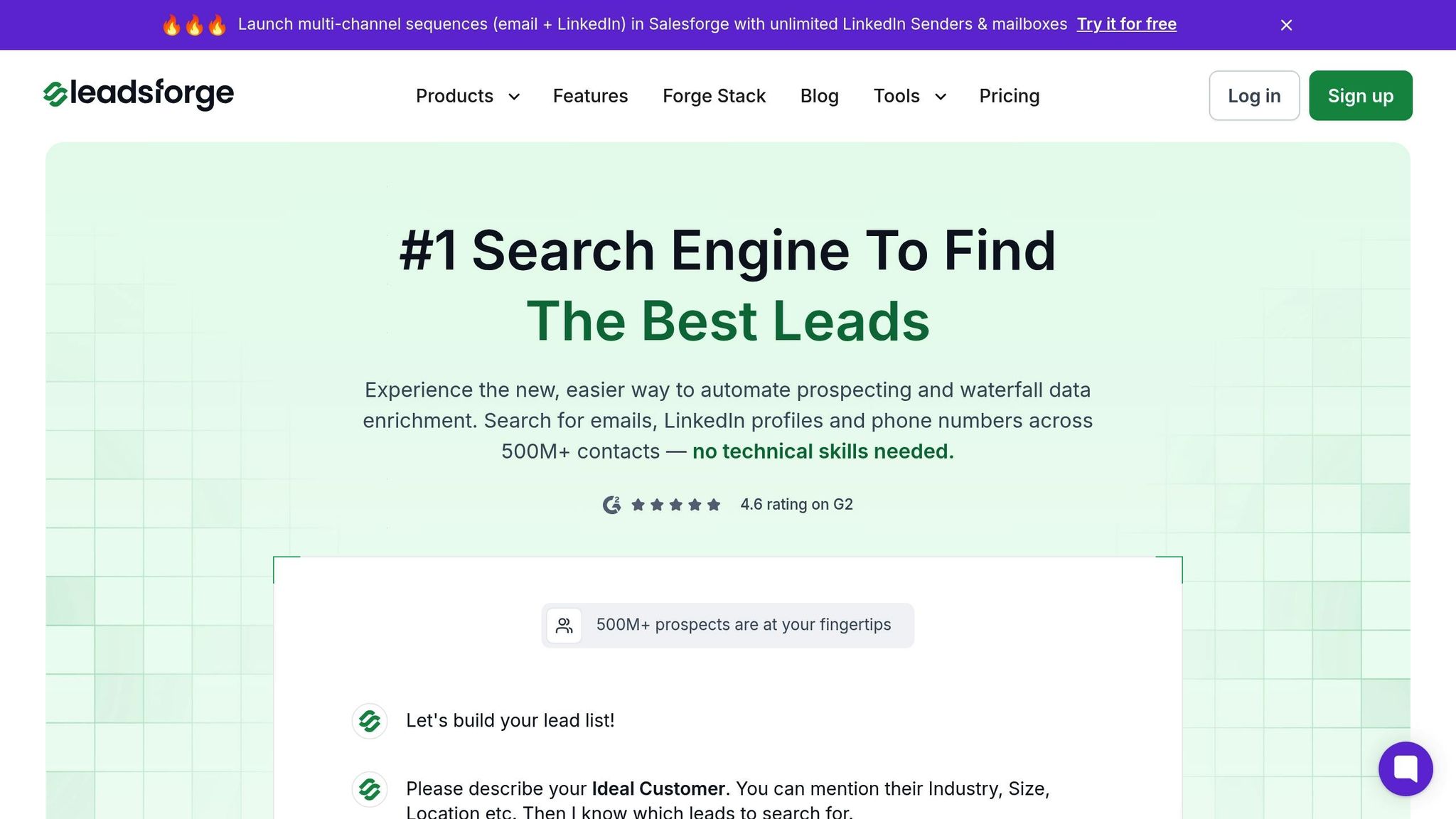
Leadsforge takes a fresh approach to data integration, focusing on lead generation and data enrichment specifically for B2B sales and marketing teams. Unlike platforms like Fivetran or Informatica, which are designed for IT departments managing enterprise systems, Leadsforge is built for sales professionals who need verified prospect information quickly and efficiently. This makes it a game-changer for B2B prospecting, offering a specialized solution that traditional data integration tools don’t provide.
The platform operates like a dynamic search engine, connecting users to over 500 million B2B contacts through multiple verified data providers. Instead of navigating static databases, users can describe their ideal customer profile in natural language via a chat-like interface. Leadsforge then generates tailored lead lists automatically, using AI to eliminate the technical hurdles that often come with traditional tools.
Leadsforge's connectors are tailored to B2B-focused data sources rather than enterprise systems like ERPs or databases. The platform aggregates data from multiple providers simultaneously, ensuring users can access a broad range of contact and company information.
Key enrichment features include LinkedIn profile data, verified email addresses, and phone numbers - core details essential for outreach. Beyond these basics, Leadsforge uses intent signals to identify prospects who are actively showing buying behaviors, helping sales teams prioritize their efforts effectively.
For exporting and integration, Leadsforge offers CSV downloads for flexibility and integrates directly with Salesforge, another tool in The Forge Stack ecosystem. This allows for seamless multi-channel outreach campaigns. Additionally, an API is available for businesses needing programmatic access to integrate lead data into existing workflows or CRM systems.
Leadsforge sets itself apart with its sequential enrichment methodology. When users request prospect data, the platform queries multiple sources in sequence until it finds verified information. This approach results in higher match rates and cleaner lead lists compared to tools that rely on a single database.
"Leadsforge isn't just a static lead database - it's a dynamic search engine that connects multiple data sources through a simple, chat-like interface. Instead of forcing you to filter through clunky dashboards or outdated lists, you can describe your ideal customer profile (ICP) in natural language and instantly generate verified lead lists."
- Leadsforge
Real-time checks for email validity, LinkedIn profiles, and phone formats reduce bounce rates and wasted outreach - common problems with outdated data platforms. Additional features like company follower searches help identify prospects following specific companies on LinkedIn, while AI-powered lookalike searches find prospects similar to your current customers. Custom prompts also allow users to qualify leads directly within the platform, filtering prospects by specific criteria before exporting.
As a cloud-based AI platform, Leadsforge easily handles increasing demand for lead generation and data enrichment without requiring manual infrastructure adjustments. By connecting to multiple B2B data providers, it can scale across industries and markets, tapping into hundreds of millions of contact records worldwide.
Leadsforge works seamlessly with other Forge Stack tools, including Salesforge for outreach, Mailforge for email infrastructure, Warmforge for deliverability, Primeforge for mailbox management, and Infraforge for private email infrastructure. While each tool requires a separate subscription, their native integration ensures smooth data flow between platforms without the need for custom development. This modular setup is ideal for companies scaling their sales operations, allowing them to start with Leadsforge and add other components as their needs grow.
For businesses implementing account-based marketing strategies or rapidly expanding sales teams, this flexibility offers a practical alternative to committing to a single, all-in-one platform.
Leadsforge uses a credit-based pricing model, setting it apart from the subscription tiers typical of traditional platforms. Instead of paying for data volume or connector usage, users are billed based on the number of leads they generate and enrich. Every new user starts with 100 free credits, and additional free credits can be earned through referrals.
The Essential Plan costs $49 per month when billed monthly or $588 annually, providing 2,000 monthly credits (or 28,000 credits upfront with annual billing). Credits never expire, giving businesses the freedom to use them as needed without worrying about losing unused capacity at the end of a billing cycle.
For teams exceeding their monthly credit allocation, additional credits can be purchased on a pay-as-you-go basis. This usage-based model offers predictable costs, often making it a better value for B2B sales teams than committing to a full-scale integration platform with features they may not need.
Leadsforge currently holds a 4.6 rating on G2, reflecting its effectiveness and user satisfaction. For B2B companies focused on sales prospecting rather than enterprise-wide data integration, this specialized pricing model delivers flexibility and cost efficiency.
After reviewing the platforms in detail, let’s dive into a side-by-side comparison of their strengths and weaknesses. Picking the right data integration platform hinges on how well its features align with your business objectives.
| Platform | Key Advantages | Main Disadvantages | Best For |
|---|---|---|---|
| Fivetran | Offers 700+ pre-built connectors, automatic API and schema change capture, minimal maintenance, and multiple security certifications | Potential risk of vendor lock-in; complex transformations may require external tools | Businesses seeking automated data replication with low technical effort |
| Talend | Combines cloud and on-premise integration, strong data governance, real-time analytics, and no-code/low-code options with AI | Higher implementation complexity for smaller teams; steep learning curve | Enterprises with intricate data needs and governance requirements |
| MuleSoft | Focuses on API-led connectivity and supports extensive system integrations | Demands advanced technical knowledge; higher costs for enterprise use | Companies building API-driven, complex integration architectures |
| Informatica PowerCenter | Recognized by Gartner, offers fast setup, wide data source support, and automated schema updates | Requires specialized expertise; higher costs and significant training investment | Large and mid-sized organizations prioritizing data quality and governance |
| SnapLogic | Provides prebuilt connectors for databases, SaaS apps, and APIs; supports ETL and ELT; includes unlimited usage in its base package | Managing multiple connector configurations can be challenging; requires ongoing maintenance as APIs evolve | Enterprises focused on consolidating and transforming data for analytics |
| Dell Boomi | Features a cloud-native design and strong integration across cloud and on-premise systems | Advanced features come with a learning curve; pricing increases with usage | Mid-sized companies scaling their integration processes |
| Jitterbit | Offers flexible integration and robust API management | May need development resources for complex use cases | Companies looking for a balance of flexibility and ease of use |
| Leadsforge | AI-driven sequential enrichment for higher match rates, real-time email validation, LinkedIn verification, and a chat-like interface requiring no technical skills; credit-based pricing starts at $49/month for 2,000 credits; integrates natively with Forge Stack tools; 4.6 G2 rating | Geared toward lead generation rather than enterprise-wide integration; separate subscriptions needed for Forge Stack tools | B2B sales and marketing teams needing verified lead data and automated qualification processes |
Integration Methods vary significantly among platforms. Traditional ETL solutions like Informatica and Talend rely on batch processing and scheduled pipelines, while Fivetran captures API and schema changes automatically with minimal upkeep. Leadsforge, on the other hand, uses sequential enrichment to query multiple sources, ensuring cleaner and more accurate lead lists.
Scalability is another key factor. Leadsforge thrives on its cloud-based AI architecture and extensive data provider connections, making it perfect for growing sales teams without the burden of managing infrastructure. Other platforms like Talend and Informatica are better suited for larger enterprises with more complex scaling requirements.
Pricing Models differ across platforms. Enterprise-grade tools like Informatica, Talend, and MuleSoft often require custom pricing, while SnapLogic offers a base package with unlimited usage. Leadsforge operates on a credit-based system, starting at $49/month for 2,000 credits or $588 annually for 28,000 credits that never expire, providing predictable costs for B2B sales teams.
Security and Compliance are critical for businesses handling sensitive data in the U.S. Fivetran meets multiple security certifications, while Informatica excels in data quality and profiling to standardize and cleanse data. Domo provides strong data governance with federated connectors. For companies with international operations or strict data residency needs, platforms with robust governance frameworks are essential.
Implementation Timelines depend on the platform’s connector availability and integration approach. Platforms with prebuilt connectors, like Fivetran, enable rapid deployment, while Leadsforge’s simple, chat-like interface eliminates technical setup altogether, allowing sales teams to start generating leads immediately.
Total Cost of Ownership goes beyond subscription fees. For enterprise platforms, costs often include implementation, training, ongoing maintenance, and potential fees for custom connectors or additional tools. It’s wise to explore free trials or entry-level tiers before committing to a long-term solution.
Whether you need an enterprise-scale integration platform or a specialized lead-generation tool, this comparison helps you identify which solution best fits your business needs.
Selecting the best data integration platform for your business starts with a clear understanding of your specific needs. For enterprise-level organizations dealing with complex data governance, platforms like Informatica PowerCenter or Talend are strong contenders. These tools excel in data quality and intricate transformations but come with higher costs and technical demands.
Miding the gap, mid-sized B2B companies often gravitate toward platforms such as SnapLogic or Dell Boomi. These options strike a balance between robust functionality and user accessibility. With extensive connector libraries and cloud-native designs, they simplify integration without requiring the deep technical expertise that enterprise solutions demand. If your team is juggling integration for 150+ applications - spanning CRM, HRIS, accounting, and ERP systems - these mid-market platforms provide reliable performance at manageable costs.
For teams priorit near a plug-and-play solution, ** research Fivetran, which boasts 700+ connectors and automatic these connectors and automatic schema change handling. Its usage-based pricing links your costs directly to data volume, reducing maintenance headaches and offering flexibility for businesses that prioritize efficiency.
Beyond these broad platforms, specialized tools like Leadsforge cater to niche needs. For instance, Leadsforge’s $49/month Essential Plan, with its 4.6 G2 rating, is tailored for B2B teams focusing on verified lead data. Its intuitive, chat-like interface requires no technical expertise, while AI-driven enrichment taps into multiple sources to verify LinkedIn profiles, emails, and phone numbers across a massive database of 500+ million contacts. For sales and marketing teams, this tool simplifies lead generation without the complexity of traditional integration platforms.
Technical requirements also play a critical role in choosing the right platform. Low-code solutions simplify data transformations using plain language, while tools like MuleSoft require advanced technical skills to manage API-driven architectures. Matching your team’s technical capabilities to the platform’s demands is crucial to avoid underutilization and wasted resources.
Integration strategies also benefit from tools that work seamlessly together. For example, Leadsforge’s native integration with Salesforge enables smooth transitions from lead generation to multi-channel outreach, eliminating manual data transfers and streamlining workflows for B2B operations.
Lastly, scalability is a key factor when planning for future growth. Cloud-native platforms like Domo and Fivetran are designed to support expanding data needs without compromising performance. Hybrid solutions like Azure Data Factory offer flexibility for businesses operating in both cloud and on-premise environments. To avoid expensive migrations later, model your data growth over the next 3-5 years and ensure your chosen platform can handle those volumes.
Before making a commitment, define your integration goals and take advantage of free trials to test how well a platform aligns with your needs. The right solution should simplify access to your data and make it actionable, not as a tool that introduces new challenges to your operations.
Choosing the right data integration platform for your B2B company starts with identifying your specific needs and objectives. Think about the volume of data you manage, how complex your workflows are, and the type of integrations required with your current tools. It’s essential to choose a platform that can grow with your business, offers an intuitive interface, and supports the unique demands of your industry.
For businesses prioritizing automation and lead generation, AI-driven platforms like Leadsforge can be an excellent choice. Leadsforge goes beyond simple data integration by enhancing your data with features like intent signals and lead qualification, helping to simplify and optimize B2B operations. To ensure you pick the best solution, evaluate platforms based on their features, pricing, and what other users have to say in reviews.
Traditional ETL (Extract, Transform, Load) platforms are built for batch processing. They often require extensive upfront work to extract data, transform it into a usable format, and load it into a target system. These systems are typically geared toward handling large, structured datasets and usually demand specialized technical skills to set up and maintain.
In contrast, modern iPaaS (Integration Platform as a Service) solutions emphasize real-time data integration. These cloud-based tools are designed to be more accessible and scalable, supporting a variety of data formats and sources like APIs, SaaS applications, and even unstructured data. iPaaS is a great choice for businesses that prioritize flexibility, faster implementation, and seamless system connectivity - all without the need for heavy infrastructure or deep technical expertise.
Leadsforge makes lead generation and data enrichment straightforward with its easy-to-use, chat-like interface. B2B sales teams can simply describe their ideal customer profile and instantly receive targeted, verified lead lists - cutting down on both time and effort.
What sets Leadsforge apart is its ability to automate critical tasks like prospecting and analyzing intent signals. Plus, it integrates effortlessly with tools like Salesforge for multi-channel outreach. This smooth integration keeps workflows efficient, allowing sales teams to spend more time closing deals and less time managing data.