1. Leadsforge – Best for Verified Buyer Intent Signals
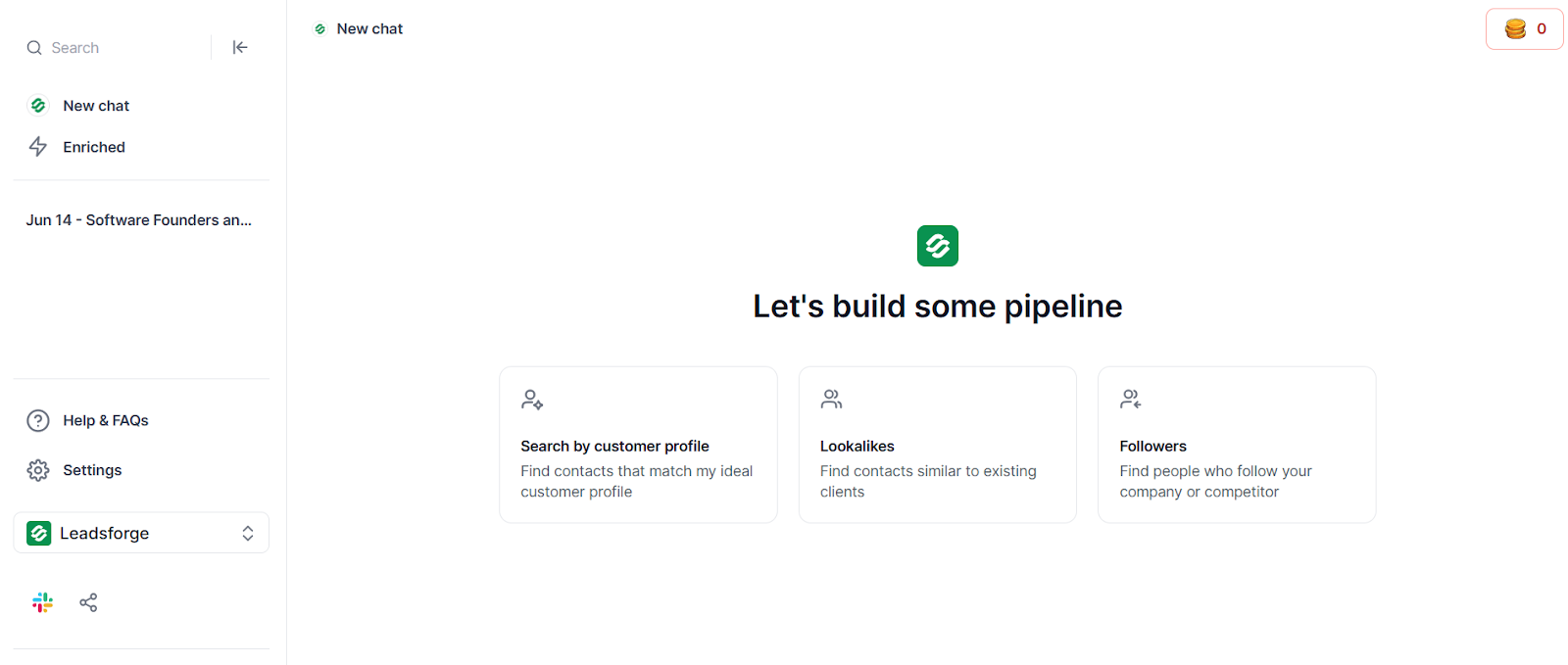
This image shows the Leadsforge lead generation
Leadsforge is an AI search engine for intent-rich leads. Instead of clicking through endless filters, you can describe your perfect buyer in plain language (like “CMOs at SaaS companies under 200 employees in the U.S.”).
The system instantly finds those profiles, verifies the data, and even lets you enrich them with real buying signals.
This makes it useful for sales teams who want to catch prospects at the moment of intent rather than relying only on static lists.
Key Buying Signal Features:
Intent Enrichment: Add signals like “Looking for SaaS B2B startups”, “Growing on TikTok”, or “Making YouTube content”. Leadsforge then shows which contacts are actively doing those things.
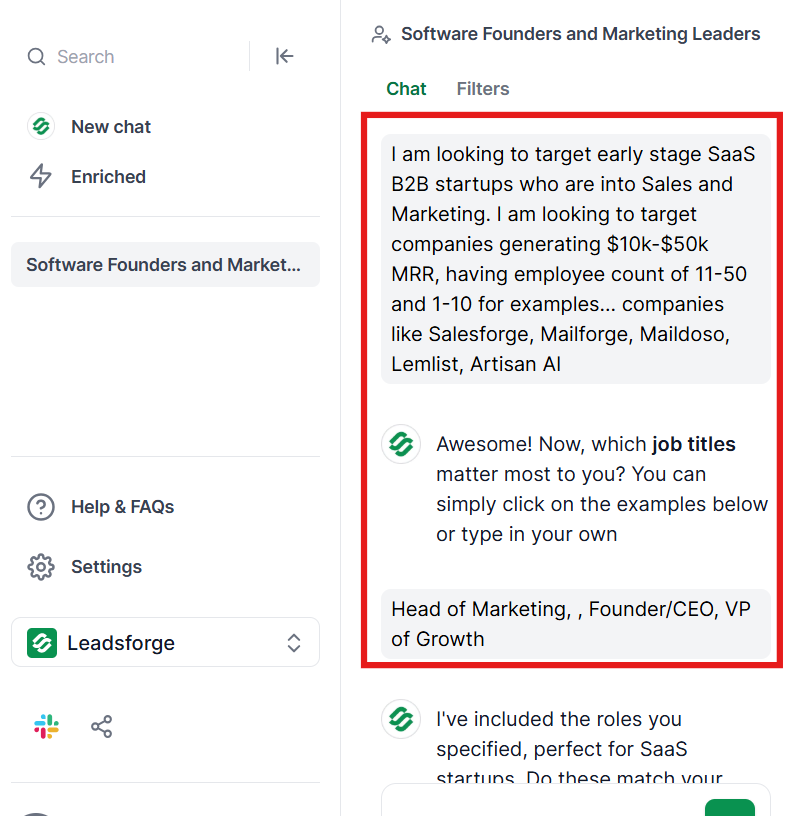
This image shows the Leadsforge lead generation based on intent
Behavior Proof: Signals are backed by LinkedIn and web evidence (e.g., profile clearly shows focus on Instagram growth).
Quick Prospecting: Just type your ICP, and Leadsforge builds the list.
Company Lookalikes: Upload a domain, and it finds similar companies with matching profiles.
This image shows the Find lookalike audience with Leadsforge
Follower Mining: Turn LinkedIn company followers into warm leads ready to engage.
Auto Verification: Every contact goes through enrichment and validation for up-to-date accuracy.
Types of Buying Signals Leadsforge Provide
Leadsforge looks at public information online to spot signs that a company is ready to buy.
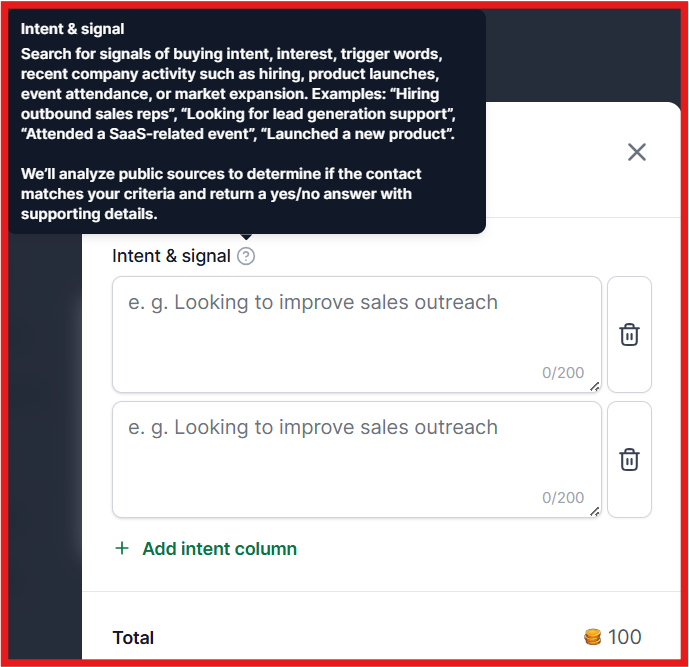
This image shows the Leadsforge intent and signals
Some of the main signals include:
Hiring activity – for example, a company hiring new sales reps or looking for lead generation help.
Company growth – signs like raising funding, opening new offices, or expanding teams.
Product updates – launching a new product or service.
Event activity – attending industry events, trade shows, or SaaS conferences.
Market interest – trigger words showing interest, like searching for UGC creators or growing on TikTok.
Each signal comes with a clear yes/no answer and proof, so you know exactly why a company shows intent.
Pros of Leadsforge:
Many users say it’s extremely easy to use, just type your ICP and the tool does the rest.
This image shows the Leadsforge G2 review
Users love the accuracy of intent enrichment, since it proves buyer interest with evidence.
Several reviewers mention it saves hours of manual research by auto-enriching leads with verified emails and LinkedIn data.
Cons of Leadsforge:
Some users mention that very niche industries may return fewer leads.
Leadsforge Pricing:
This image shows the Leadsforge pricing
Free Trial → 100 free credits.
Essential Plan → $49/month (2,000 credits, rollover allowed).
Annual Plan → $588/year (28,000 credits upfront).
Extra Credits → Add more monthly/annual credits as needed.
Best For:
Sales teams, SDRs, and marketers who want more than just lists, they want proof of buyer intent.
In short, Leadsforge turns lead search into an intent-driven engine. You don’t just get names, you get signals that prove who’s ready to buy.
Next, let’s look at Apollo, a tool that combines prospecting, engagement, and intent tracking in one platform.
2. Apollo – Best for Engagement & Buying Intent
This image shows the Apollo.io homepage
Apollo is an all-in-one sales platform that combines prospecting, engagement, and intent tracking.
Instead of using separate tools for lead search, outreach, and intent data, Apollo brings them together in one place.
This makes it especially valuable for teams that want to spot active buyers early and engage them with personalized outreach.
Key Buying Signal Features:
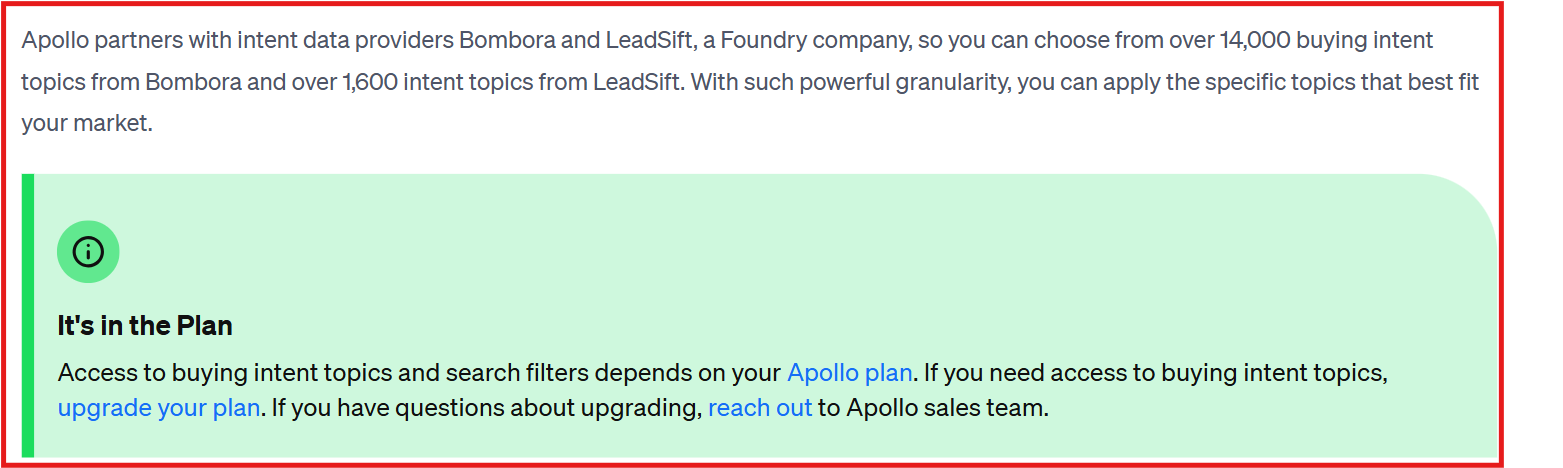
Multi-Source Intent: Signals powered by LeadSift and Bombora, pulled from websites, social media, news, and content.
This image shows the Apollo multi-source intent
1600+ Intent Topics: It lets you filter prospects based on specific buying interests.
Weekly Refresh: Intent data is updated every 7 days for accuracy.
Built-in Prospecting: Buying signals are integrated directly into Apollo’s database and Chrome extension.
Types of Buying Signals Apollo Provides
Apollo’s Buying Intent helps you find companies most likely to be in the market for your solution.
Here’s how it works:
Intent Topics – You can choose topics (like “CRM software” or “Sales automation”) that match your product or service. Apollo then flags companies researching those topics.
This image shows the Apollo lets you filter people by Buying Intent, using scores (High, Medium, Low)
Intent Signals – When a company shows interest in your chosen topics, Apollo marks it with an intent signal so you can prioritize outreach.
Intent Scores – Companies are ranked by how strongly they match your intent topics, so you know which ones are more likely to buy.
Historical Trends – See how a company’s intent score changes over the last 90 days to spot rising interest.
Company-Level Focus – Signals apply to companies, not individuals. You then find the right contacts at those companies.
Pros of Apollo:
It combines database, engagement, and intent tracking in one system.
This image shows the Apollo G2 review about intent tracking
Users like how sequences make it easy to track prospects and automate follow-ups.
Reviewers highlight AI features for drafting emails quickly.
Cons of Apollo:
Some users mention data can be outdated or less accurate for niche industries.
This image shows the Apollo G2 review about outdated data
Advanced features often require higher-tier pricing.
Reviewers note the interface can feel heavy or overwhelming at first.
Apollo Pricing:
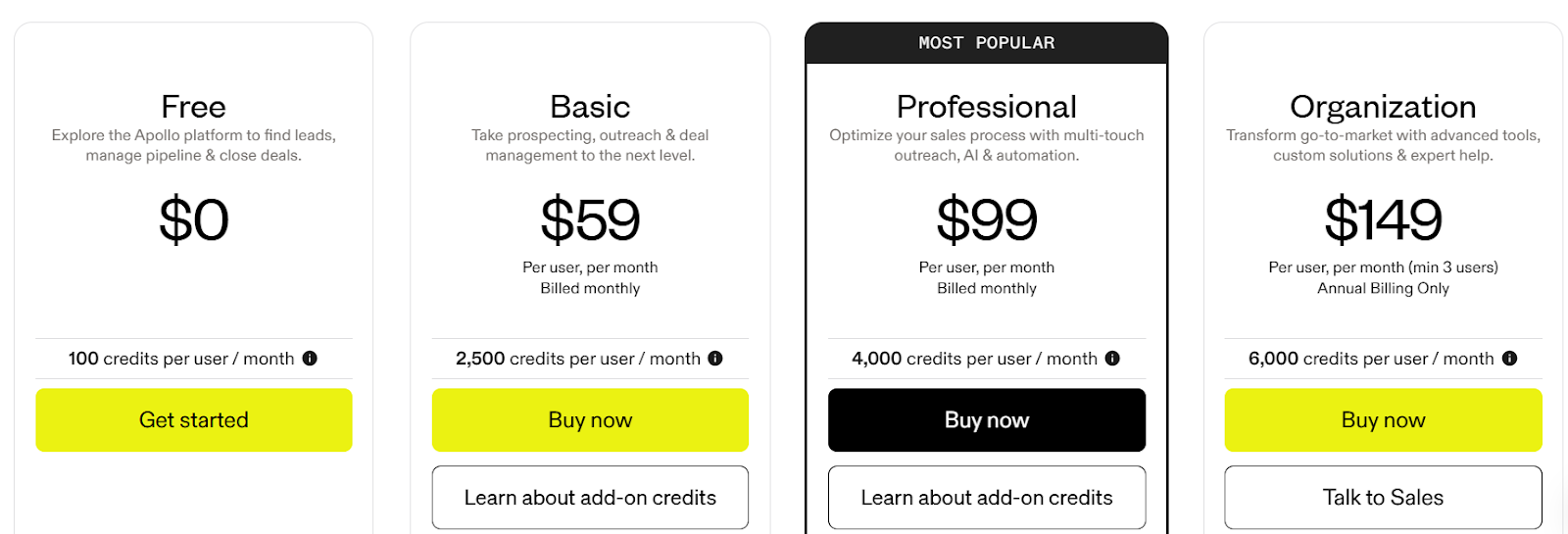
This image shows the Apollo.io pricing
Free Plan → $0/month with 100 credits per user.
Basic → $59/month per user, includes 2,500 credits, sequences, Gmail/Salesforce extension.
Professional → $99/month per user, 4,000 credits, advanced filters, US dialer, unlimited sequences.
Organization → $149/month per user (annual only, min 3 users), 6,000 credits, international dialer, advanced security, and full automation.
Best For:
Sales teams, SDRs, and RevOps leaders who want everything in one platform, prospecting, automation, and intent.
In short, Apollo doesn’t just give you data, it gives you the full system to find, engage, and convert buyers showing intent.
Before you consider Apollo, we would like you to go through this detailed Apollo review.
Next, let’s look at Seamless.ai, which focuses on real-time buyer insights.
3. Seamless.AI – Best for Real-Time Prospecting with Buyer Intent Signals
This image shows the Seamless.ai homepage
Seamless.AI is a sales intelligence platform that helps you find verified contacts and layers in buyer intent data.
Instead of chasing cold leads, you can target prospects actively researching solutions like yours.
Buyer Intent is backed by a large data co-op, offering insights across 10,000+ topics in 170+ categories, so you know which companies are showing interest right now.
This makes Seamless.AI especially useful for teams that want to connect with decision-makers earlier in their buying journey.
Key Buying Signal Features:
Behavior-Based Signals: Uses digital footprints (content engagement, searches, site visits) to flag buying intent.
Weekly Updates: Intent data refreshes regularly to keep your lead lists current.
Types of Buying Signals Seamless.AI Provides
Seamless.AI gives you access to buyer intent data powered by Bombora so you can spot companies that are researching solutions like yours.
Here’s what you get:
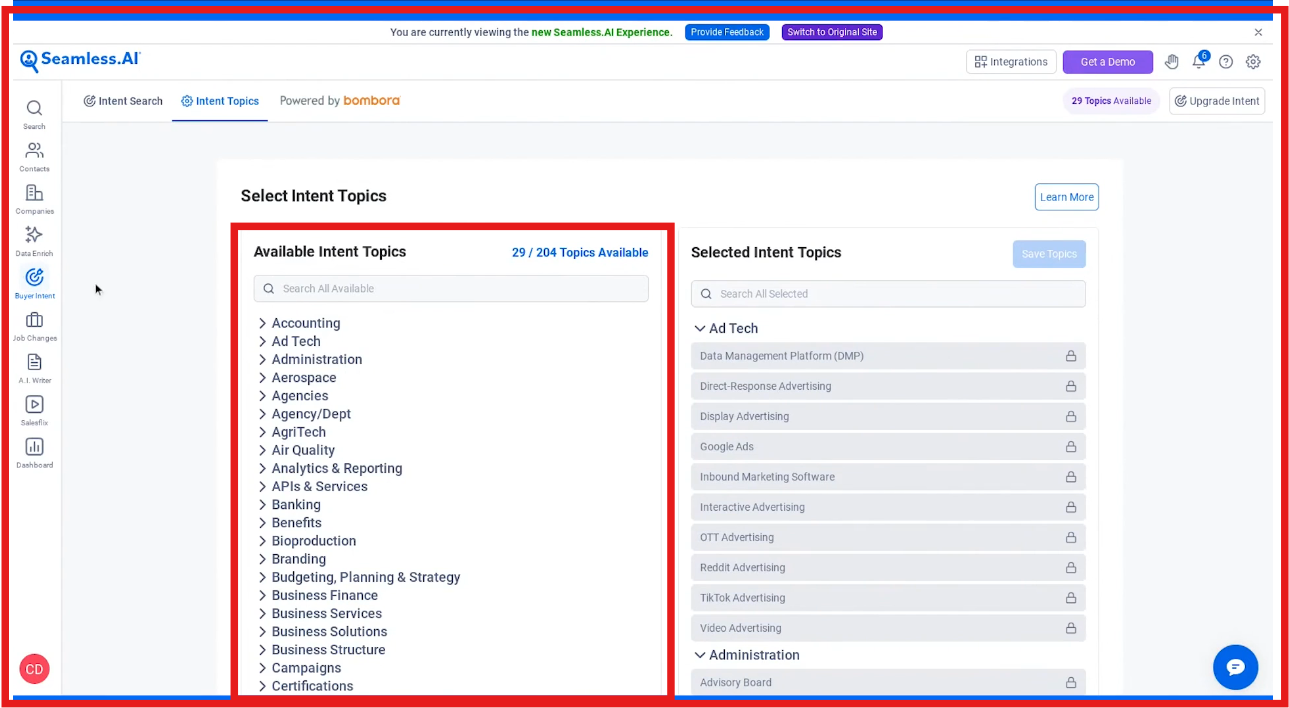
Intent Topics – Choose from mutliple topics (like CRM software, IT outsourcing, or sales training) to match your product or service.
This image shows the Seamless.ai available intent topics
Intent Levels – Companies are ranked from Very Strong down to Very Weak based on how active they are on those topics.
Overall Intent Score – See a company’s total interest level across all chosen topics.
Topic-Specific Scores – Drill down into which topics a company is most focused on.
Trends Over Time – Track whether a company’s research activity is rising, falling, or steady.
Filters – Narrow results further by company size, revenue, industry, or location.
Pros of Seamless.AI:
Users like how easy it is to build lead lists without manual research.
This image shows the Seamless.AI G2 review
Many say the data coverage is broad and integrates smoothly with Salesforce and HubSpot.
Users highlight that intent topics make it easier to prioritize high-intent accounts and reach the right buyers.
Cons of Seamless.AI:
Some users note data accuracy issues in certain industries or regions.
Others mention duplicate or outdated records that require manual validation.
This image shows the Seamless.ai G2 review about outdated data
A few reviews mention that credit limits can feel restrictive for larger outreach campaigns.
Seamless.AI Pricing:
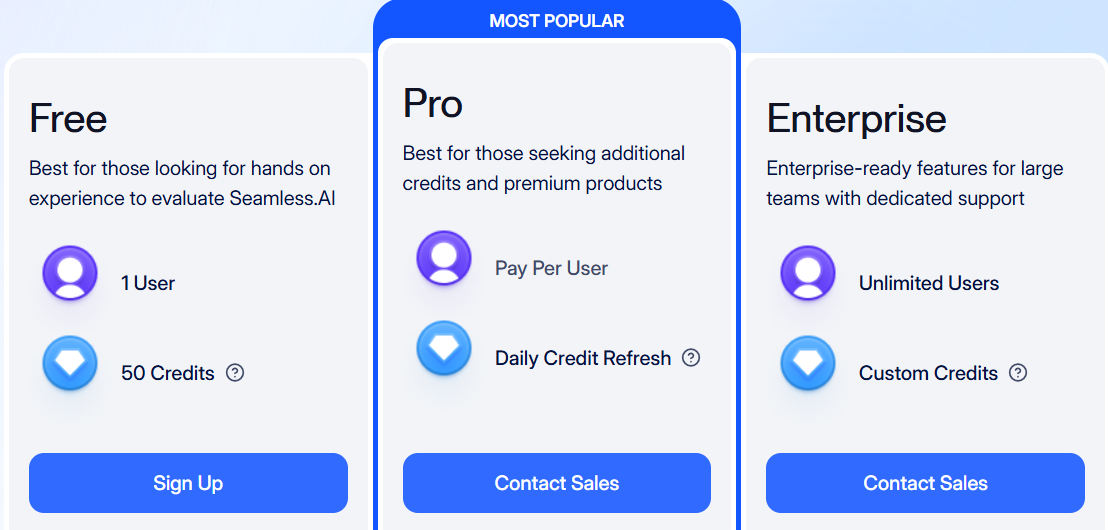
This image shows the Seamless.ai pricing
Buyer Intent is a premium add-on, not included in the free version.
Pricing depends on team size and plan (no fixed public rates).
Users report plans ranging from basic subscriptions to larger enterprise packages, with sales-team contact required for intent add-on pricing.
Best For:
Sales and marketing teams who want a large pool of contacts plus buyer intent signals in one platform.
In short, Seamless.AI helps you go beyond static lists by combining verified contacts with intent insights, so you can spend more time on prospects who are ready to buy.
4. Lusha – Ideal for Verified Contact Data & Buyer Intelligence
This image shows the Lusha homepage
Lusha is a sales intelligence platform that helps teams instantly find and connect with verified contacts.
With a database of 280M+ professionals, it combines enriched profiles, verified phone numbers, and email addresses with buyer intent signals, so sellers can prioritize the right accounts at the right time.
Instead of spending hours filtering through directories, users can describe their target (e.g., “heads of procurement in the energy sector in Canada”) and get a ready-to-engage list enriched with live buying signals.
Key Buying Signal Features
Buyer Intelligence: Identify companies actively showing buying intent, powered by job changes, company growth, and digital signals.
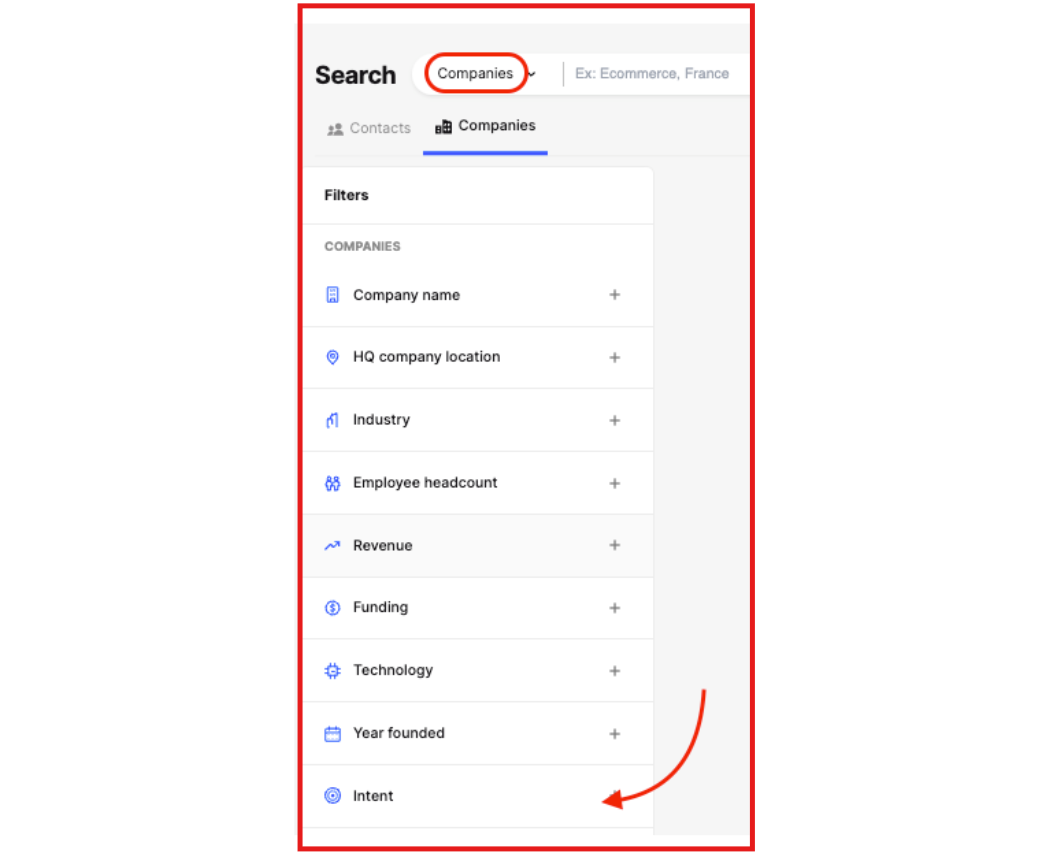
This image shows the Identify companies on Lusha with buying intent
Real-Time Prospecting: Chrome extension uncovers verified contacts as you browse LinkedIn and company sites.
Types of Buying Signals Lusha Provides
Lusha’s intent data helps you spot companies most likely to be in buying mode. Here’s what you get:
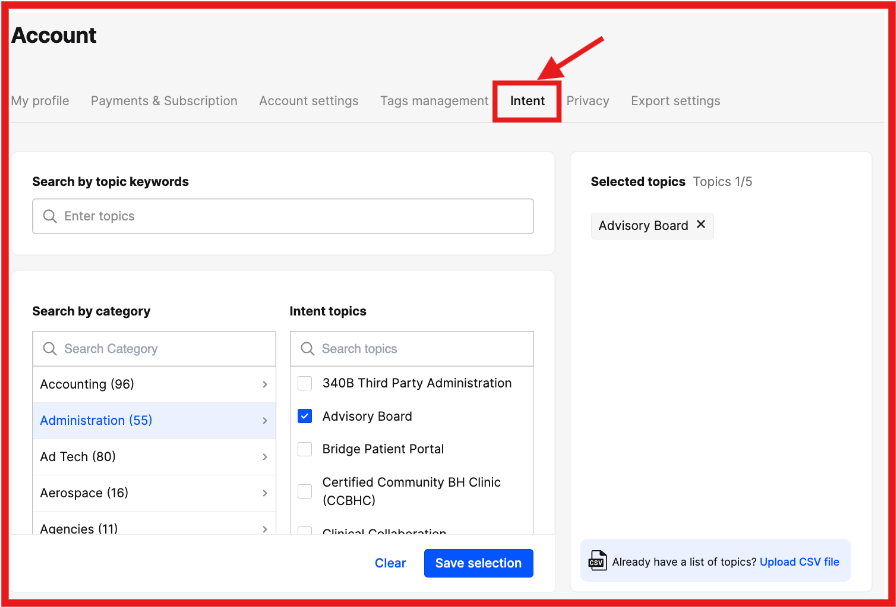
Intent Topics – Pick from hundreds of topics (like “CRM software” or “Accounting”) that match your product or service.
This image shows the Lusha intent topics
Company-Level Signals – Signals apply to companies, not individuals, so you can target accounts more effectively.
Intent Scores – Companies are ranked by how strongly they show interest in your chosen topics.
Alerts & Updates – Get notified when companies in your lists show fresh intent activity.
Technology & Behavior Insights – See when companies add/remove tools or research solutions tied to your industry.
Pros of Lusha
Users like how easy it is to pull verified phone numbers and emails directly from LinkedIn via the Chrome extension.
Many highlight the high accuracy of emails and improved deliverability.
It offers advanced filters, and intent data for better targeting.
This image shows the Lusha G2 review about intent data
Cons of Lusha
Users report data gaps in niche industries or smaller companies.
This image shows the Lusha G2 review
Some say credits run out quickly, especially in larger campaigns.
A few mention outdated or incomplete records, requiring double-checking.
Lusha Pricing
This image shows the Lusha pricing
Free Plan → 40 credits/month + Chrome extension.
Pro Plan → Starts at ~$19.40/user/month (billed annually, 3 seats minimum).
Premium Plan → Around ~$45.45/user/month (billed annually), with more credits and analytics.
Scale Plan → Custom pricing for larger teams needing high credits, automation, and intent insights.
Best For
Outbound teams that want both direct dials and intent signals without sacrificing compliance.
Lusha helps you move beyond guessing who to contact, by combining verified contact info with buyer intelligence, it ensures you’re always reaching the right prospects at the right time.
5. Lead411 – Best for Unlimited Searches with Growth Intent Data
This image shows the Lead411 homepage
Lead411 is a B2B sales intelligence and lead generation platform designed to help teams reach decision-makers faster.
Unlike many competitors, Lead411 offers unlimited search and view plans on higher tiers, making it attractive for teams that prospect heavily.
With verified emails, direct dials, intent signals, and seamless CRM integrations, it supports outbound sales, ABM, and recruiting workflows efficiently.
Key Buying Signal Features
Verified Contacts: Millions of emails and phone numbers with a 96% deliverability rate on optimized emails.
Growth Intent Data: Track hiring trends, funding events, executive changes, and tech adoption to find accounts in buying mode.
Sales Intelligence Alerts: Real-time notifications for company expansions, leadership moves, or revenue growth.
Types of Buying Signals Lead411 Provides
Lead411 uses Bombora intent data to track which companies are actively researching certain topics. This helps sales teams know when a company might be ready to buy.
Here’s how it works:
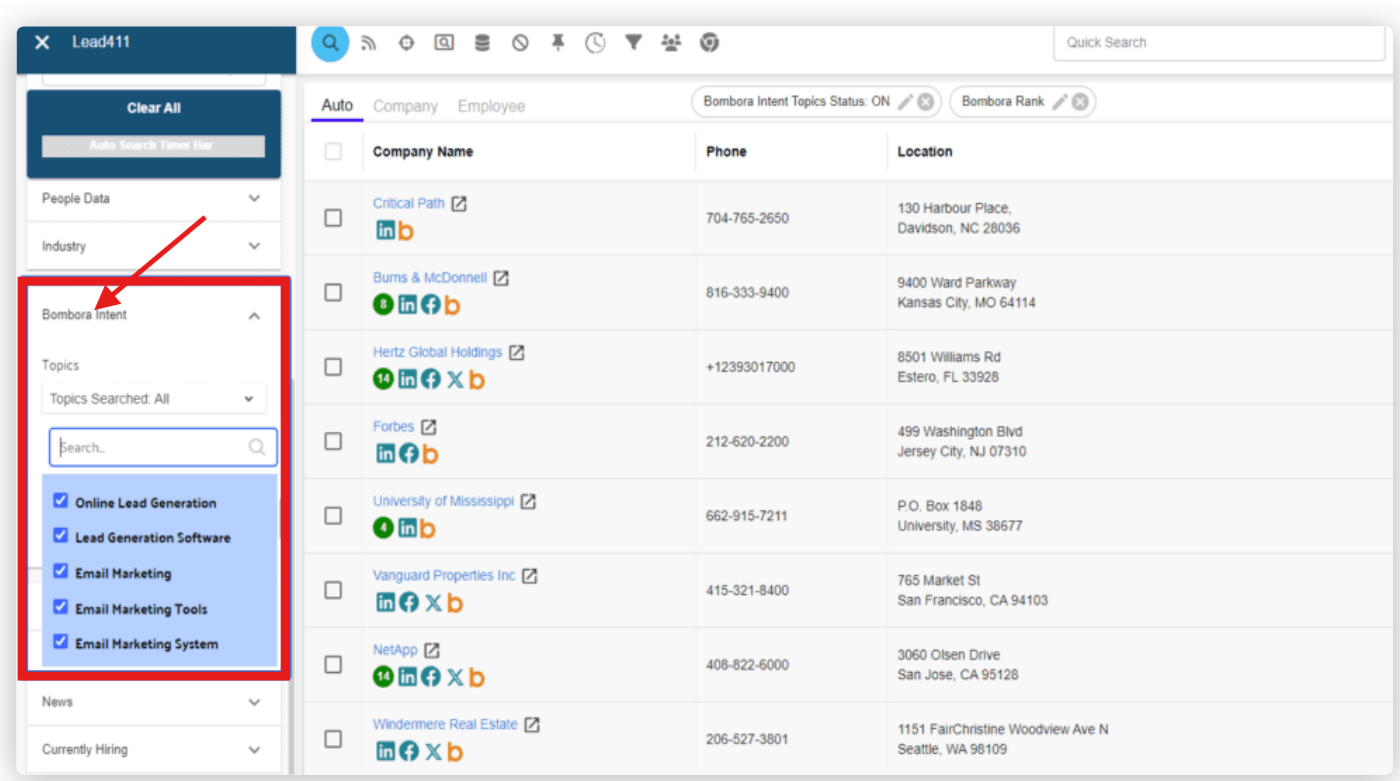
Intent Topics – You can pick from hundreds of topics (like Email Marketing, Lead Generation Software, Online Lead Generation). Lead411 then monitors which companies are researching those topics.
This image shows the Lead411 Intent topics
Company Activity – When a company shows higher research activity around a chosen topic, Lead411 flags it as an intent signal.
Bombora Rank – Companies are ranked by how strong their research signals are, so you can prioritize outreach.
This way, you don’t just have a list of contacts, you know which companies are actually showing interest in your type of solution.
Pros of Lead411
Many users say it provides very accurate contact data compared to similarly priced tools.
This image shows the Lead411 G2 review about accurate data
Users like the value for money, often calling it a cost-effective alternative to ZoomInfo.
Reviewers mention the filters and intent triggers help target the right accounts at the right time.
Cons of Lead411
Some users report limited coverage, especially for niche industries or regions.
This image shows the Lead411 G2 review
Others say export limits outside of unlimited plans can feel restrictive.
A few mention the interface takes time to learn and filtering could be more granular.
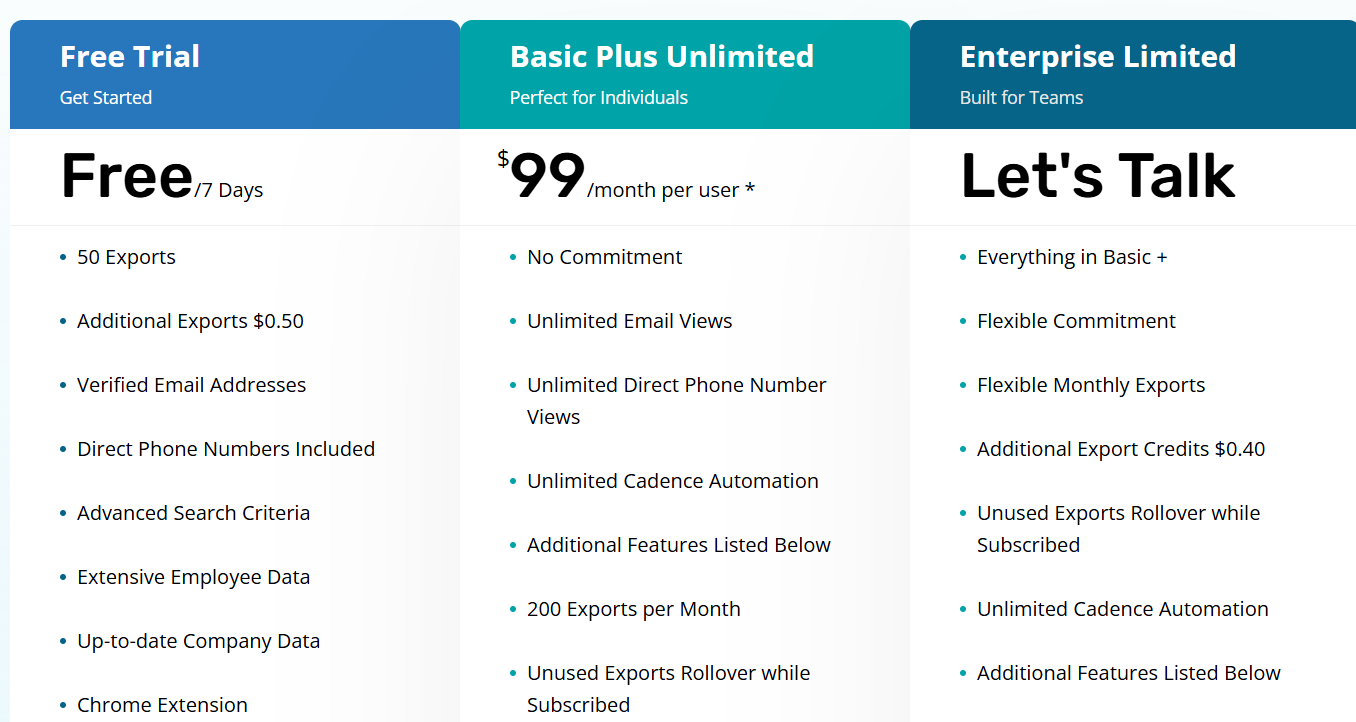
Pro / Enterprise Plans → Custom pricing; includes Bombora intent data, API access, lead scoring, and automation.
Best For
Sales teams, SMBs, and recruiters who want a cost-effective alternative to ZoomInfo or Apollo.
Lead411 balances accuracy, intent intelligence, and affordability, giving teams verified data and intent insights without the steep costs of bigger providers.
Which Tool Should You Choose for B2B Buying Signals & Intent?
When comparing these platforms, the real difference comes down to how strong their intent data is and whether they only provide contacts or also prove who’s actually in buying mode.
Leadsforge →Best for verified intent signals like hiring trends, funding news, and product launches.
Apollo → Solid all-in-one (prospecting + engagement + intent tracking), but intent signals are lighter compared to Leadsforge.
Seamless.AI → Attractive for unlimited lead searches, yet lacks strong enrichment or proof of intent, so quality can feel generic.
Lusha → Strong on compliance and contact accuracy (phone numbers, emails), but intent signals are not its focus.
Lead411 → Offers growth intent alerts (funding, hiring, expansion) and affordable plans, but not as advanced in behavior-level proof as Leadsforge.
If your goal is just more contacts, any tool can do the job.
But if intent is what brought you here, Leadsforge stands out with verified signals that show exactly when buyers are ready.