If you’re searching for Lead Forensics reviews, you’re likely trying to see if it’s worth using for your B2B sales or marketing team.
Lead Forensics is a B2B website visitor identification tool that shows which companies visit your website, even if they don’t fill out a form.
It helps teams spot buying intent, prioritize accounts, and turn website traffic into sales opportunities.
In this review, we’ll explain how Lead Forensics works, what data it provides, its key features, pricing, pros and cons, and who it’s best for, so you can decide if it’s the right fit for your business.
Lead Forensics is a B2B website visitor identification tool that helps businesses see which companies visit their website, even when those visitors don’t fill out a contact form.
It works by tracking website visits and matching IP addresses to a large database of B2B companies.
This allows teams to identify the business name, location, industry, and size of companies browsing their site.
Instead of relying only on form fills, it helps teams uncover hidden buying intent from website traffic and act on it at the right time.
In short, Lead Forensics turns anonymous B2B website visits into company-level sales and marketing opportunities.
Lead Forensics works by tracking visitors on your website and identifying the companies behind those visits.
First, you add a small tracking code to your website, similar to Google Analytics. This code tracks visits in real time.
When a business visits your site, Lead Forensics captures the IP address of that visit. It then matches the IP address to its B2B database to identify the company, including details like business name, industry, location, and company size.
The platform also records website behavior, such as which pages were viewed, how often a company visits, and how recently they were active. This helps teams spot buying intent.
Once a company is identified, the data appears in the Lead Forensics dashboard. Teams can set up filters, alerts, and CRM integrations to send high-intent accounts directly to sales or marketing.
In simple terms, Lead Forensics turns anonymous website traffic into company-level insights that sales and marketing teams can act on.
Lead Forensics is built to help B2B teams understand who is visiting their website and what those companies are interested in.
Instead of just showing traffic numbers, it turns anonymous visits into real sales and marketing insights.
Here are the most important features of Lead Forensics:
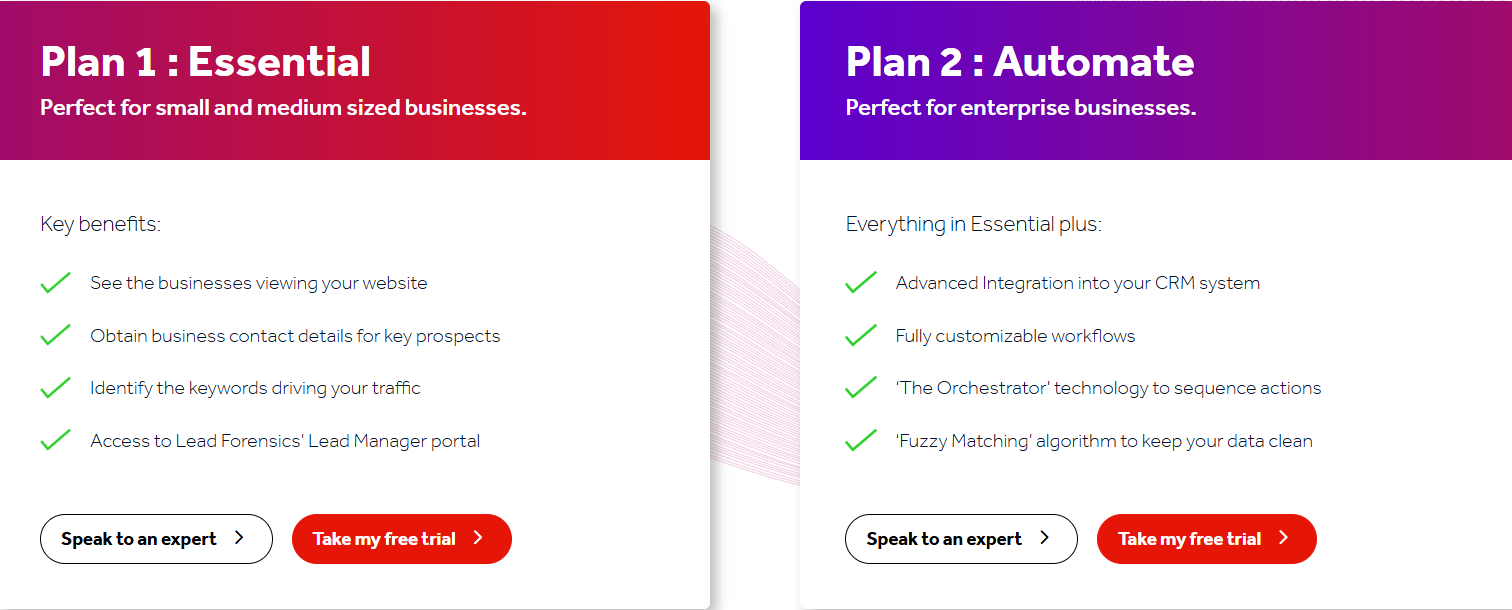
Lead Forensics does not list pricing publicly. All plans are sold through a sales team and priced based on your business needs.
The platform offers two plans:
I. Essential – for small to mid-sized B2B businesses
II. Automate – for enterprise teams
A free trial is available, but requires speaking with sales.
Pricing is custom and best suited for mid-market and enterprise teams with steady website traffic.
Lead Forensics is a good fit if:
It may not be right if:
Lead Forensics helps you identify which companies visit your website, but it does not actively find new leads.
If you want to discover prospects and get their contact details, Leadsforge is a better alternative.
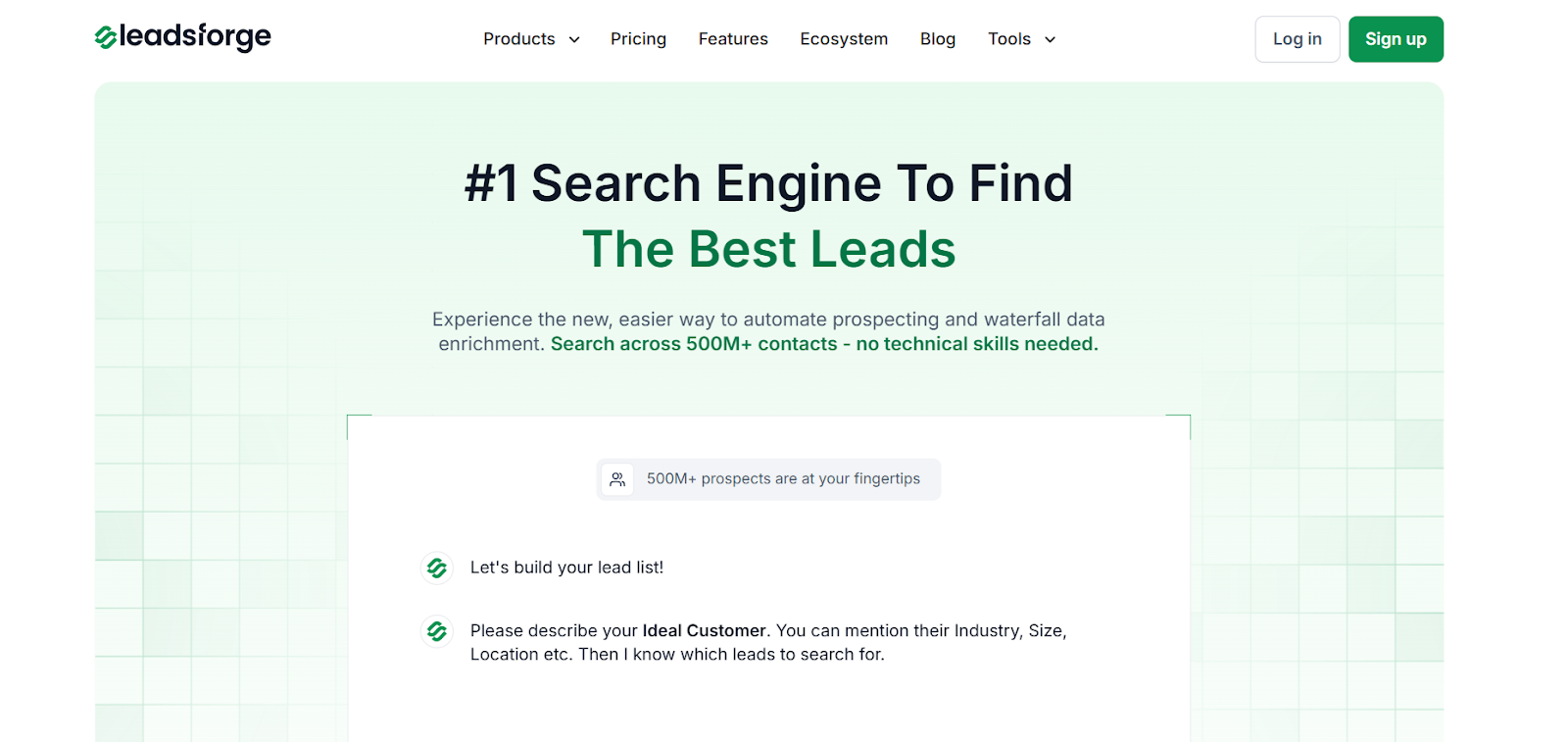
Leadsforge works as a chat-based B2B lead search engine.
You describe your ideal customer, such as “CEOs in Atlanta”, and it instantly returns verified work emails, phone numbers, and LinkedIn profiles from a database of 500M+ contacts.
Unlike Lead Forensics, Leadsforge does not depend on website traffic.
It proactively finds leads using multiple data sources and applies waterfall enrichment to ensure the best available contact data is returned.

Leadsforge also helps you go beyond basic lead lists by finding lookalike companies, identifying competitor followers, and adding intent signals to help prioritize outreach.

Leadsforge pricing starts at $49/month for 2,000 export credits, and unused credits never expire. Lead Forensics uses custom pricing, which requires speaking with sales.
If you want to see anonymous website visitors, Lead Forensics is useful. If you want to find, enrich, and qualify leads for outbound sales, Leadsforge is the stronger choice.
Lead Forensics can be worth it if you want to know which companies visit your website and your business already gets steady B2B traffic.
It works best for mid-sized and enterprise teams that run account-based sales or marketing and want to act on website intent signals.
However, Lead Forensics does not actively generate new leads. It only shows companies that already visit your site, and pricing is custom and sales-led, which may not suit smaller teams.
If your goal is outbound lead generation, faster prospecting, or building lead lists at scale, Lead Forensics may feel limited.
If you want to find new leads, get verified contact details, and add intent signals without relying on website traffic, Leadsforge is a better option.
With Leadsforge, you can:
Try Leadsforge now with 100 free credits!